
AMD just shrank an AI supercomputer down to the size of a lunchbox


AMD has just announced a piece of hardware that could change the AI industry, with a supercomputer rivalling the capabilities of an entire server fitting into a box that's not much bigger than a lunchbox.
This takes form in the AMD Ryzen AI Halo, which will be released for developers in the second quarter of 2026, boasting that it can transform ideas into actual workflow in minutes, removing the stress of configuration by hosting everything locally.
Purchasing it will set you back $3,999.99 in total, representing quite a significant spend, but that price could be more than worth it for many developers looking to synchronize the process and make everything a lot more seamless.
Some have even speculated that it could eliminate the need for external AI subscriptions through services like ChatGPT or Claude, relying instead solely on local services due to the power of the machine, but whether that actually comes true remains to be seen.
What does AMD Ryzen AI Halo offer?
As reported by CNX Software, you are actually getting a lot for the price when it comes to the Ryzen AI Halo from AMD — especially because it ships in a case that's not much bigger than a lunchbox or large book.
Advert
It's specialized AI chip – the Ryzen AI Max+ 395 processor – offers performance of up to 126 Trillions of Operations Per Second (TOPS), with 128GB of LPDDR5x memory and a 2TV NVMe SSD inside the chassis.
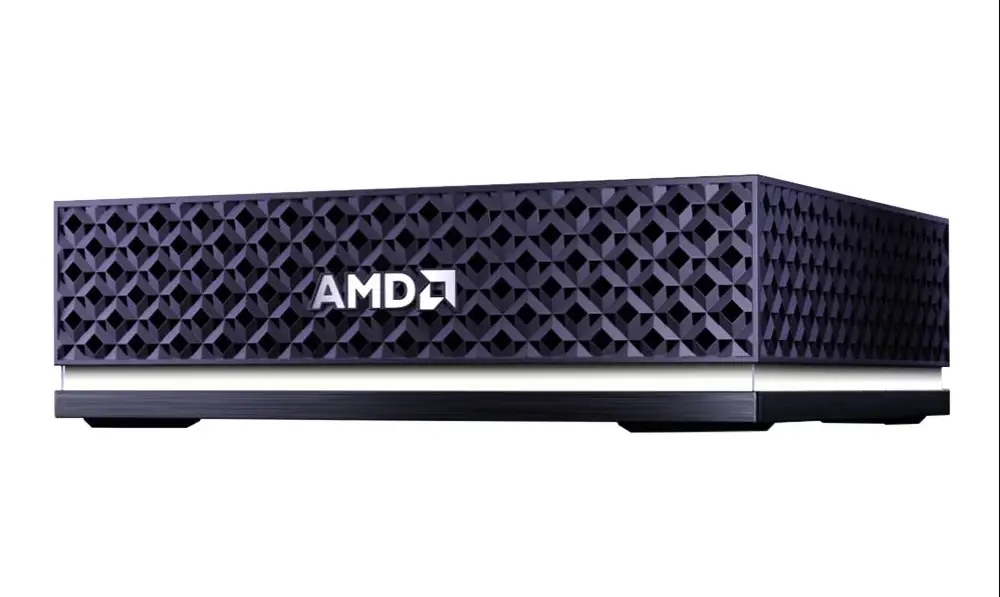
One of the most impressive aspects of this particular piece of hardware is its status as the first x86 device where the GPU and CPU share the same 128GB of memory, which significantly increases its capabilities and arguably matches it to the potential of an entire server in some aspects.
For example, as shared by 'codingvic' on X, this provides 110GB of memory for the GPU on Linux which far exceeds the 32GB provided by a top-of-the-range RTX 5090, and similar performance increases are seen in AI model benchmarks.
Does Nvidia have a competing product?
Nvidia does indeed have a similar rival product, with the DGX Spark coming out last year to offer competing supercomputer performance, yet benchmarks from AMD indicate that their own version offers a significant improvement.
The Ryzen AI Halo offers anywhere between a 4% and 14% performance increase across a variety of different Qwen and GPT models, and also provides the user with additional factors to consider outside of the benchmark sheet.
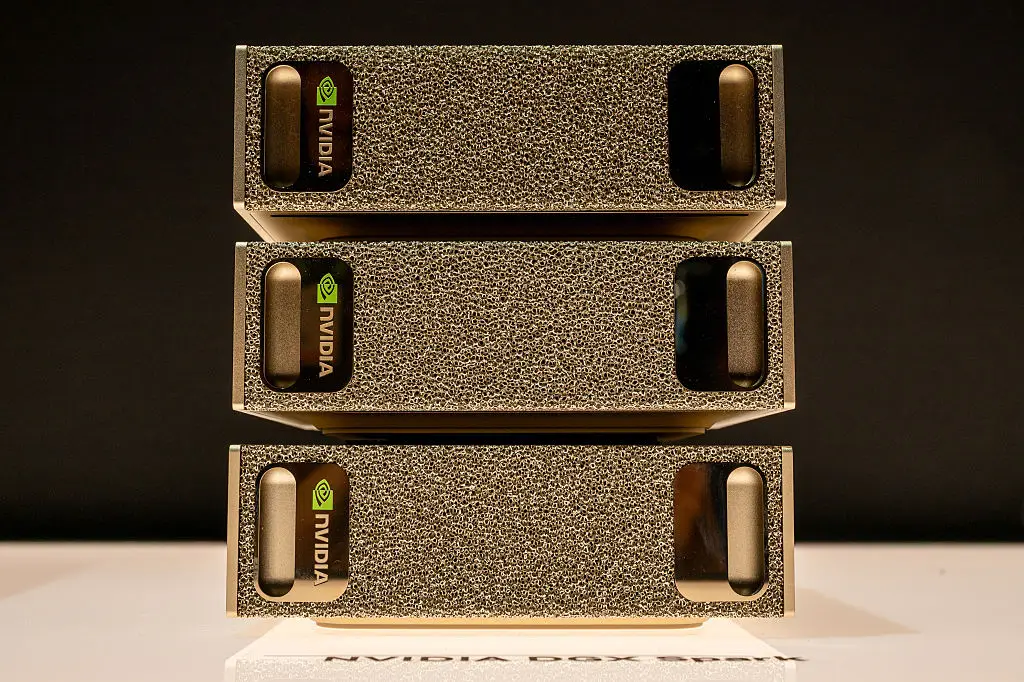
Where the DGX Spark only supports the Linux operating system you'll be able to use both Linux and Windows on the Ryzen AI Halo, and AMD's device also offers a 50 TOPS NPU alongside 'leadership LLM Tok/Sec per $'.
It remains to be seen whether Nvidia will challenge AMD's newly found lead with an updated version of the DGX Spark soon, but for now developers might well be eyeing up a switch to the red side going forward.