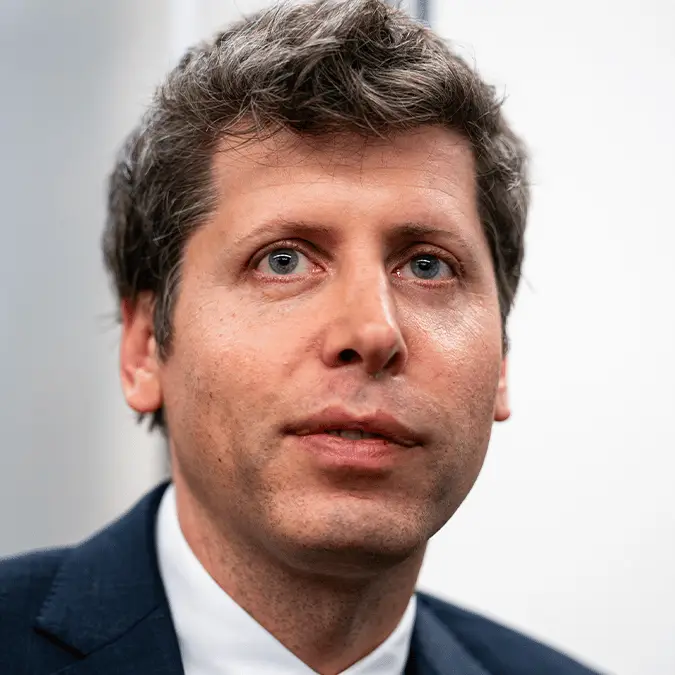
OpenAI just leaked employee iMessages to shut down Apple’s trade secret lawsuit


The tech giants are fighting again, and while OpenAI isn't one of the Big Five (Alphabet, Amazon, Apple, Meta, and Microsoft), it's been on an upward trajectory since being founded in 2015.
This has seen OpenAI butt heads with several big companies over the past 11 years, with it notably clashing with Elon Musk over claims he was duped out of millions of dollars while the AI company strayed from its original mission statement.
It was a lawsuit that Musk ultimately lost. OpenAI is now poised to return to the courtroom for a whole new lawsuit, this time as Apple accuses the ChatGPT creator of poaching employees and gaining improper access to confidential information via former staffers.
Not taking this one lying down, OpenAI has issued its own sniping statement.
Why is Apple trying to sue OpenAI?
Advert
At the core of the July 10 filing, Apple claimed OpenAI was recruiting former Apple engineers as a roundabout way of 'stealing' proprietary technology tied to secret hardware projects.
We previously covered how OpenAI could be stung for millions, with one of the key figures named being former Apple vice president Tang Yew Tan, who is now OpenAI's chief hardware officer. Apple maintains that Tan shared confidential information about Apple suppliers and also went on to encourage other former Apple employees to do the same when being interviewed for jobs at OpenAI.
Apple refers to 'show-and-tell' interviews, also claiming that former Apple employee Chang Liu downloaded "dozens of Apple's confidential hardware-related files."
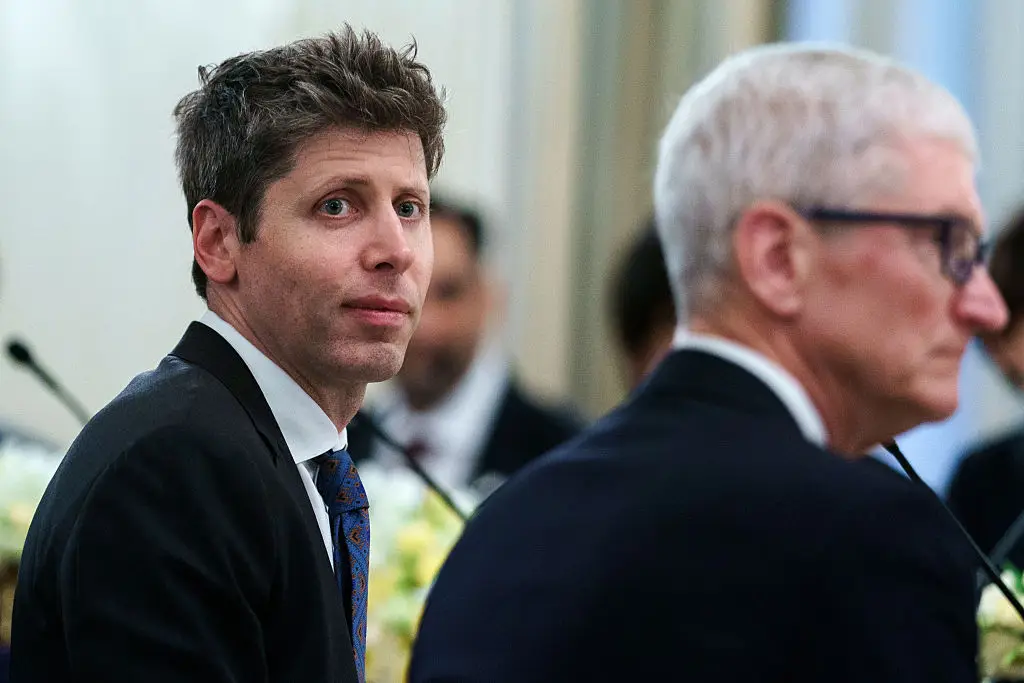
While Apple and OpenAI seemed to have a healthy working relationship where the latter's AI tech was going to be integrated into Apple products, things soured after OpenAI acquired Jony Ive's io. Before moving on from Apple in June 2019, Ive is remembered as the company's senior vice-president of industrial design and chief design officer.
Apple's filing alleges that over 400 of its former employees now work at OpenAI. The lawsuit is moving forward as Apple says it received no response following a February 2026 warning that it was launching an internal investigation into potential trade secret theft.
Apple sought an August 2026 preliminary injunction in the USA to prevent former employees and OpenAI in general from accessing, using, or disclosing trade secrets, also asking for a second motion that would order Tan, Liu, and others to sit for depositions.
In a somewhat embarrassing situation, OpenAI suggests Apple has 'got it wrong'.
OpenAI says Apple is getting it wrong
In a defiant post on its own site, OpenAI reiterates that it sees Apple as one of the greatest companies ever but calls out a "careless, aggressive and oddly personal lawsuit sadly doesn’t live up to that reputation."
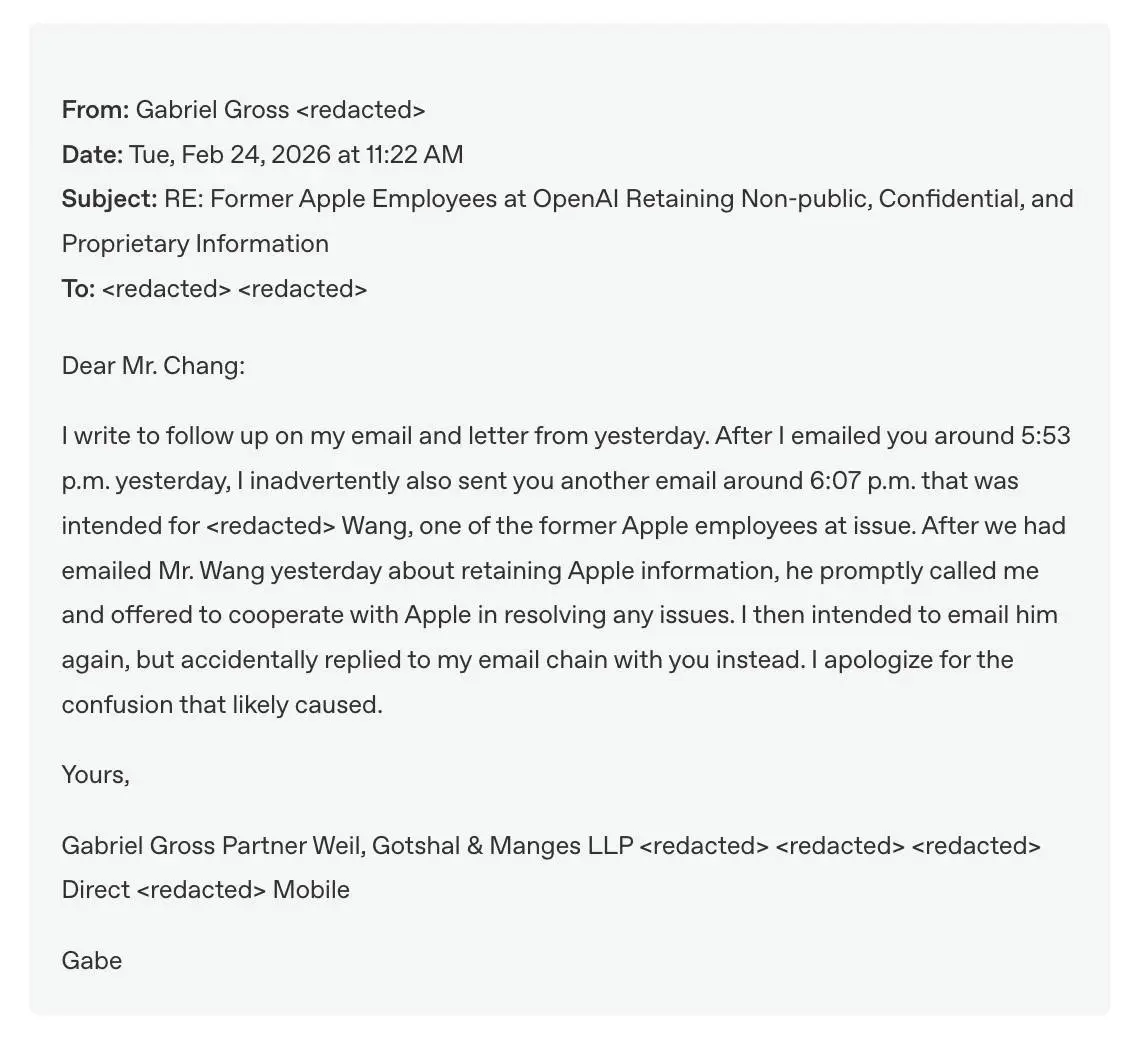
OpenAI says that Apple's legal team "emailed the wrong person after confusing two Asian last names” and has also “claimed they had a discussion with our General Counsel, which they now concede never happened."
It's said that Apple didn't raise any of the points from the lawsuit at the time and told OpenAI it was 'resolving any issues', with the AI overlord then linking out to an email exchange and stating: "We then heard nothing for five months until they sued. In their latest filing, Apple tries hard to spin this sequence of events."
Sharing a series of messages, OpenAI is adamant that Chang Liu was specifically asked by Apple employees to help locate potentially confidential information. As for Tan, OpenAI championed his 24-year Apple legacy as one of its 'most innovative leaders' and added: "Tang has always been clear with the team that we do not want, and must not use, any confidential information from other companies."
There are further complaints that Apple is trying to shift the blame to 'residual access' to sensitive materials, with OpenAI saying it's because Apple fails "to properly manage system access when people leave."
It maintains that "former employees who are trying to do the right thing when they leave still have access to Apple files—despite not wanting them or even being aware of them."
In terms of the preliminary injunction, OpenAI concludes that it's "both based on false information and completely unnecessary because we do not have, nor want, any of their trade secrets."