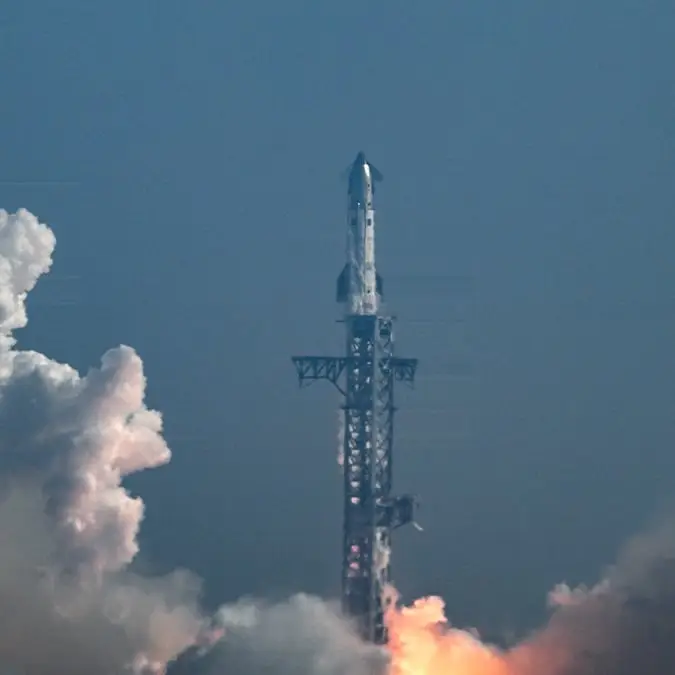
SpaceX warns California residents of 'sonic boom' as they gear up for new launch


Californian residents could be subjected to ‘one or more’ sonic booms tomorrow (August 19) as SpaceX prefers for its next launch.
The space company led by Elon Musk is anticipating the launch of its latest mission, which will send 24 new Starlink satellites into orbit.
The launch will take place at the Vandenberg Space Force Base in California, with the firm warning that local residents might be impacted.
On the website, SpaceX explained: “There is the possibility that residents of Santa Barbara, San Luis Obispo, and Ventura counties may hear one or more sonic booms during the launch, but what residents experience will depend on weather and other conditions.”
Advert
A livestream of the event can be viewed from the official SpaceX account on X, formerly Twitter, with the company also posting updates in the lead up to liftoff.
According to the space firm, this launch will mark the 12th flight for the first stage boosting supporting the mission, which has also previously launched Sentinel-6B, Twilight, NROL-172, Transporter-17, and seven Starlink missions.
The SpaceX statement continued: “Following stage separation, the first stage will land on the Of Course I Still Love You droneship, which will be stationed in the Pacific Ocean.”
Impacts of a sonic boom on the human body
According to a study published in Acta Acustica, a sonic boom does have the ability to impact humans, as it can cause people to suddenly startle, creating an annoyance. That being said, there are no indicators to say that it causes any physical damage or permanent issues to hearing.
Still, that doesn’t stop it from being a major irritation for some people, especially if it occurs regularly.
This became an issue when the Concorde plane was in operation, with the noise of the aircraft taking off causing disruptions to local communities.

NASA explains: “Sonic booms have been a problem since aircraft first began exceeding the speed of sound, or Mach 1, so disturbing to people below that for decades U.S. and international regulations banned commercial supersonic flight over land. Overcoming this disturbance is one reason why NASA has conducted extensive research into how sonic booms form, how they travel through the atmosphere, and how to reduce their noise.”
The space agency adds: “NASA’s research into sonic booms includes how to design aircraft that are quiet, how people and structures respond to shock waves and noise, and how the atmosphere changes the boom sound. This research includes the use of computer models, sound laboratories, wind tunnels, microphones, sensors, aircraft, and some very clever researchers and engineers.”