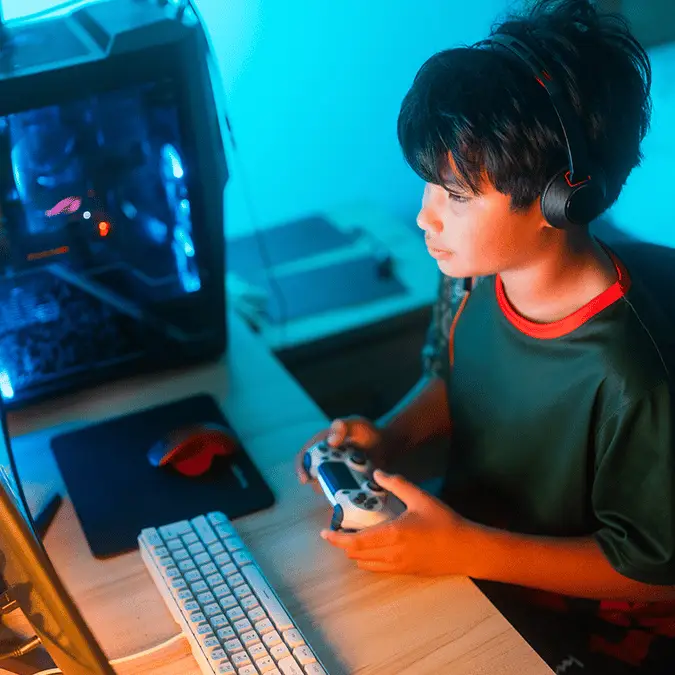
Dad sues gaming companies for $1.50 after his son lost 1,868 hours to video games


People often play their favorite games for hundreds, if not thousands of hours — yet one dad in China is taking some of the country's biggest studios to court for a measly $1.50 after his son racked up an excessive amount of hours.
Targeting gaming companies like Tencent, NetEase, miHoYo, and 37 Interactive Entertainment, the man, referred to solely by his surname Qin, believes that these developers haven't done enough to implement effective anti-addiction systems, impacting his child as a result.
Games released by these studios include massive hits like Marvel Rivals, Genshin Impact, Puzzles & Survival, and Honor of Kings, and the lawsuit details how the son had played for more than 1,868 hours since March 2024, averaging to around 2.44 hours every single day with many often stretching into the late hours of the night.
Man sues major gaming companies for just $1.50
As reported by South China Morning Post, what has shocked many though is the minuscule amount of money that Qin is seeking if victorious from the lawsuit, as he has asked for just 10 yuan – equivalent to around $1.50 – as compensation.
This is solely because he wants to make a statement from what would be a symbolic lawsuit, and would much rather receive meaningful change to prevent this from happening again instead of money that won't help other people suffering from the same issues.
Advert
The lawsuit also emerged just a month after Qin's son was hospitalized after ingesting 18 pills designed to treat a fever, and while the explicit reasoning behind this incident has not been disclosed, the father speculates that it spawned from guilt or dizziness caused by prolonged gaming sessions.
This unhealthy lifestyle has also caused his son to lose around 10 kilograms (22 pounds), and it wasn't until the hospitalization that Qin realized the severity of his son's problem.
Father calls for stricter anti-addiction measures for gaming
While the financial compensation is insignificant from the lawsuit, what Qin instead seeks from the plaintiffs is the stricter implementation of rules that he claims would help his son and many others across China who might be suffering from a gaming addiction.
"I hope the court can compel these companies to fulfil their responsibilities in preventing juvenile addiction," Qin proclaimed. "I also hope the trial is held publicly to shine a light on the industry's management weaknesses."
He also added that he "will do everything I can to protect my son's rights. Games have had a destructive impact on children of this generation. If I do not advocate for my child's rights, I would not deserve to be called a parent."
China's current laws prohibit underaged children from playing games outside of very specific hours, with access only granted between 8 and 9 p.m. on Fridays, Saturdays, and Sundays, alongside any statutory holidays.
Qin's son seemingly circumvented these restrictions by using his adult sister's identity card, and as a result, his father has called for gaming companies to enforce stricter rules, including facial recognition technology, to prevent loopholes from being exploited.
While China is one of the few countries worldwide to implement explicit access restrictions for children, the recent wave of age verification laws could issue similar limitations for gamers under the age of 18, and with social media curfews on the horizon there's no ruling out a block for video games too.