Criminal charges woman could face after being caught asleep behind wheel of Tesla traveling at high speed


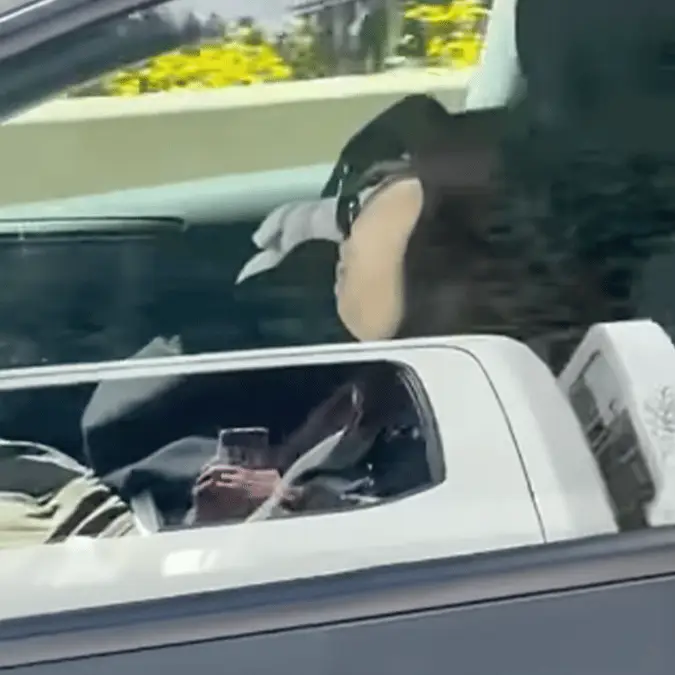
One woman could find herself in trouble with the law after a viral video circulating throughout social media appeared to catch her asleep at the wheel of her Tesla vehicle, which could be escalated if she was using the car's automated self-driving technology at the time.
As reported by CBC, the woman in question is shown in the video with her head slumped on her shoulder while wearing a large pair of sunglasses, and viewers can see her eyes shut at the time which indicates – although does not directly confirm – that she was asleep.
It also appears that she was accompanied by another individual in the car's passenger seat, and the vehicle itself was traveling at a high speed while she was behind the wheel.
While Tesla's self-driving technology, FSD, requires drivers to be ready to take over control at any moment – which was central to arguments made by the car company following a recent crash where the tech was implicated – its involvement here could be key to the legal consequences that the woman could face.
What criminal charges could the woman be subject to?
According to the Royal Canadian Mounted Police, individuals caught being either distracted or fatigued while driving – especially to the point of falling asleep behind the wheel – can be subject to fines of up to $500, a loss of up to 4 demerit points, and even a potential suspension of their licence.
Advert
These charges obviously escalate significantly in the event of a potential accident, but while the woman was driving at a considerable speed at the point at which she was speculated to be asleep, it doesn't appear as if any incident actually occurred.
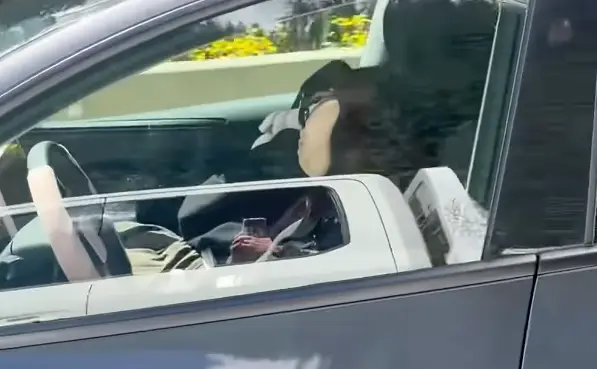
If this was the case, its likely that the presence of a passenger – especially with it being a potentially young child – would be taken into consideration when dealing with the consequences, but this would only be decided after the fact based on the outcome.
What the driver could also find herself subjected to is punishment for breaching the Motor Vehicle Act put in place by the Government of British Columbia, which specifically prohibits the driving of automated vehicles deemed to be Level 3, 4, or 5.
According to the Society of Automative Engineers (SAE), Levels 1 and 2 of automated vehicles refer to driver-assistance features like lane change assist or automatic braking, whereas Levels 3, 4, and 5 refer to technology that does not require the person to be driving when features are enabled.
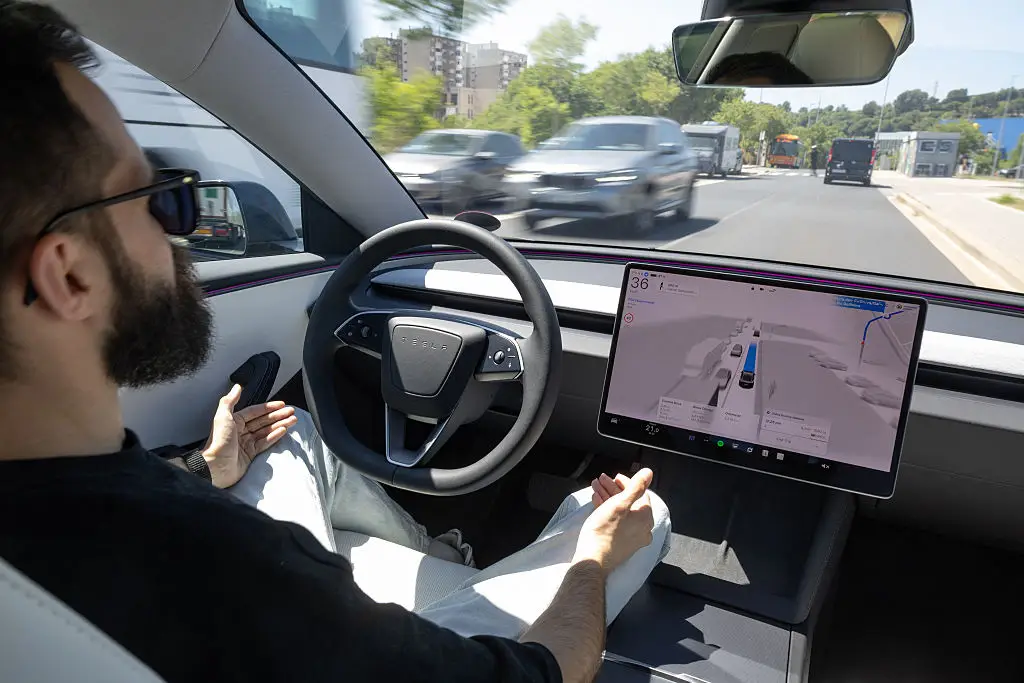
While Tesla's FSD can operate without the input of the individual behind the wheel, it does require drivers to remain attentive and often completes checks to see if they are ready to take over at any moment.
However, if the woman is deemed to have been driving a vehicle that falls into the prohibited categories, she could face a fine ranging between $368 and $2,000, alongside 3 driver penalty points and also potentially six months of imprisonment as the harshest punishment.
Why did the Tesla vehicle not stop FSD from working?
While Tesla vehicles do feature checks that ensure drivers are engaged with the situation on the road, it has been speculated that the driver's large sunglasses prevented (or perhaps fooled) the camera into seeing whether her eyes were open or not.
There are also other features like steering wheel nags that are used to achieve a similar result, yet some drivers have come up with accessories to fool the system and pass these checks while asleep.
Tesla also appears to offer recommendations, as per Futurism, to drivers that are noted as being drowsy to enable FSD as an antidote to falling asleep, despite this being against the company's own mandate.
Speaking to the CDC, British Columbia Highway Patrol media relations officer Michael McLaughlin explained that "you must always be alert, sober, fully-focused on the road, at least one hand on the steering wheel. It is not legal to rely on full self-driving technologies in British Columbia."