Netflix announces new series based on one of the 'most unethical psychological experiments of all time'


Netflix has faced criticism after revealing a revival of the Stanford Prison Experiment, with a new unscripted 'reality' series on the streaming platform remaking the psychological test that was deemed to be incredibly unethical all those years ago.
Shock value is often the best way to draw people's attention on the internet these days, and mixing reality with entertainment only ups the ante when tension is involved.
That is perhaps the motivation behind Netflix's decision to revive the Stanford Prison Experiment — a highly controversial scientific study conducted in 1971 that in retrospect has been widely branded one of the most unethical experiments in history.
Whether this new series, aptly titled 'The New Stanford Prison Experiment', falls into the same trappings remains to be seen, yet there are likely as many people willing to boycott the streaming show as there are desperate to see how the experiment unfolds in the modern era.
Why was the Stanford Prison Experiment so controversial?
Conducted on the Stanford University campus in 1971 by Philip Zimbardo, a psychology professor at the college, the Stanford Prison Experiment collected 24 male college students as participants in a new study aiming to simulate the psychological effects of the prison environment.
Advert

These participants were randomly assigned the roles of prison guards or prisoners, with the former told to prevent the latter from escaping from the experiment.
What was supposed to be a two-week-long study – with participants paid $15-per-day for their time – ended after just six days after a visit from psychologist Christina Maslach discovered the extreme psychological abuse that guards were inflicting upon the prisoners.
Not only have critics of the experiment deemed its findings to be unscientific and fraudulent, but it was also decried for its incredibly unethical practices, leading to a review and significant reforms surrounding experiments with human participants.
When can you watch The New Stanford Prison Experiment?
The New Stanford Prison Experiment is set to premiere on October 21, 2026, with the first season featuring six 45-minute-long episodes for people to enjoy — or look on in horror at, perhaps.
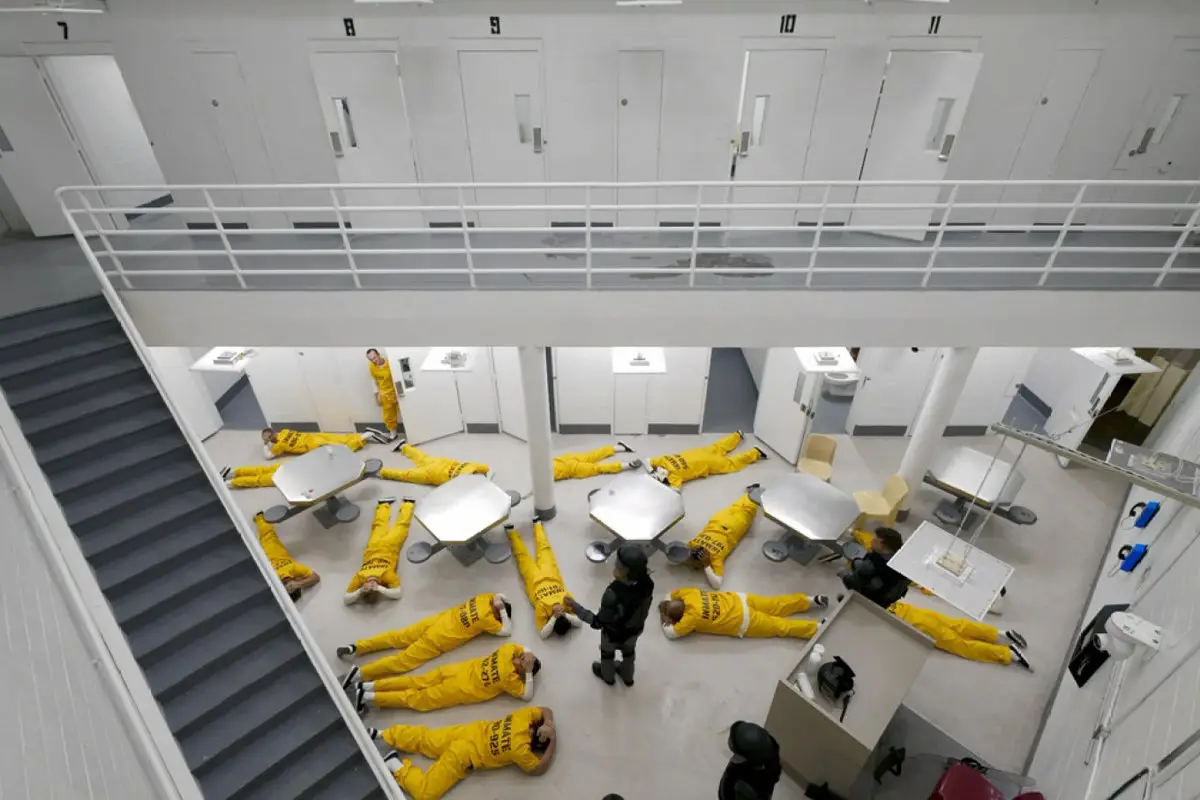
The series is explicitly unscripted and sees 30 human participants enter a real-life prison under similar conditions to the original, with individuals randomly assigned roles as prisoners or guards.
"Thrust into a system of power, hierarchy, and control, they'll discover whether ordinary people inevitably conform to the roles they given — or whether empathy, morality, and individuality can withstand the forces pushing them in the opposite direction," the series' synopsis reads.
"As the pressure builds and the balance of power begins to shift, the central question feels more urgent than ever: Does power corrupt?"
It's safe to say that many viewers have already made their mind up on the series, however, with people on social media lambasting Netflix's decision to revive something they believe should remind in the past.
"Netflix taking one of the most unethical psychological experiments of all time and turning it into a reality show? Why am I not shocked," wrote one concerned commenter on Reddit.
Another argued that the series is "instantly flawed with participants performing for the cameras, completely aware that this is a reality show airing on Netflix. Not an experiment, just torture by enthusiastic 'guards'. What is this mess?"
Executive producer weighs in on ethical concerns
It is surprising that Netflix would be willing to recreate something that has been almost universally panned for its ethical approaches, yet one of the show's executive producers has revealed why she believes it to be more relevant than ever today.
"The Stanford Prison experiment has always fascinated me," said Jane Lipsitz, an executive producer of The New Stanford Prison Experiement, as per Variety. "Despite its serious ethical flaws, it asked a fundamental question that feels even more relevant today: how does power affect ethical choices?
"Getting the opportunity to reimagine this social experiment was one of the most intense, exhilarating – and definitely nail-biting – experiences we've ever had," she continued, noting that "Netflix has always been an incredible supporter of ambitious projects that take risks, push boundaries, and tell challenging stories, so we were incredibly grateful to have them as our partners on this one."