A major country just introduced an under-16 social media ban with eye-watering $2.5M fines


There are further concerns about what young people access online, with one major country imposing a social media ban on those under 16. More and more governments are discussing what younger generations are being exposed to, and while a lot of the debate is focused on X-rated sites, it's now expanded to the various social media platforms and their potential to deliver everything from pornography to violence.
Some have accused governments of initiating a Big Brother-inspired culture of censorship, but at a time when doctors are comparing social media to class I carcinogens, there are arguably just as many on the other side.
Earlier this year, even the United Kingdom floated the idea of banning under-16s from social media. However, it was over to Australia to make the landmark first ban, slapping the likes of Instagram, TikTok, Facebook, and X with a potential AU$49.5 million fine (equivalent to $35.5 million) if they don't restrict under-16s from accessing their services. Now Malaysia have begun taking action on a nation-wide ban on social media for under-16s.
Advert
Others, including Brazil and Indonesia, have followed suit, but now, another major country is bringing down its hammer.
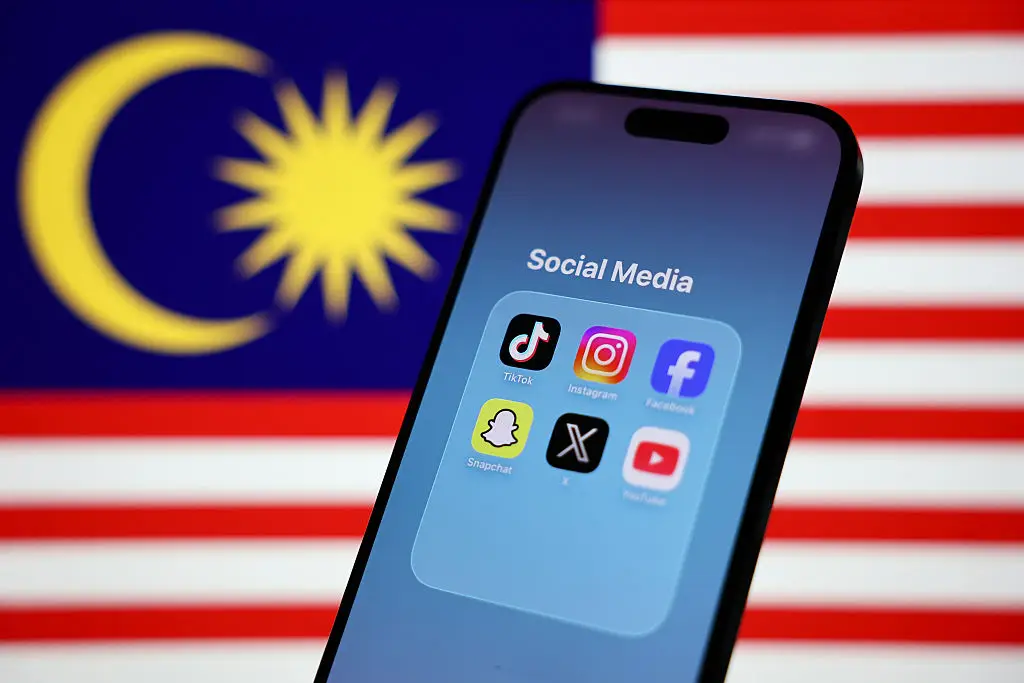
Malaysia’s Communications and Multimedia Commission has vowed to progressively roll out its ban over the next six months, demanding that platforms boasting at least eight million users block people under the age of 16 from creating accounts.
For the time being, those who are identified as under 16 will have a month to download and transfer their data. This includes photos and videos which will be lost forever when the restrictions come into play.
As for the companies that don't comply, they'll face penalties of 10 million ringgit ($2.5 million).
Similar to what's happened in Australia, there are obvious questions about how under-16s might try and circumvent the rules, especially with their parents technically able to create accounts on their behalf. In Malaysia, parents will not be penalized if they create accounts for their children. This could cause problems for social media platforms unless they find a way to ensure the new rules are being enforced.
According to Associated Press, Malaysia's Communications and Multimedia Commission has defended its moves, adding: "These measures help strengthen the protection of children in the online environment, while providing added reassurance to parents in navigating increasingly complex digital risks."
Not everyone is as hopeful, with Clara Koh, Meta’s director of public policy for Southeast Asia, cautioning that a ban on under-16s could push them to unregulated corners of the web. She reminded naysayers that Meta has launched 'teen accounts' for under-18s, created with the sole aim of limiting contact, screen time, and teens being exposed to inappropriate content.
It was these same arguments we saw Pornhub use to clap back against its bans in various countries, arguing that it's more regulated than other parts of the internet.
Benjamin Loh, social science lecturer at Monash University in Malaysia, has shared his concerns, worried that social media companies might be storing our sensitive personal data without having safeguards. He concluded that past experiences suggest people will continue trying to get around the laws: "This is a major gap that unless regulators are willing to fix, will result in the law having little effect in stopping children from using social media."