Russia issue surprise statement responding to US announcement of weapons in space


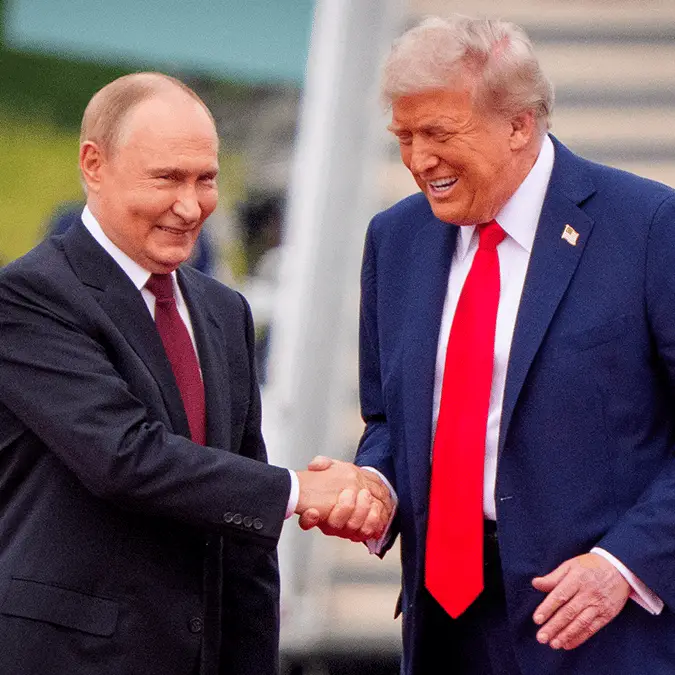
Russia has issued a surprising response to news that the United States is operating weapons in space, calling for a 'complete demilitarization' of the realms beyond our planet despite not being subject to the Outer Space Treaty themselves.
While many had speculated it for a while, the US Space Force (USSF) finally confirmed that it is indeed operating weapons of an unknown form in Earth's orbit, putting the constraints of previously-signed agreements into question.
Ever since the possibility of space exploration became a reality it has been imperative for many countries to reach a shared agreement on how the intergalactic arena should be treated, with peace and common good at the forefront.
That could soon be challenged, however, with the United States asserting its military might as a means of defense — and while many expected Russia to react with matching aggression, America's close rival has taken a somewhat unexpected stance.
How has Russia responded to US space weapons?
As reported by Kyiv Post, Kremlin spokesperson Dmitry Peskov issued the response that many had been waiting for, directly condemning the confirmation of weapons in space from the USSF.
Advert

"We believe that space must be free of any weapon," he told reporters. "We are counting on broad international consolidation to continue working towards the complete demilitarization of space."
These beliefs were echoed by officials from China – who is co-leading the International Lunar Research Station (ILRS) alongside Russia – as a spokesperson urged the United Nations to "stop preparing for war in outer space."
This does appear to suggest that neither country is willing nor able to take part in an intergalactic war – of which would have consequences that could bring the world to a halt – but the United States appear unwilling to budge despite these calls, and even amid criticism in relation to the Outer Space Treaty.
Are space weapons allowed under the Outer Space Treaty?
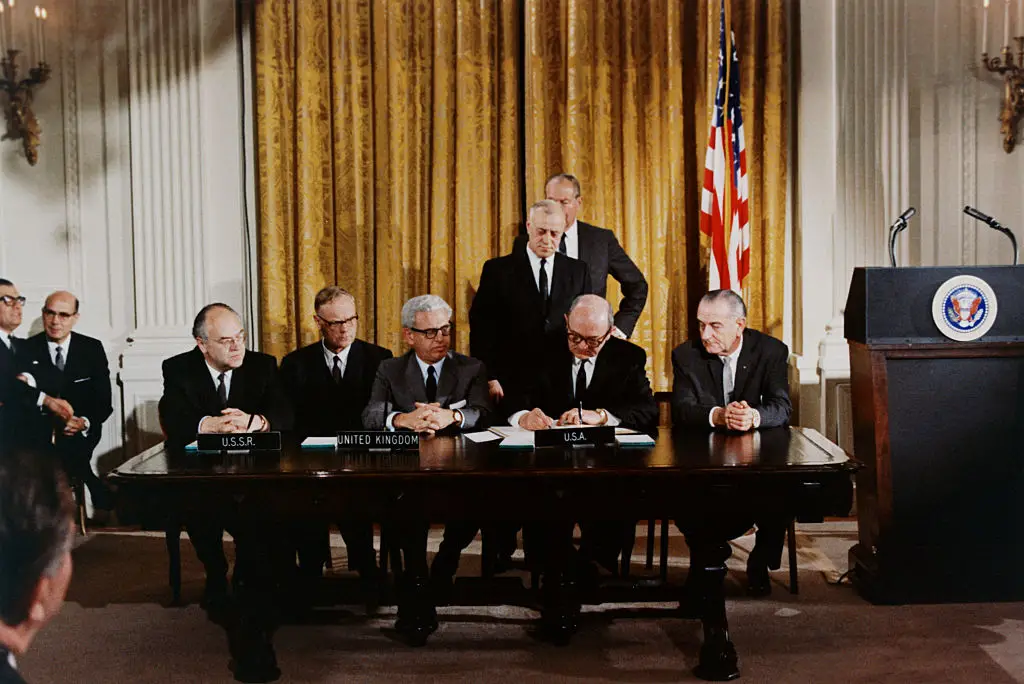
Originally signed in 1966, the Outer Space Treaty was designed as a legal framework for the exploration and use of outer space, which before then was a lawless zone.
All nations that have signed on to the treaty agree that "the exploration and use of outer space shall be carried out for the benefit and in the interests of all countries and shall be the province of mankind."
It also mandates that "states shall not place nuclear weapons or other weapons of mass destruction in orbit or on celestial bodies or station them in outer space or in any other manner."
What complicates things in terms of the deployment of new space weapons from the USSF is the form they take, as it's likely that American officials would deem them exempt from this particular ruling.
We don't have any information regarding the weaponry they possess, but it would only be explicitly against the treaty if it were deemed to be nuclear or a 'weapon of mass destruction', whereas USSF officials have discussed them more as defensive measures.
Where critics like Russia and China might have ground, however, is deeming these weapons to be not for the benefit and interests of all countries, as they would presumably be used in opposition to a rival nation's actions.
However, the United States could equally argue that those parameters have already been breached through the use of satellite imagery for military action, with a report from the Wall Street Journal revealing how Iran used data from Chinese satellites in strikes that killed three US soldiers.