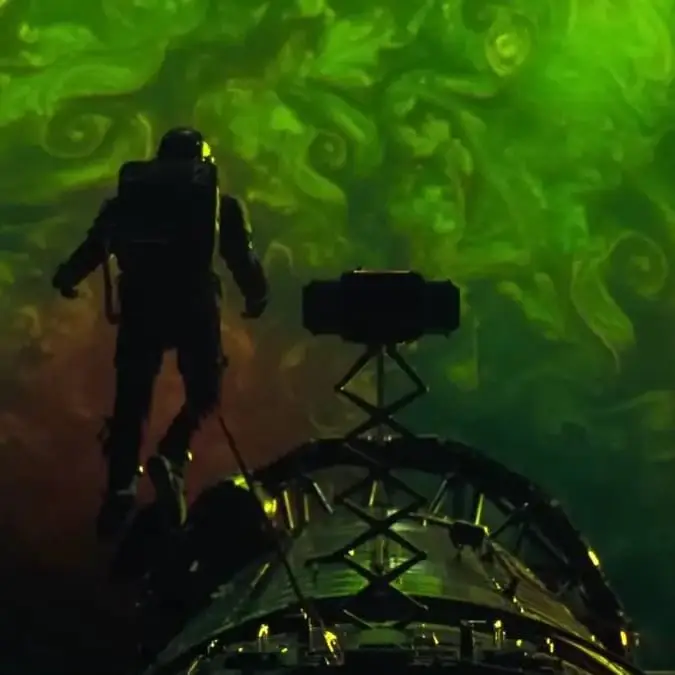
Exactly how accurate the science is in Project Hail Mary after soaring at box office


Warning: Project Hail Mary spoilers ahead
The biggest blockbuster of 2026 is here, and while the likes of Pixar's Hopper's and Paramount's Scream 7 have defied box office projections, they've been blasted into space by Project Hail Mary. Directed by The Lego Movie's Phil Lord and Christopher Miller, with a script from The Martian's Drew Goddard, the Ryan Gosling-led sci-fi spectacular has been declared a certified hit with the best-performing non-franchise opening weekend since Oppenheimer released in 2023.
Given Goddard's hand in Project Hail Mary, it might not come as much of a surprise that both this and The Martian are based on books from Andy Weir.
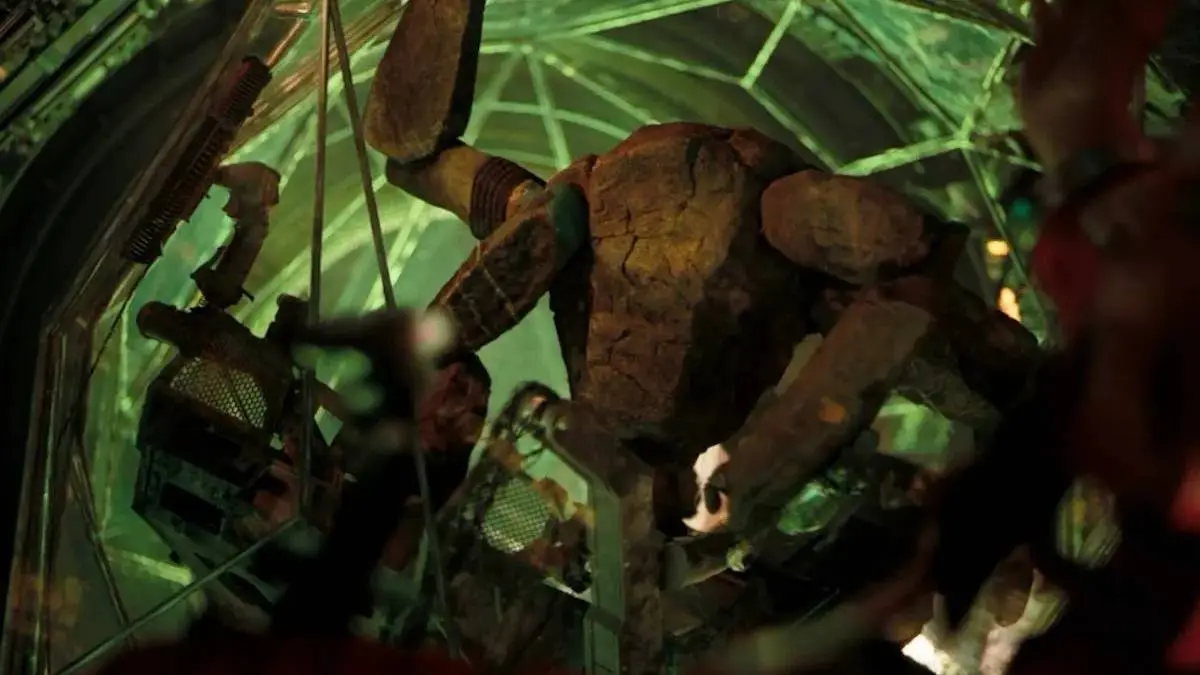
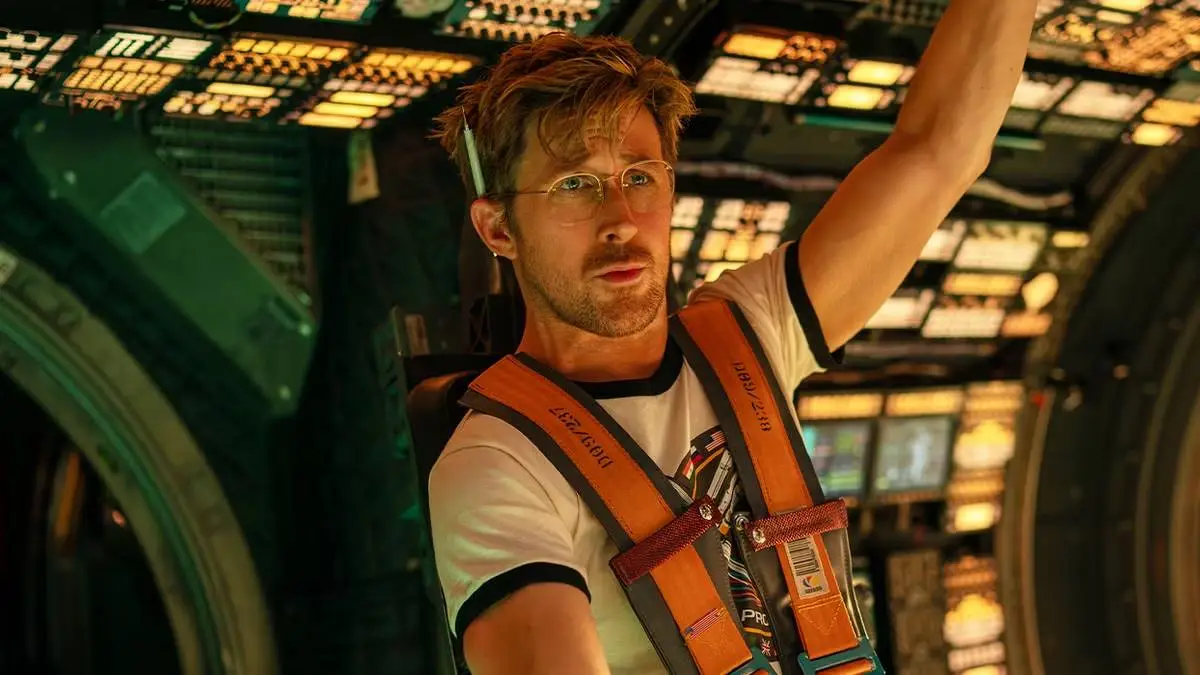
Project Hail Mary follows Gosling's Ryland Grace as a science teacher who ends up alone in space, trying to prevent the potential extinction of our Sun and the demise of the human race. Playing out as a heartwarming buddy film, Grace's plight is improved when he crosses paths with a rock-like alien he dubs Rocky.
Advert
Even though five-legged rock creatures from 40 Eridani probably don't exist, Project Hail Mary is apparently spot on in several other scientific areas.
Who wrote Project Hail Mary?
Speaking to Rolling Stone, Weir says that his method is to reverse-engineer his stories by focusing on a scientific problem and working back to build the plot around it. Like The Martian looked at how you could survive alone on Mars, Project Hail Mary homes in on currently impossible space travel. Still, Weir claims he's not as smart as his novels might make him seem, telling the outlet: "I know more than the layman about science, but not as much as real scientists, so I know enough to search for what I don’t understand.
"It’s easy for me to write characters that are way smarter than I am, because I can spend two weeks working on a problem and say the character solved it in five minutes.
“When you stick to real science, that science will help you create the plot and the challenges."
While the movies based on his work have been praised for attempting some sort of scientific realism, they aren't perfect. The Martian had NASA physicist Dr. Jim Green among its advisors, and although Neil deGrasse Tyson didn't consult on Project Hail Mary, he apparently approves of its scientific accuracy.
How accurate is the science in Project Hail Mary?
Scientific American has headed to the lab, and although some of the science is a little 'hand-wavy,' other bits are more grounded than you'd think.
Taking Albert Einstein's E = mc2, the movie’s fictional Astrophage alien microbe could technically use the Sun’s energy to create neutrinos in their cell membranes and convert the mass back into energy to blast out as thrust and be used as fuel.
Key locales like Tau Ceti and 40 Eridani are real locations, with the first being a star that's about 12 light-years away from Earth, and 40 Eridani a star system that's 16 light-years away. Similar to most life on Earth, Astrophage has mitochondria, which lines up with the idea that terrestrial life and Astrophage have a common ancestor. Carnegie Science astrobiologist Mike Wong knows that mitochondria evolved on Earth, but added: "There’s plenty of life on Earth that doesn’t have any mitochondria, like the bacteria and archaea.
“If there was an origin for life in the greater cosmic neighborhood, it would seem that Earth would have to be the origin."
As with many sci-fi movies, artificial gravity rears its head. The Martian used a spinning spacecraft to create artificial gravity, and in Project Hail Mary, it's down to centripetal force.
Drew Feustel is the lead astronaut at a private space station company called Vast and served as one of the movie's technical consultants, noting that the concept of a spinning habitat is already on Vast’s list of priorities. Still, Project Hail Mary might be wrong about the concept of simulating gravity while on land.
Finally, the biggest bugbear for some is how a simple middle school teacher can be fast-tracked as an astronaut. Former NASA astronaut Mike Massimino points to the agency training 'payload specialists' between 1983 and 2003. These people had little critical mission-critical knowledge, with Massimino saying that what you needed to know depended on specific missions and other crew members. At the very least, you'd need knowledge on "what you need to be able to do is make a meal and use a toilet and know all the emergency procedures.”
Fustel concluded that one thing Project Hail Mary nailed is how difficult life in space really is without romanticizing it: "It’s very unglamorous. That’s the reality of it."