
Neil DeGrasse Tyson believes we're all living in a simulation and there might be proof to back it up


American astrophysicist Neil DeGrasse Tyson believes that we are all living in a simulation and it turns out that there could actually be proof to back up what he’s saying.
This is a theory that has been speculated on for years - is everything in the universe real or is it all a simulation?
Tyson seems to think so and he believes that, while humans aren’t intelligent enough to build a simulation of that scale, it could be the expertise of a smarter civilization.
But now it seems like there could be more to the theory than just wild guesswork.
Advert
This is because Melvin Vopson, who is a researcher from the University of Portsmouth, has claimed there could even be signs that a simulation is our reality.
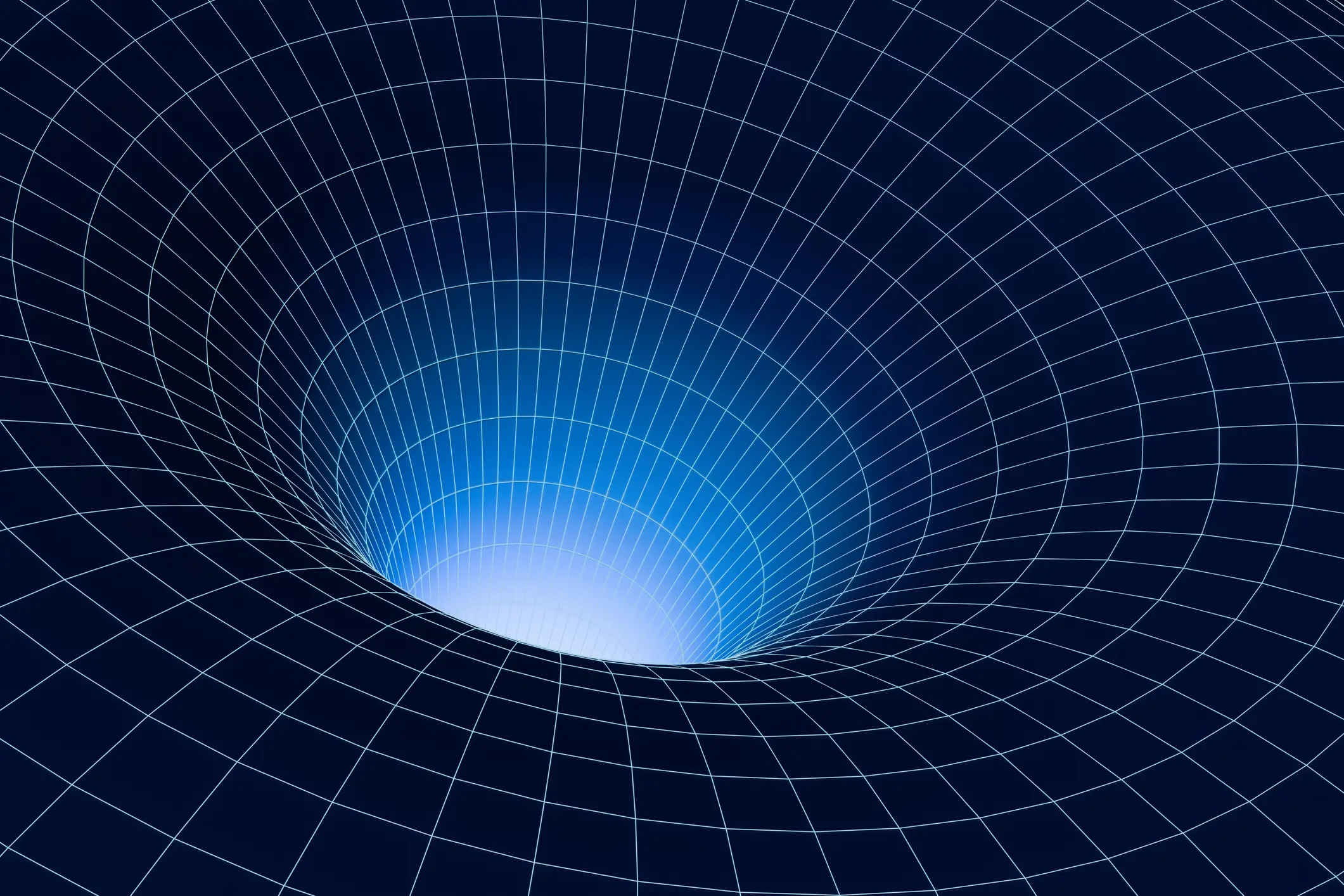
In an article published by AIP Advances, Vopson presented his findings which he believes indicates that gravity or gravitational force is actually the result of a computational process within the universe.
He explained: “My findings in this study fit with the thought that the universe might work like a giant computer, or our reality is a simulated construct. Just like computers try to save space and run more efficiently, the universe might be doing the same. It's a new way to think about gravity - not just as a pull, but as something that happens when the universe is trying to stay organized.”
So instead of gravity being a force of attraction that acts between all objects with mass or energy in the universe, it could be a result of the universe ‘trying to keep information tidy and compressed’.
In his research, the expert went on to suggest that mass and ‘all elementary particles’ store information about themselves similar to the way DNA works.

Vopson has said that ‘space pixelation in elementary cells can act as a data storage medium’ and each cell is able to register information in the form of binary data.
He continued: “The process is identical to how a digital computer game, virtual reality application, or other advanced simulation would be designed.”
Vopson added: “This triggers the attracting force because of the rule set in the computational system, requiring the minimisation of the information content, and by extension, a reduction of the computational power. Put simply, it is far more computationally effective to track and compute the location and momentum of a single object in space, than numerous objects. Therefore, it appears that the gravitational attraction is just another optimising mechanism in a computational process that has the role to compress information.”
Could it be a far stretch or something scientists have been missing for years?