uniladtech homepage
  • News
    • Tech News
    • AI
  • Gadgets
    • Apple
    • iPhone
  • Gaming
    • Playstation
    • Xbox
  • Science
    • News
    • Space
  • Streaming
    • Netflix
  • Vehicles
    • Car News
  • Social Media
    • WhatsApp
    • YouTube
  • Advertise
  • Terms
  • Privacy & Cookies
  • LADbible Group
  • LADbible
  • UNILAD
  • SPORTbible
  • GAMINGbible
  • Tyla
  • FOODbible
  • License Our Content
  • About Us & Contact
  • Jobs
  • Latest
  • Archive
  • Topics A-Z
  • Authors
Facebook
Instagram
X
TikTok
Snapchat
WhatsApp
Submit Your Content
NASA astronauts likely to experience severe impacts on their bodies when they finally return to Earth after 252 days stranded

Home>Science>Space
Published 11:27 13 Feb 2025 GMT

NASA astronauts likely to experience severe impacts on their bodies when they finally return to Earth after 252 days stranded

Two astronauts have been stuck in space since June 2024

Rikki Loftus

Rikki Loftus

google discoverFollow us on Google Discover
Featured Image Credit: Joe Raedle/Getty Images
Space
Nasa
Health
Science

Advert

Advert

Advert

The NASA astronauts who are stuck in space are likely to experience severe impacts on their bodies when they finally return to Earth.

Sunita ‘Suni’ Williams and Barry ‘Butch’ Wilmore have been stranded in space since June 2024 and it is expected to have taken a toll on their bodies.

What was meant to be an eight day mission has lasted months after they ran into some serious issues with their spacecraft Boeing Starliner spacecraft’s propulsion system.
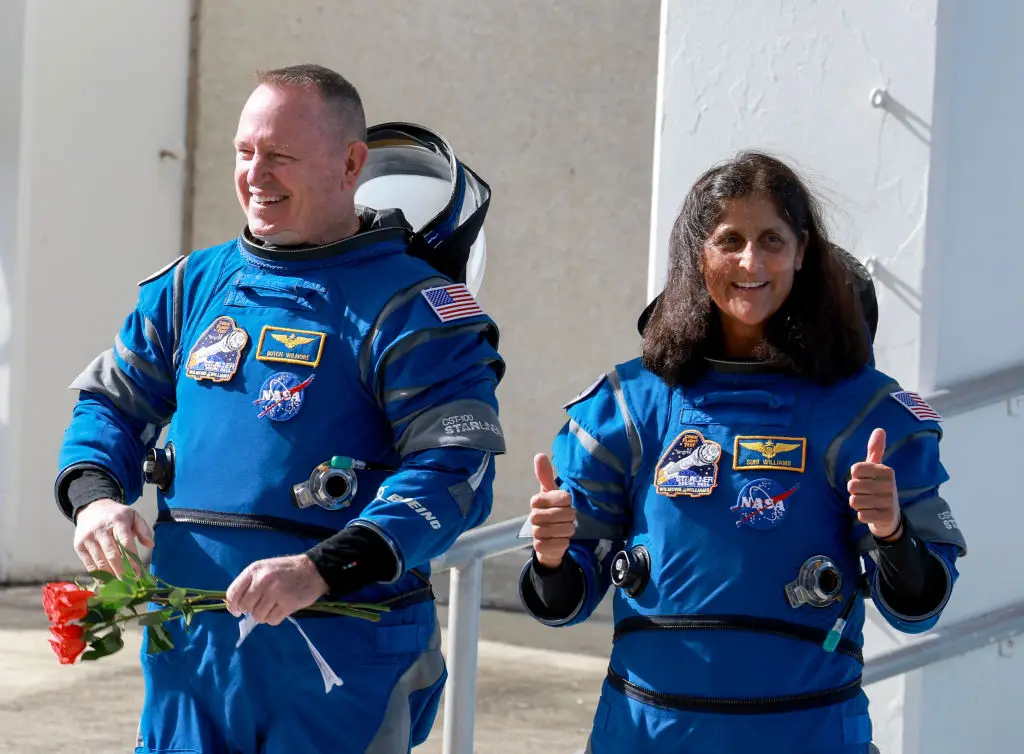
Two NASA astronauts have been stuck in space since June 2024 (Joe Raedle/Getty Images)

Advert

Five of the spacecraft’s maneuvering thrusters had reportedly stalled, with five helium leaks and a faulty propellant valve.

Boeing had insisted that the spacecraft was safe, allowing thruster tests that had taken place both in space and on the ground.

However, NASA deemed it too unsafe for the pair to return to Earth and instead, the spacecraft returned empty.

Williams and Wilmore have been patiently waiting in orbit ever since and, after 252 days stuck on the International Space Station, it is hoped that the pair will finally make their return in March.

This is when they are due to be picked up by a SpaceX spacecraft carrying Crew-9.

But spending that much time in space will come with some physical side effects.

In fact, one astronaut who recently returned to Earth had to be hospitalized overnight, although the reason hasn’t been made public.
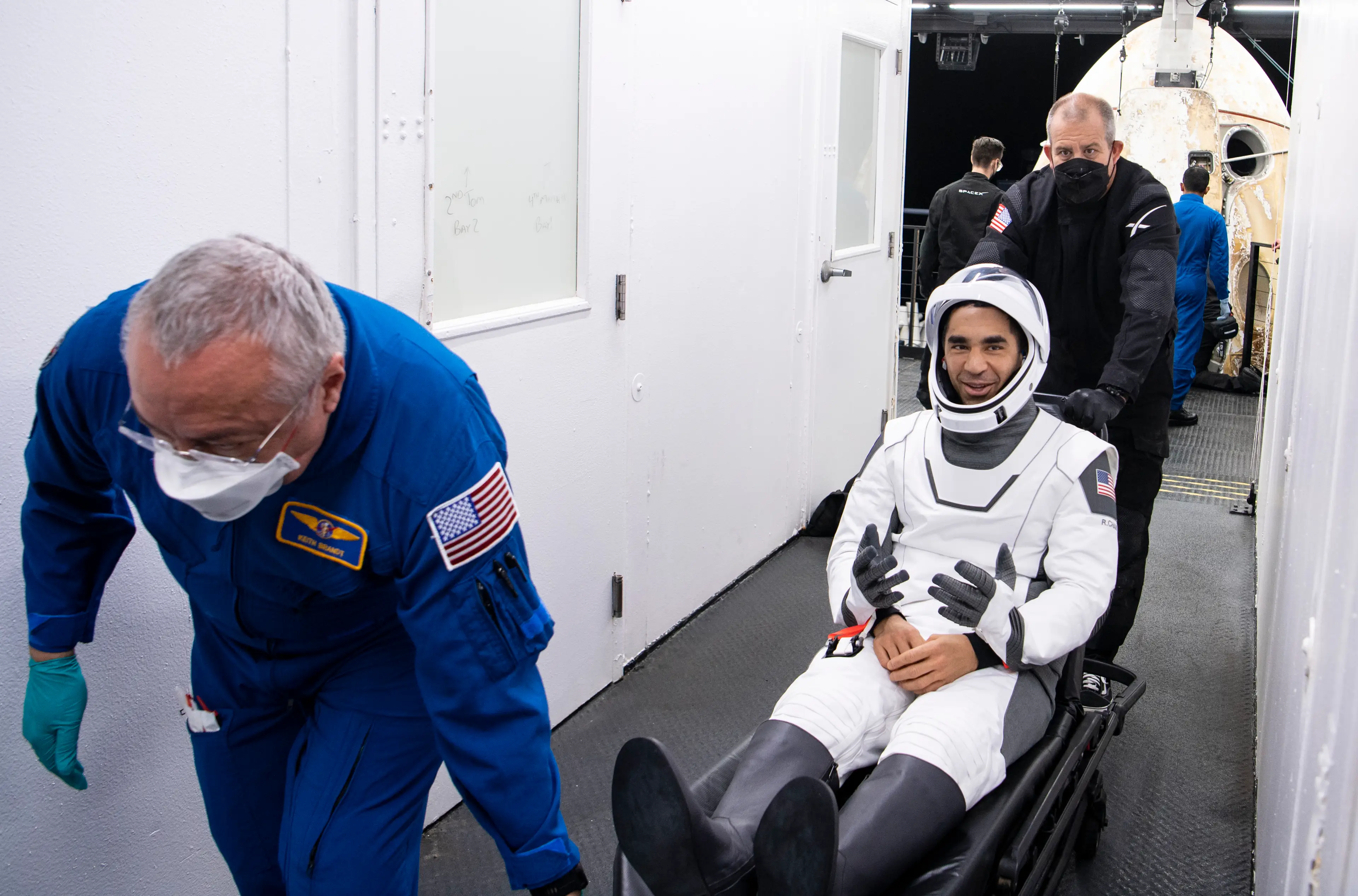
Astronauts usually need to be helped out of the spacecraft (HUM Images/Universal Images Group via Getty Images)

What are the physical effects of time in space?

One thing that can be impacted by spending time in space is your bones. When you’re not standing on your feet, carrying your body around, the bones in your feet stop producing healthy new tissue and start to weaken.

This has the potential to spark space-related osteoporosis.

Muscle mass is another body part that starts to break down in space, as well as effects on the cardiovascular system.

The heart doesn’t have to work as hard to pump blood around the body in space, which ends up weakening the heart muscle.

How can astronauts combat the effects of space?

Luckily, there are things that astronauts can do while in space to slow down the changes to their body.

People living on the ISS follow a strict routine that includes two hours of exercise a day.

There are specialized weightlifting machines that pull downwards to create resistance.

There are also treadmills that the astronauts can strap themselves into.

In fact, during a previous space mission, Williams even completed the Boston Marathon on one of them.

Choose your content:

an hour ago
a day ago
  • Erik Simonsen / Getty
    an hour ago

    How to see asteroid as big as five cruise ships visible from Earth this Saturday

    1997 NC1 was discovered in 1997, and will come the closest to Earth in 400 years

    Science
  • NASA Johnson
    a day ago

    Scientists sound the alarm over the environmental impact of NASA’s plan to deorbit the ISS

    Plans to dump the space station in the sea have been challenged by experts

    Science
  • Curtin University
    a day ago

    An asteroid slammed into Earth 3,000,000,000 years ago and we finally know where it hit

    The North Pole Dome impact structure is nowhere near as cold as its name would suggest

    Science
  •  NASA Johnson
    a day ago

    Experts expose a ‘troubling’ legal loophole in NASA's plan to dump the ISS in the Pacific

    The isolated Point Nemo is already known as a 'spacecraft cemetery'

    Science
  • Brutal recovery Artemis 2 astronauts face following return to Earth as bodies struggle with gravity
  • NASA orders emergency evacuation after Russia threatened to use a 'saw' on the ISS
  • NASA finds remnants of an ancient world blasted apart 155 million years ago
  • NASA report reveals failures that left two astronauts stranded for nine months to be one of worst in its history