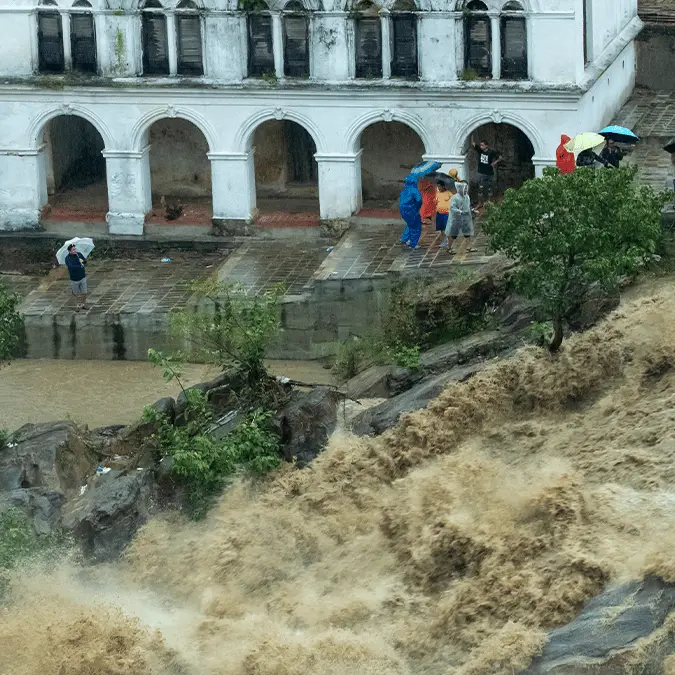
New map shows 15 million people are at risk of a Nepal-style flood disaster


Climate change threatening permafrost in mountains across the world could lead to an increase in devastating Nepal-style floods, leaving over 15 million people at risk right now worldwide.
These hypothetical danger zones don't just exist in the same mountain ranges across Nepal and wider Asia, but also are present within the United States and Canada – specifically impacting the north west and parts of Alaska's western coast.
Addressing the concerns that climate change could cause, Dr Jonathan Carrivick – a scientist specializing on glacial flooding at the University of Leeds in England – revealed to the Daily Mail:
"North America could experience something similar to what we see in Nepal today," noting that the worsening climate makes "the likelihood of these sort of events – possibly bigger – more frequent."
Advert
Unfortunately the seeming inevitability of climate change and associated destruction across the globe makes the reality of these natural disasters almost impossible to avoid, and that only looks to be cemented with the increased power demands and environmental impact of AI as it takes over the world.
Which areas are most at risk for extreme flooding
According to a new paper published in Nature Communications, more than 15 million people across the world are exposed to what's known as glacial lake outburst floods (GLOFs), with more than half of that number existing in just four countries: India, Pakistan, Peru, and China.
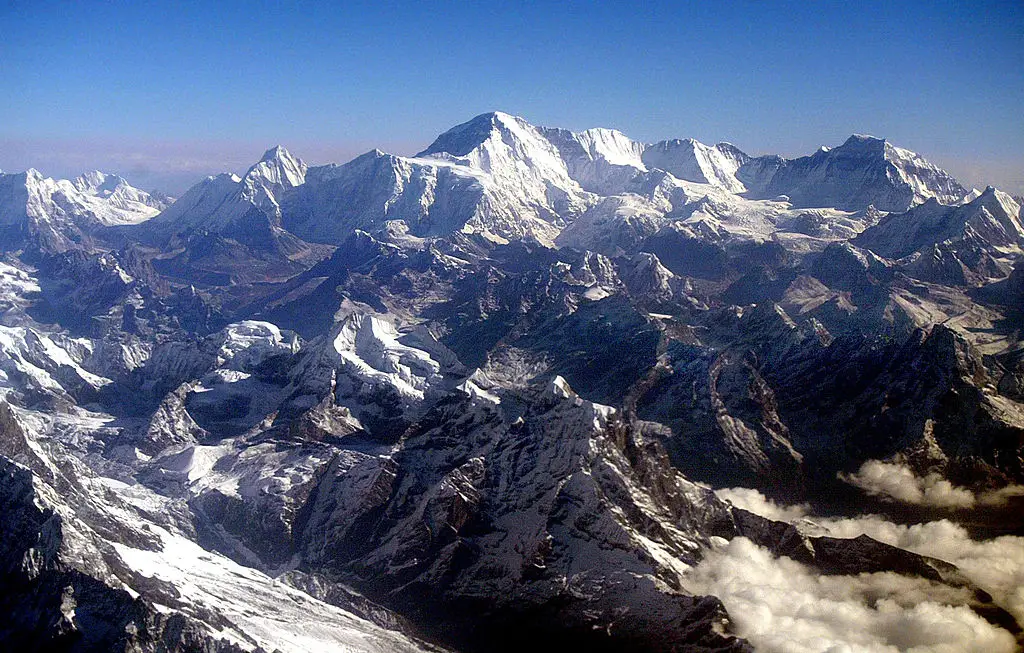
High Mountain Asia (HMA) – an areas covering ranges like the Himalayas, Karakoram, Hindu Kush, Pamirs, and Tian Shan – remains the most exposed area, with roughly 1 million people living under 10 kilometers (6.21 miles) of a glacial lake potentially at risk of turning into a flood, those aforementioned four nations bring the biggest risk in terms of sheer population.
"While HMA has the highest potential for GLOF impacts, we highlight the Andes as a region of concern," the study outlines, "with similar potential for GLOF impacts to HMA but comparatively few published research studies."
Was Nepal flooding caused by melting glaciers?
There hasn't yet been a definitive answer to the cause of recent flooding in Nepal – which has reportedly killed hundreds of individuals with more than 1,500 still missing after the natural disaster swept across the Nepal-Tibet border – scientists do believe that it originated from a glacial collapse.
This is different from a GLOF, which related to the sudden release of meltwater from a glacier after an unstable natural dam breaks, as it is understood that a massive rock failure was at the heart of this particular catastrophe.
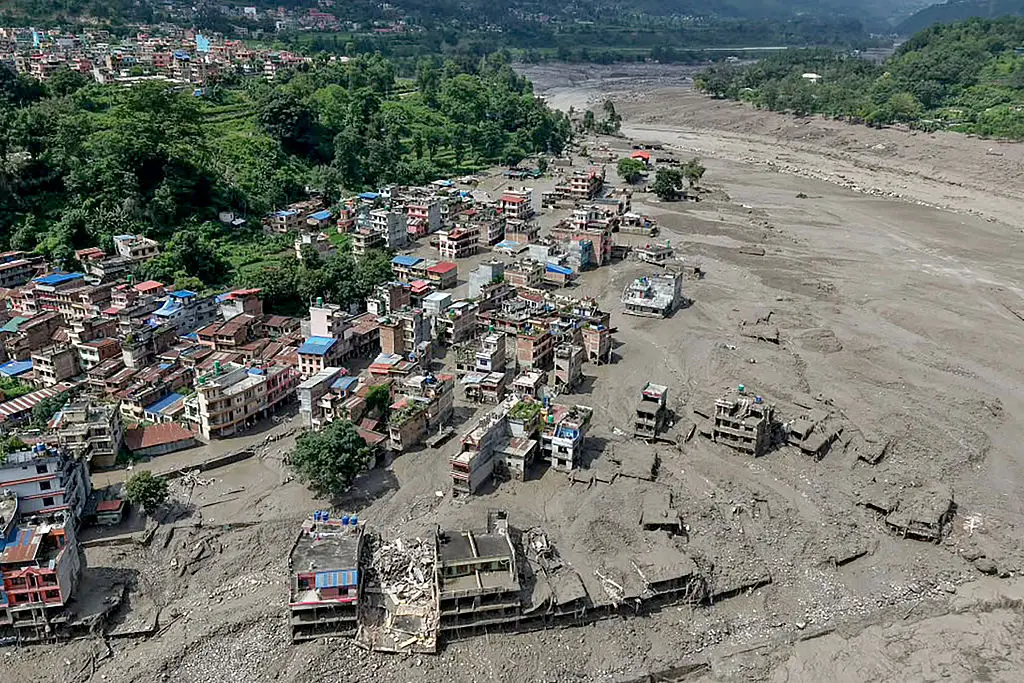
It is believed to have taken part of a glacier with the landslide, sending both ice and rock speeding down the mountain to be mixed with sediment that eventually blocked the Lhende Khola River.
Consequently, a dam built up similar to that of a GLOF, which eventually broke triggering a flood that reached an elevation of around 800 meters (2,600 feet) as it crashed through civilization.