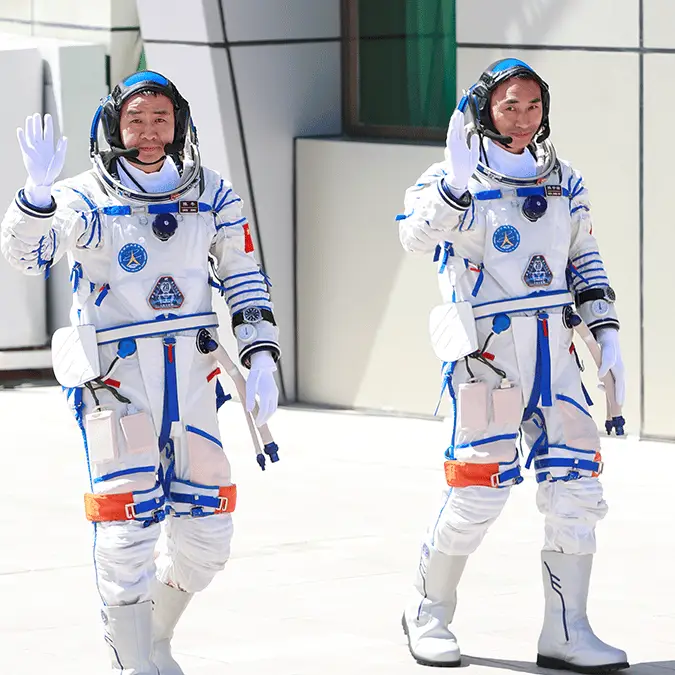
Officials issue plea as Chinese astronauts are left stranded in space after being struck by object


While the likes of logging, mining, and fishing are held as some of the most 'dangerous' jobs in the world, we don't imagine being an astronaut is exactly a walk in the park. History is littered with tragedies, including the Space Shuttle Challenger and Columbia crashes, proving that when something goes wrong up there, it tends to go wrong in a big way.
Even though we know less about our oceans than we do about space, it doesn't make it any less deadly. There are already fears that Elon Musk's hopes of colonizing Mars will lead to mass deaths, but as we aim to get mankind back on the Moon for the first time since 1972, the space race is well and truly back on.
You might remember when the world was gripped by the story of Butch Wilmore and Suni Williams, with the two NASA astronauts marooned on the International Space Station for 286 days.
In a bizarre case of history repeating itself, China recently faced a similar dilemma when its Shenzhou 20 astronauts were stranded aboard the Tiangong Space Station when their return craft was hit by debris.
Advert
After Musk and President Donald Trump were praised for helping bring Wilmore and Williams home, there were calls for the pair to put their differences aside and do it to rescue Chen Dong, Chen Zhongrui, and Wang Jie.
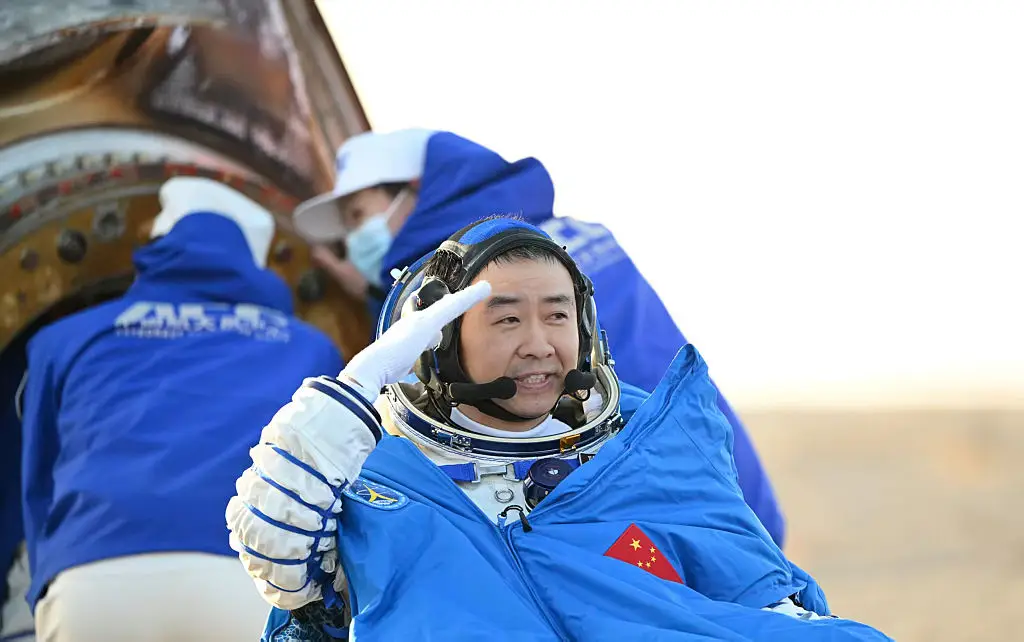
The trio is now home thanks to borrowing the Shenzhou 21 spacecraft on November 14, but by doing so, it’s left the Shenzhou 21 crew with a still-damaged vehicle that's unsafe for reentry.
This domino effect could continue, although technicians are supposedly working on an uncrewed Shenzhou 22 craft to remotely pilot itself to Tiangong.
Incidents like this and the one involving Wilmore and Williams have raised concerns about our ability to rescue astronauts who face unexpected problems like damage to their return vehicles.
This was raised by the RAND Corporation's Jan Osburg, with the senior engineer saying the global policy think tank needs to look at what can be done.
Speaking to Space.com, Osburg explained: "Government programs typically have more time and funding for contingency procedures of their own, compared to private missions. Also, government missions typically go to space stations."
Referring to the ISS and Tiangong as 'safe havens', he highlighted how the issue of rescuing those blasting off into space will likely become more of a hot topic as the industry booms.
Osburg suggests that compatible docking systems to transfer travellers from a vehicle in distress to another could be one option, as well as compatible communications systems alongside rescue coordination procedures and responsibilities between different organizations. We've seen this evolve in the maritime world over the past few decades, so it could be time to apply it to the stars.
James Lewis, the associate chief (acting) and NASA's International Docking System Standard (IDSS) Committee Chair in the structural engineering division, questioned what systems China used, adding: "Since we are precluded by U.S. law from even talking to China, we do not have a clear answer if they adhere to or meet-the-intent of the IDSS Interface Definition Document (IDD)."
Lewis says that what we know about China and Russia's space technology is largely pulled from the internet, as all sides are notoriously secretive about their capabilities.
Brian Weeden, director of civil and commercial policy at the Center for Space Policy and Strategy for The Aerospace Corporation, concluded that we need to start working together: "We're now in an era where there's multiple governments, multiple companies involved in space. So the shift is not just one organization needing to think about space rescue for their own needs.
"Rather, how does the global community think about space rescue that is more integrated across different missions, across different agencies, across different countries? That is a much harder problem because of the need to communicate and interact."