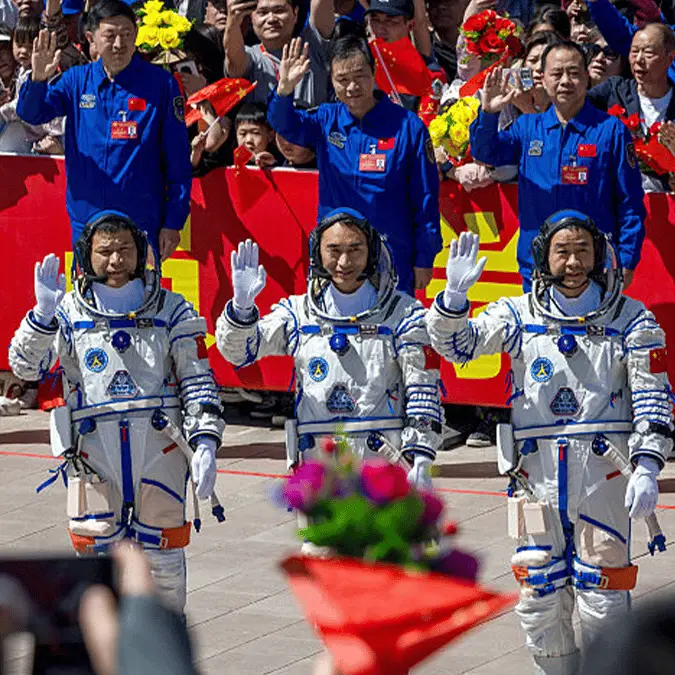
How much money stranded astronauts could get paid after being 'struck by unknown object' delays return


What is it about astronauts getting stuck in space? While our trips to the stars continue to become more advanced than ever, it's hard to imagine that the technology powering Apollo 11 was just a fraction of the processing power in our modern smartphones.
Even though NASA astronauts Butch Wilmore and Suni Williams were stranded in space for 286 days, their ordeal pales in comparison to Francisco 'Frank' Rubio's 371 days in space, or what about Russian cosmonaut Valeri Polyakov holding a record-breaking 437.75 days?
Wilmore and Williams were supposedly compensated far less than you'd think for their extended stay in space, but what about the three Chinese astronauts who currently find themselves marooned on the country's Tiangong space station?
What happened to the Shenzhou-20 mission?
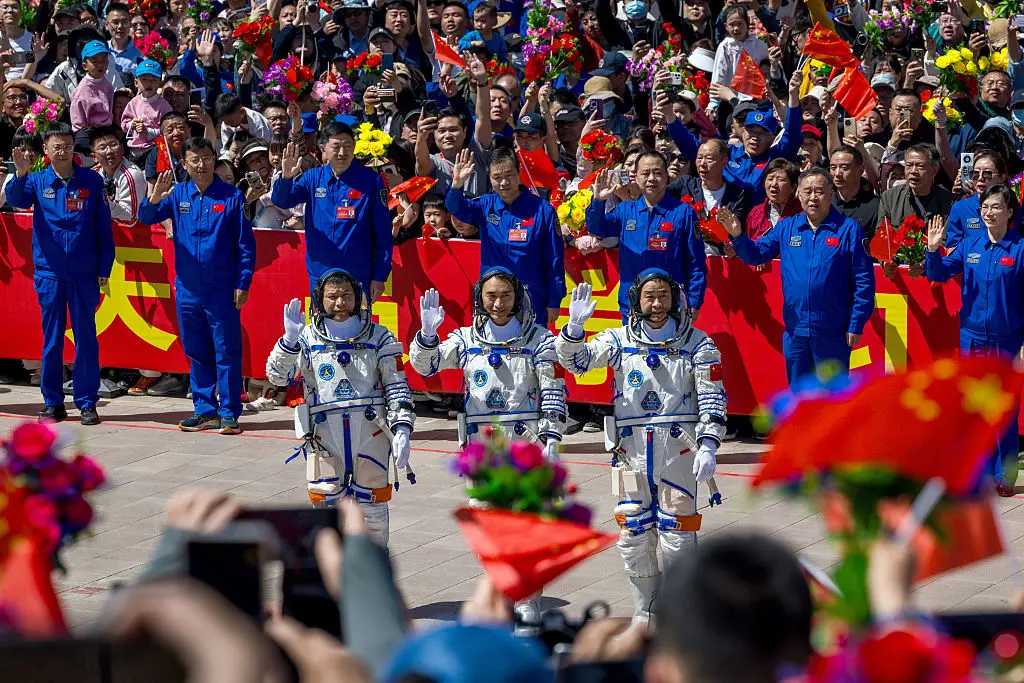
Considering Chen Dong, Chen Zhongrui, and Wang Jie were hoping to be back on terra firma by now, we're sure they're not too impressed about having to unpack their bags for a longer visit.
Advert
Damage was found in their capsule's hull, with officials from China’s Manned Spaceflight Agency (CMSA) claiming a piece of space debris caused it. The agency explained: "The Shenzhou-20 manned spacecraft is suspected of being hit by a tiny piece of space debris, and an impact analysis and risk assessment are under way."
Their replacements had already arrived at Tiangong via the Shenzhou-21 mission, meaning things are currently a little cramped up there.
The two crews are working together to try and figure out whether they need to repair the original craft, with the CMSA clarifying: "To ensure the safety and health of the astronauts and the success of the mission, it has been decided that the Shenzhou-20 return mission, originally scheduled for 5 November, will be postponed.”
There's no word on how long the delay will take or whether the stranded astronauts could use the Shenzhou-21 craft as a replacement return vehicle.
Being struck by space junk is no laughing matter, with continued reports that the likes of Elon Musk's Starlink satellites are contributing to the mounting concerns about Kessler syndrome. As this kind of junk can be hurtling around up there are 27,000 km/h, incidents like the Shenzhou-20 one prove just how deadly this can be.
Will the Shenzhou-20 astronauts get paid overtime?
Before you think the trio of astronauts (known as taikonauts in China) will be rubbing their hands with glee about a bumper payout, remember that they're classed as career military officers or government employees under the People’s Liberation Army (PLA) Air Force and the CMSA. This means their pay and any potential overtime benefits are governed by military salary regulations instead of civilian labor laws.
As well as being paid a base salary, they can expect extra allowances depending on the risk of a spaceflight and the time spent on orbital duty. These are set before a mission and don't work in the same way as hourly wages.
Internal CMSA policy could grant them more for an extended stay aboard Tiangong, although NASA, the European Space Agency, and Roscosmos astronauts are also salaried government employees who have mission-based bonuses.
According to Salary Expert, the average base wage for a Chinese astronaut is ¥213,397 ($30,000) a year, coupled with a ¥4,887 bonus.
Assuming a mission was extended by a month, and using the base salary as an estimate, they might expect an extra $2,500 if it were proportional to time and excluded the mission-specific hazard pay.
As the Chinese government doesn't publish full figures and compensation likely includes the likes of rank and years of service, it's tough to estimate. Then again, there could be a beefy bonus waiting for them when they're back on Earth.