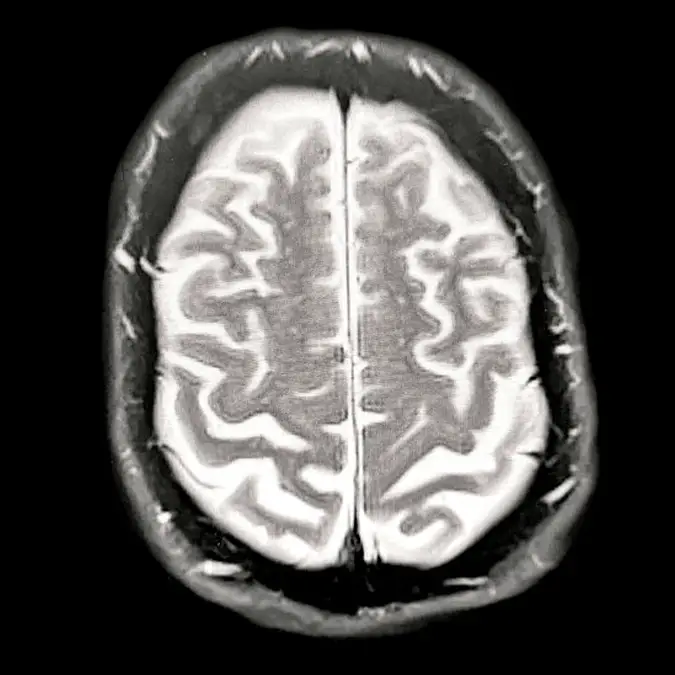
Scientists uncover 'death switch' hidden in the brain that could fuel Alzheimers


Alzheimer's ranks among the most terrifying health conditions people worry about as they age, but research continues to offer hope that specific lifestyle changes might lower our risk of developing this devastating condition.
Recent studies have revealed that adopting certain habits, like achieving daily walking targets or some more unpleasant ones, can help prevent the onset of Alzheimer's.
Other research has even challenged the belief that the condition is irreversible, suggesting that severely damaged brains might actually have the potential to recover.

Advert
Now, a new study, published in Nature, shows that a hidden 'death switch' in the brain might be the key driver behind Alzheimer's progression. If these findings prove accurate, they could open doors to more effective treatments.
A team led by neurobiologist Prof. Dr. Hilmar Bading at Heidelberg University studied mouse models with Alzheimer's to demonstrate how a dangerous protein interaction triggers brain cell death and in turn, mental decline.
Working with researchers from Shandong University in China, the scientists discovered a harmful protein interaction between the NMDA receptor and the TRPM4 ion channel.
NMDA receptors are vital in nerve cell communication and are found on cell surfaces, both at synapses and in surrounding areas. The receptors also support neuron survival and maintain cognitive abilities.
However, when TRPM4 connects with NMDA receptors outside these synapses, it can create a 'death complex,' Bading noted, adding that the interaction can result in damaging nerve cells.
According to the results, the toxic NMDAR/TRPM4 combination appears more frequently in Alzheimer's mice than in healthy ones.

To counter the process, the researchers used the team's previously developed compound called FP802, a 'TwinF Interface Inhibitor.'
Turns out, FP802 successfully disrupted the interaction between TRPM4 and NMDA receptors, effectively breaking apart the toxic complex.
"In Alzheimer's mice treated with the molecule, disease progression was markedly slowed," said Dr. Jing Yan, formerly part of Prof. Bading's team.
The treated animals show less of the typical cellular damage
associated with Alzheimer's, including a significant drop in beta-amyloid buildup in the brain, reduced synapse loss, and reduced mitochondrial damage.
In contrast, learning and memory capabilities remained mostly preserved.
"Instead of targeting the formation or removal of amyloid from the brain, we are blocking a downstream cellular mechanism, the NMDAR/TRPM4 complex, that can cause the death of nerve cells and -- in a disease-promoting feedback loop -- promotes the formation of amyloid deposits," Bading explained.
Although still in early stages, the researchers believe this inhibitor could offer a widely applicable approach for slowing or halting neurodegenerative diseases like Alzheimer's and ALS.
"The previous results are quite promising in the preclinical context, but comprehensive pharmacological development, toxicological experiments, and clinical studies are needed to realise a possible application in humans," the lead researcher concluded.