Woman gave birth inside MRI scanner to reveal the mechanics of childbirth in insane first


Childbirth is one of the most natural things there is. After all, none of us would be sitting here if not for the miracle of childbirth.
Science has thankfully come a long way since the likes of Catherine Parr and Martha Jefferson tragically perished during childbirth, although the 2023 death of athlete Tori Bowie shows it can still be a deadly experience even in modern times.
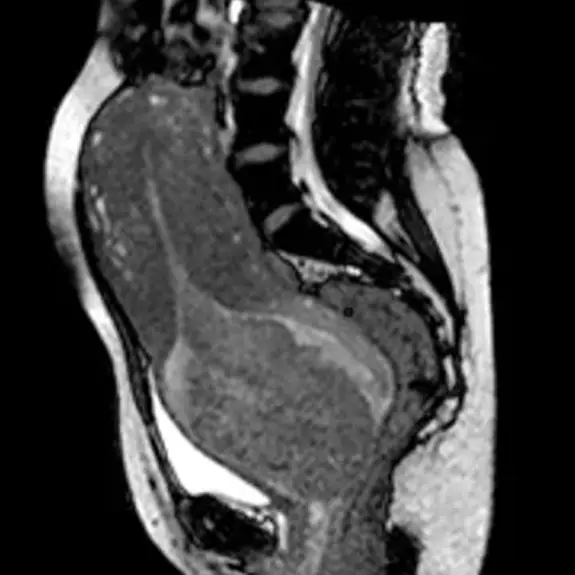
Hoping to give us an unprecedented look at how the human body functions when giving birth, one woman stepped inside an MRI scanner to reveal how everything works.
While we imagine most would love to be as comfortable as possible at home, or surrounded by doctors in a traditional hospital bed, at least being in a medical facility should be a reasonably safe place to give birth.
Advert
Given that some women are known to have given birth in everything from a McDonald's bathroom to the corner of a New York City street (dubbed the "Miracle on 68th Street"), an MRI scanner might not be so bad.
Showing that you can do everything from having sex inside an MRI scanner to even having a poop, giving birth might not be the craziest activity performed in one of those claustrophobic tubes.
Published in a May 2012 copy of European Radiology, the story recaps how a German woman gave birth in an MRI back in 2010.
Remembering just how tight things are inside a traditional MRI, the team had to widen its mouth to help occupy the mother-to-be and the obstetrician. They also had to take the metal out of the fetal heart monitor so that it wasn't interrupted by the scanner's magnet, while sheeting was provided to protect the machine from 'fluid' leaking.
As reported by Scientific American, the 24-year-old woman wore earmuffs to shield her from the loud sound of the machine. As soon as the baby's head appeared, the machine was shut down to protect its own delicate ears.
Apparently, the hardest part of the whole thing (apart from the actual woman having to give birth) was getting her to keep still to ensure the images were as clear as possible.
The best images came from just before and after the birth, with one showing the baby's head going toward the birth canal.
Notably, this world-first captured the contortions of the uterine muscles and how the fetus rotated on its way toward the outside world.
Researchers noted the images showed "how extensively the rectum and adjacent muscles are pushed against the coccyx to enable the child to pass through the birth canal."
Experts said that although they don't recommend doctors continue monitoring births with an MRI scanner, it helps shine a light on what happens during obstructed labor and while a fetus doesn't move properly through the birth canal in 15% of vaginal deliveries.
Thankfully, this volunteer gave birth in an MRI, so the rest of you don't have to.