
Exactly what breathing in mould does to your body as Bryan Johnson reveals he found mould at home


Bryan Johnson has revealed that he discovered potentially high levels of mold in his gym after carrying out an air test, raising questions about what breathing in the fungus can actually do to the human body.
The venture capitalist, who is known for his extreme methods in an attempt to prolong his life, took to X, formerly Twitter, to share the news.
In a post, he wrote: “I found mold in my gym. > 4,900 spores/m3 > penicillium/aspergillus 4,800 spores/m3 > ulocladium (~40 spores/m3) > stage 4, high > outdoor control 360 spores/m3/”
Advert

The biohacker went on to add: “I do periodic mold testing at my house. I used a Buck BioAire B520. It pulls a calibrated volume of air through a spore trap cassette which slams airborne particles onto a sticky slide. The spore count is then counted using a microscope.”
With the posts, he shared a tongue-in-cheek video that included the song ‘House’ by Charli xcx and John Cale, where the lyrics stated: “I think I’m gonna die in this house.” However, is Johnson’s mould problem really putting his life at risk?
What happens when you breathe in mould spores?
In a YouTube video posted by Life Noggin, mould is a type of fungus that releases microscopic spores into the air ‘small enough to fit 250,000 on the head of a pin’, which can then be breathed into the nose and lungs.
Common symptoms include a ‘runny nose, a cough, or watery eyes’, but for some people, the reaction can be more serious.
The video explains how ‘those who are exposed to large amounts” could experience symptoms including fever or shortness of breath, as it also warns that people with asthma or existing lung problems could see their symptoms worsen.
For most healthy people, breathing in mould spores does not result in a serious fungal infection, but the risk is different for people with weakened immune systems or certain underlying lung conditions.
Some moulds can also produce substances called mycotoxins under certain conditions, which the YouTube channel describes as being potentially ‘dangerous, especially in large quantities’.
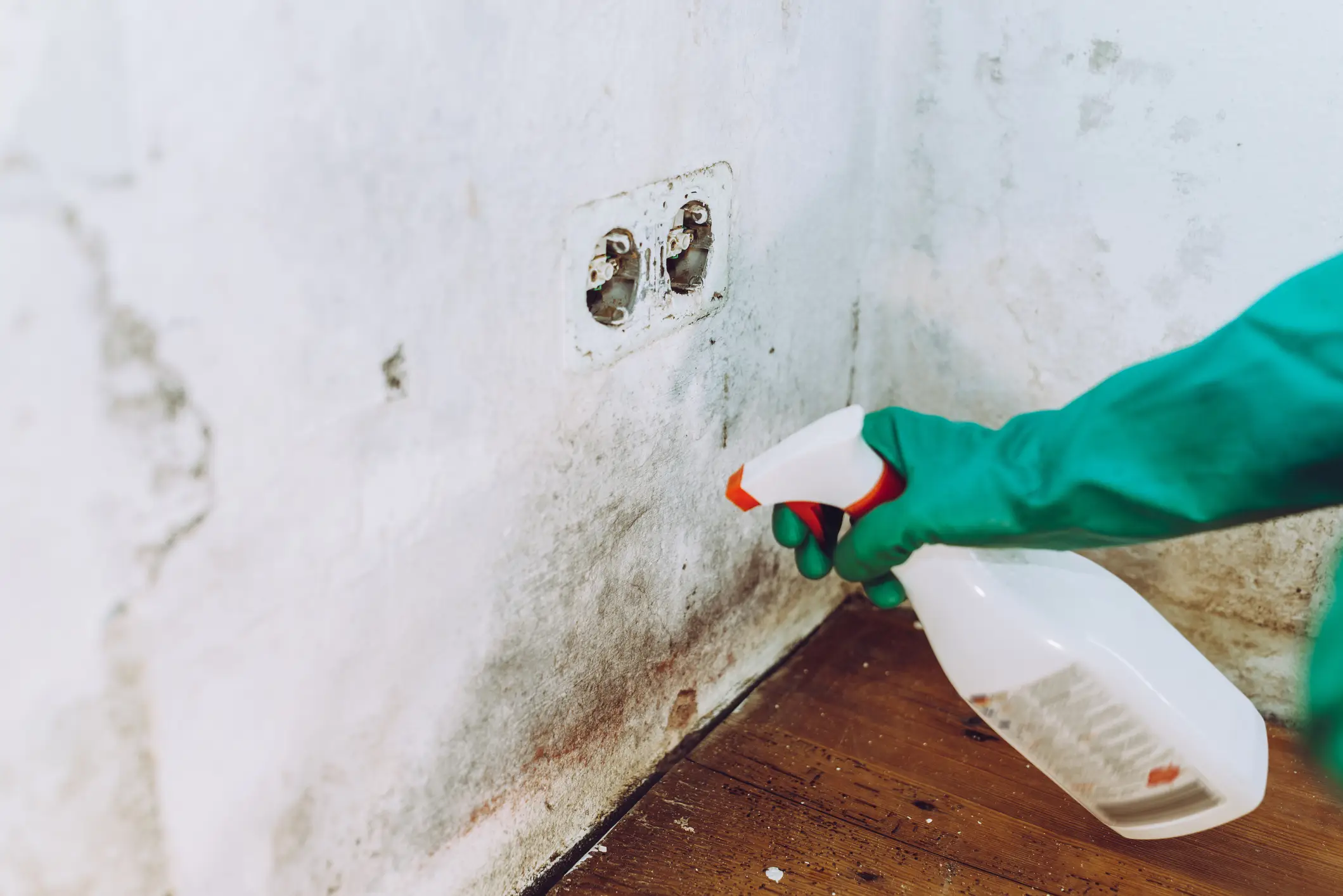
The video continues: “The Centers for Disease Control and Prevention suggests taking precautions to avoid mould growth, such as controlling humidity levels, quickly fixing any leaks, and venting moist areas like the bathroom or laundry room.”
While Johnson’s test can sound alarming, the reality is that mould exposure affects people differently. For most, the risks factor on things like allergies, irritation and respiratory symptoms, while people with asthma, existing lung disease or weakened immune systems can face more serious complications.