
Scientists spot eerie cold blob that could ‘disrupt life as we know it’ for millions


Experts have spotted a strange cold blob that has the potential to ‘disrupt life as we know it’ for millions of people.
When people think of climate change, many usually imagine rising temperatures and melting ice caps but scientists spent years puzzled by an eerie patch of ocean near Greenland that appears to be doing the complete opposite.
The area, which has become known as the ‘cold blob’, is located in the North Atlantic Ocean and has cooled by around 1 degree celsius (33.8 degree fahrenheit) in recent decades despite much of the planet continuing to heat up.
Now, researchers believe they may have identified the cause, and the discovery could have major implications for weather patterns across Europe, North America and beyond.
Advert
A new study published in Geophysical Research Letters points to a weakening of the Atlantic Meridional Overturning Circulation (AMOC), which is a vast network of ocean currents that helps move heat around the globe.
In the paper, it states: “The subpolar Atlantic is the only region of the world ocean which has been cooling significantly. Our analysis of this ‘cold blob’ and of ERA5 reanalysis data strongly suggest that this is not just a surface phenomenon but a deep‐reaching loss of ocean heat content, and that it cannot be explained by increasing surface heat loss but requires declining or weakened lateral heat transport.
“Surface heat loss appears to respond as a negative feedback to heat content changes: periods of increasing heat content coincide with periods of large surface heat loss.”
The AMOC is often described as a giant conveyor belt as it transports warm, salty water from tropical regions northwards into the Atlantic before it cools, sinks and flows back south beneath the surface.
Scientists have known for a while that the AMOC might be weakening, but there has been ongoing debate about what is driving the change.
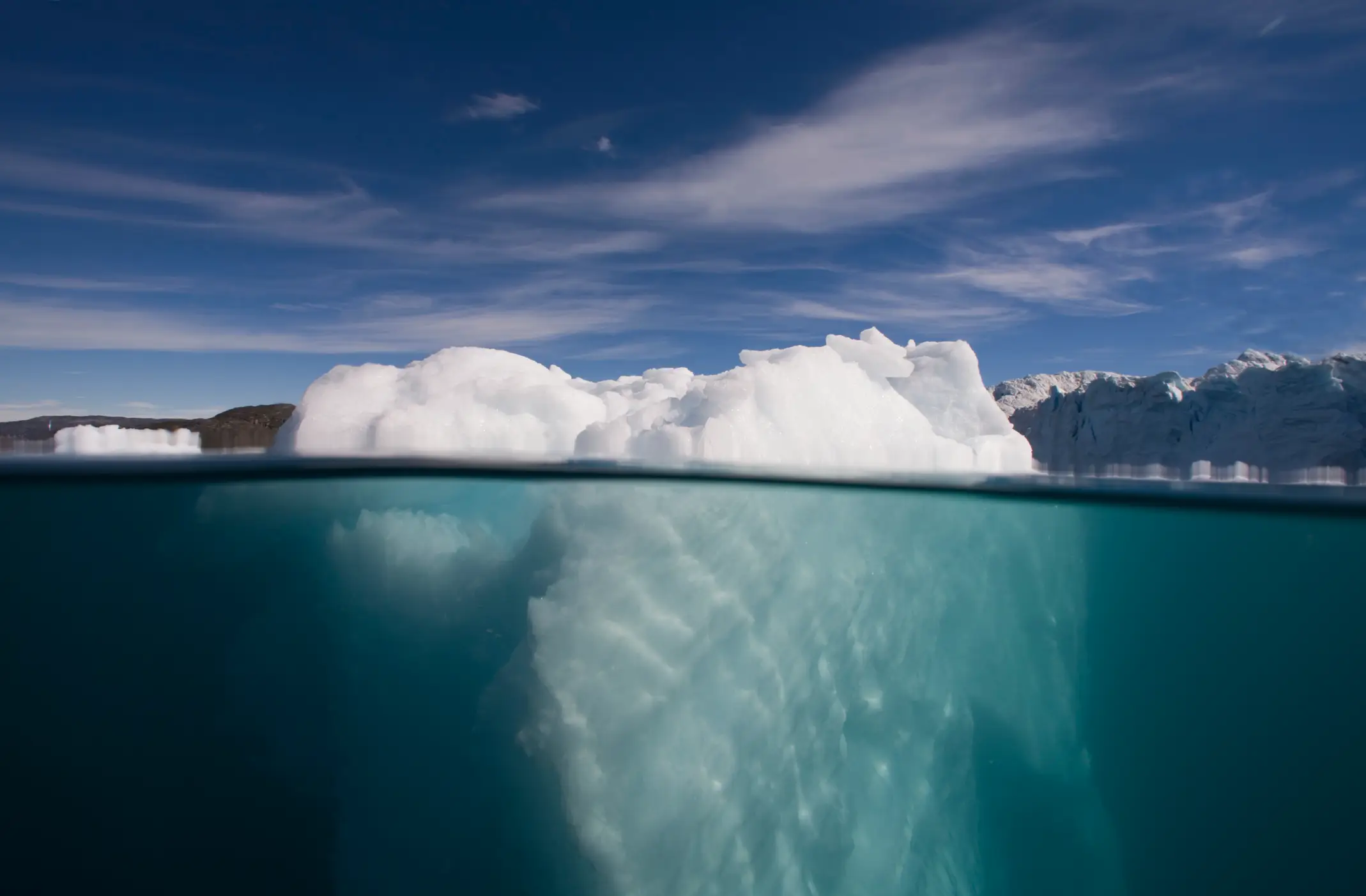
According to the team of researchers, the cold blob reaches depths of around 3,280 feet, suggesting that changes within the ocean itself are likely responsible rather than atmospheric conditions alone.
The experts warn that if the circulation continues to weaken, the effects could extend far beyond the North Atlantic.
For countries in northwestern Europe, it could mean significantly colder winters despite the broader trend of global warming.
Meanwhile, in other places, it could contribute to rising sea levels along parts of North America’s east coast.
And parts of Africa and Asia could experience significant changes to rainfall patterns.
However, experts have said that more long-term monitoring will be needed before a definite conclusion can be drawn.