Scientists share images of 250,000,000-year-old fossil that proves our ancestors laid eggs


One of the earliest ancestors of mammals has been discovered to have laid eggs, as a fossil dating back 250 million years reveals the truth that scientists have been endlessly searching for with little progress until now.
While there might be scientific evidence 'proving' the existence of Adam and Eve as the genesis of human life, researchers can track our ancestral origins back to an animal known as the Lystrosaurus (and beyond that, even) over 250 million years ago.
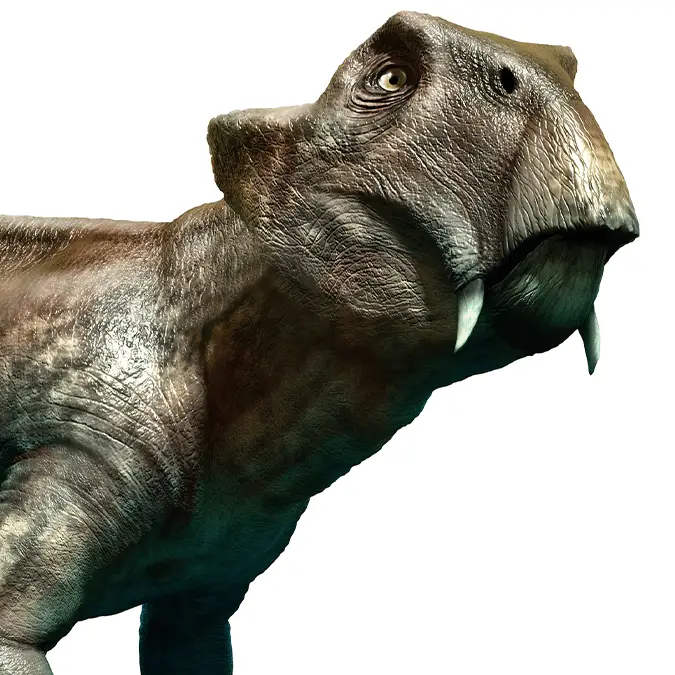
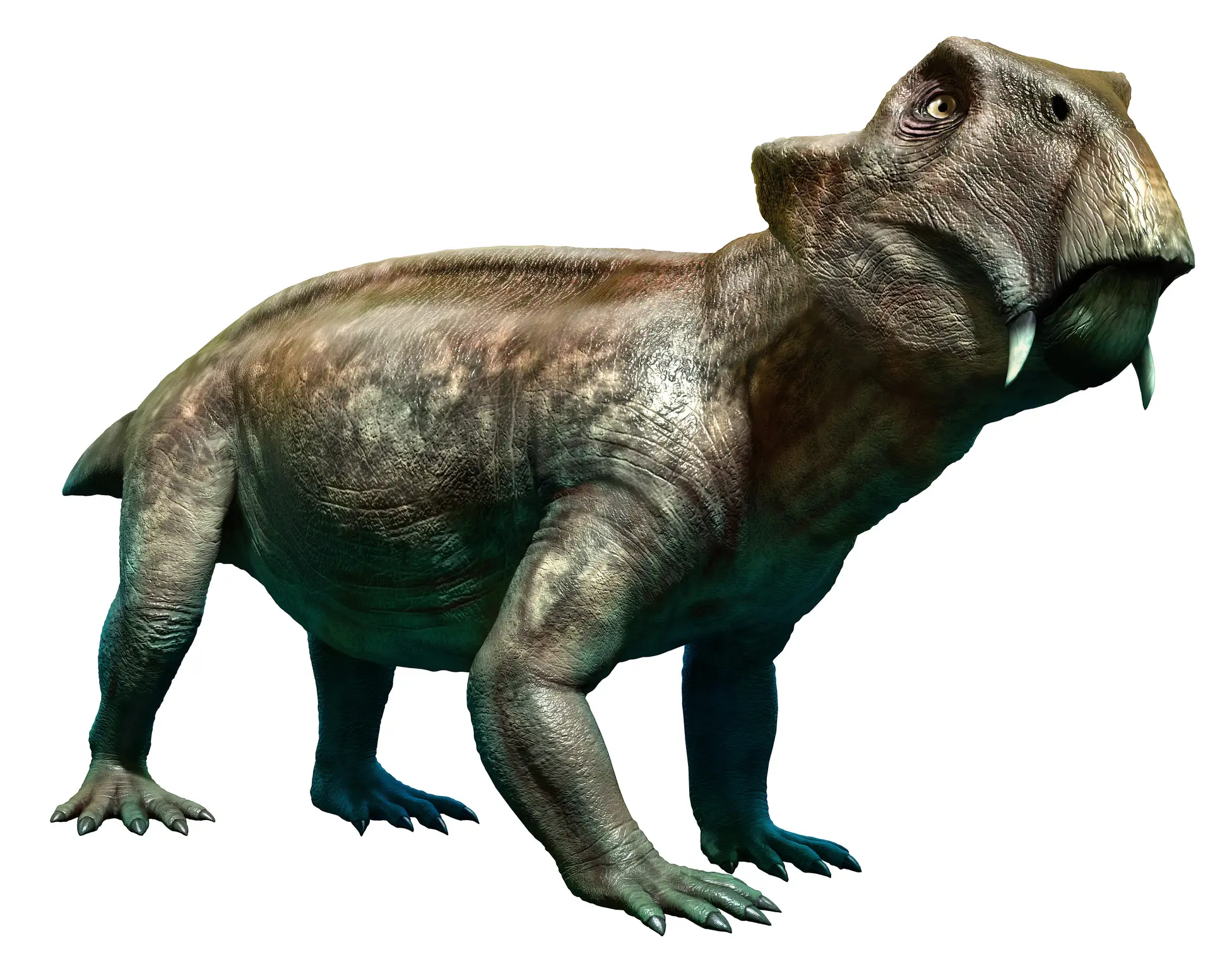
Living in areas understood now to be Antarctica, East Asia, European Russia, and South Africa, Lystrosaurus was an almost rodent-looking herbivorous mammal measuring about 2 to 8 feet (0.6 to 2.5 meters) tall.
What has remained so elusive about this ancient mammal, however, is its means of reproduction, as while it's understood to an evolutionary origin point for many species of mammals some scientists believed that it lay eggs.
Advert
As reports by Phys.org, this hypothesis has now miraculously been confirmed to be true, as researchers have now conducted analysis on fossils that preserve the eggs of this ancient mammal despite dating from hundreds of millions of years into the past.
The research, published in PLOS ONE, reveals how the three 'perinate specimens' were examined through the use of high-resolution CT and synchrotron scanning technology, revealing an illuminating property that explains why the mystery has remained for so long.
"One specimen, NMQR 3636, displays a tighly curled posture suggestive of an 'in ovo' position and completely lacks tusks," the study explains. "Crucially, the lower jaw symphysis remains unfused — a developmental trait found only in pre-hatching embryos of modern birds and turtles."
These traits allowed the researchers to be confident in the fact that the Lystrosaurus did indeed lay eggs, although the reason why this has been so difficult to confirm is due to unconventional nature of the shells.
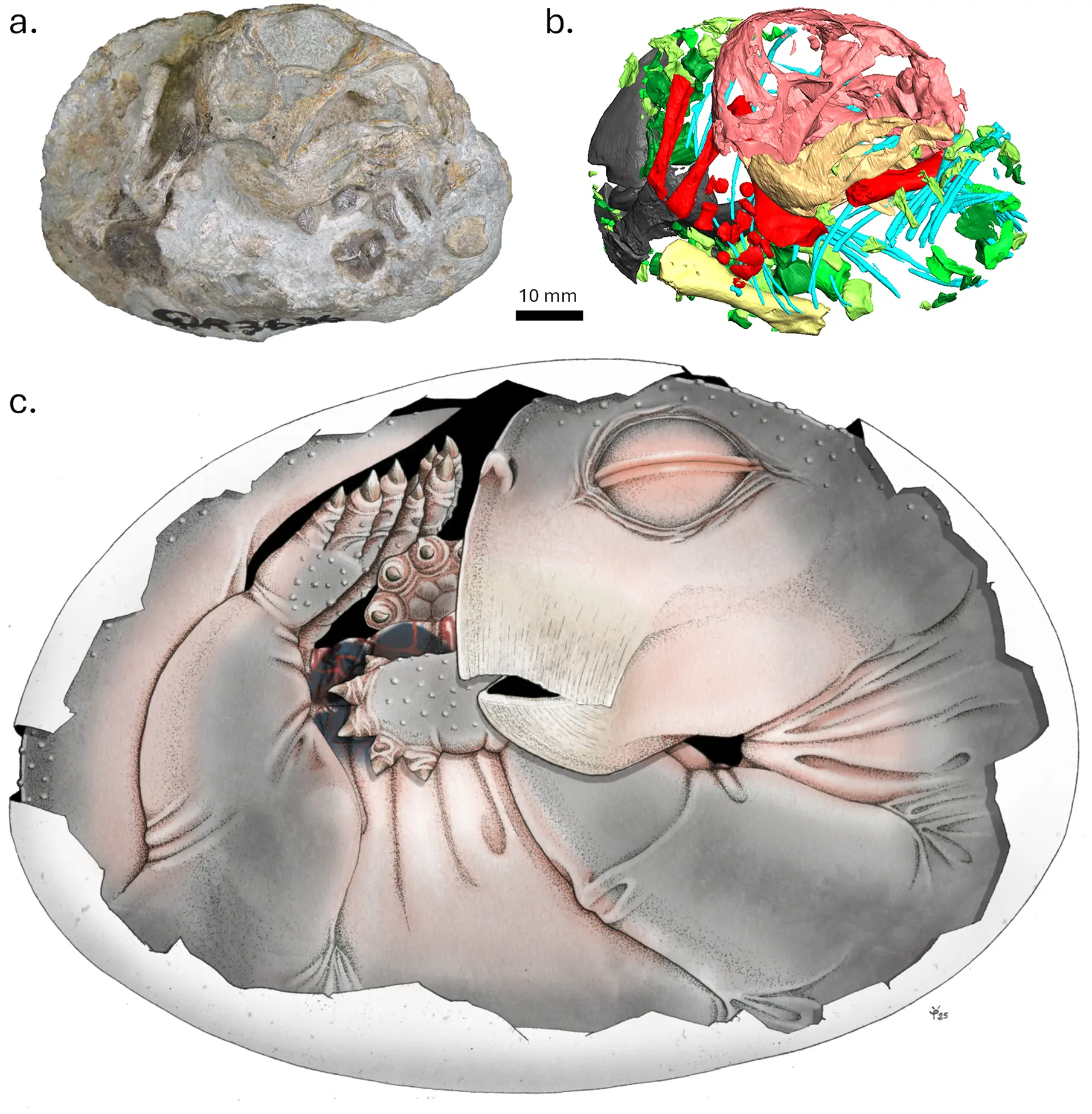
"No calcified eggshell is preserved, so the egg might have been soft and leathery," the researchers reveal, adding that "the large size of the reconstructed egg suggests a precocial, non-milk-feeding developmental strategy."
The importance this egg is evident in the survival of the Lystrosaurus during the End-Permian Mass Extinction, which is generally understood to be the worst extinction event Earth has ever witnessed, as it benefitted from the unusual reproductive strategy.
Detailing the discovery process, Professor Jennifer Botha illustrated that "this fossil was discovered during a field excursion I led in 2008, nearly 17 years ago.
"My preparator and exceptional fossil finder, John Nyaphuli, identified a small nodule that at first revealed only tiny flecks of bone. As he carefully prepared the specimen, it became clear that it was a perfectly curled-up Lystrosaurus hatchling.
"I suspected even then that it had died within the egg, but at the time, we simply didn't have the technology to confirm it," she continued.