Cell map reveals your brain 'changes gear' twice in your life at two very different ages


The human brain is truly fascinating, and with us only being able to survive a matter of seconds without one, it sits alongside the heart as one of the body's most important organs.
Science continues to evolve as we slowly get to know more about the brain, but while we've not cracked the concept of a full brain transplant, sci-fi tech like Neuralink is helping bridge the gap when it comes to damaged nervous systems.
Even though we've previously covered how one computer has been built from human brain cells, as well as OpenAI's Sam Altman attempting to live forever by preserving his brain, the crucial organ still has plenty of mysteries.
Now, a massive science study has revealed two important ages where our brains supposedly 'change gear' and enter a new chapter.
What key ages does your brain change at?
Advert
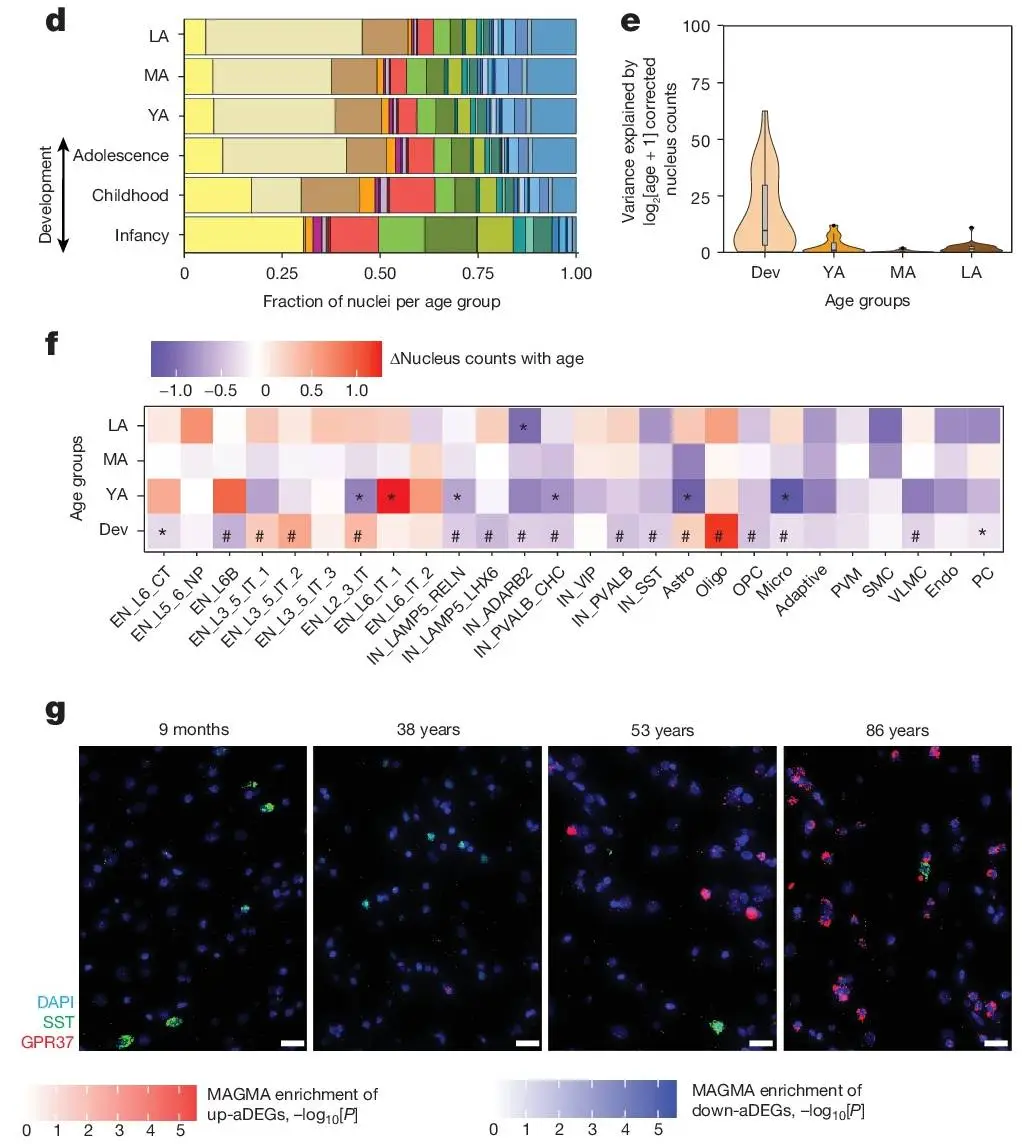
Scientists from the Icahn School of Medicine at Mount Sinai in New York looked at 1.3 million brain cells that were donated from people ranging from infancy to 97. The aim was to map the prefrontal cortex, which is the region responsible for helping us form memories and make decisions.
As noted by co-author Dr Kiran Girdhar (via Nature), there are two distinct ages that take us into new chapters of our brain development.
These are supposedly 24, when we enter maturity, and again at 60, when aging apparently becomes more obvious.
Infancy and our teenage years are important for cells rapidly changing and new connections being formed, although there's an 'unexpected inflexion point' when the rate of change dramatically drops at the age of 24.
The prefrontal cortex then remains relatively stable until the cells responsible for protecting the brain kick up in activity when we turn 60.
Findings come as part of PsychAD, which is a project determined to create a detailed map of the prefrontal cortex. Discussing the findings, Girdhar explained: "This atlas provides an essential reference for understanding healthy brain ageing at the molecular level."
Why is 60 such an important age for the human brain?

The Daily Mail says that 60 is a particularly important age, as nerve cells in younger minds follow a 24-hour timetable of biological processes that are largely predictable based on whether it's night or day. As we go beyond 60, this pattern starts to break down.
It's here that some immune cells become far more active in dealing with damaged proteins toward the end of the day. Damaged proteins contribute to disease, which would explain why your brain goes into overdrive in trying to protect itself.
By studying RNA, Girdhar and the rest of the team were able to study what cells do at various stages in our lives. Following rapid development in childhood and stability into adulthood, 60 is an important marker for changes at a molecular level.
The outlet notes that these latest findings are similar to a 2025 study from the University of Cambridge, highlighting four ages (nine, 32, 66, and 83) for five broad eras of neural wiring across the average human lifespan of childhood, adolescence, adulthood, early ageing, and late ageing.
That research suggested that everything starts to go 'downhill' when our brains stop becoming as efficient, and segregation emerges at the age of 66.
This latest work is different because RNA testing delves deeper into the molecular level of individual cells.
Nine papers have been published as part of the PsychAD project, with one focusing on data from 6.3 million individual cells and trying to map the progression of diseases like Alzheimer's, Parkinson's disease, Lewy body, vascular dementia, schizophrenia, and bipolar disorder.
Lead author Professor Panos Roussos, concluded: "These highly complex brain disorders impose an enormous public health burden, yet we still have a limited understanding of the molecular mechanisms that drive symptoms, progression, and resilience.
"By mapping shared and distinct cellular programs across Alzheimer's disease, related dementias, and psychiatric disorders, PsychAD creates a framework for moving beyond traditional diagnostic boundaries toward precision approaches for target discovery, biomarker development, and therapeutic prioritization.”