
Scientists create first computer made from human brain cells


As researchers and tech experts work hard to get artificial intelligence closer to humans than ever before, scientists might have just done the opposite by creating a machine that uses brain cells to process information.
It has always seemed inevitable that man and machine would become intertwined at one point in the future, yet until now, it seemed to be an impossibility reserved exclusively for science fiction stories.
One of the biggest goals in the world of AI is to achieve what's referred to as 'artificial general intelligence' (AGI for short), and this marks the moment where the technology can match or outperform humanity in most tasks, effectively 'replacing' our purpose.
Some scientists have other ideas, as we could soon become one with the computers that are seemingly looking to overtake us. It comes as the first-ever 'Brain-Tissue Computer' has been created in a wild experiment.
Advert
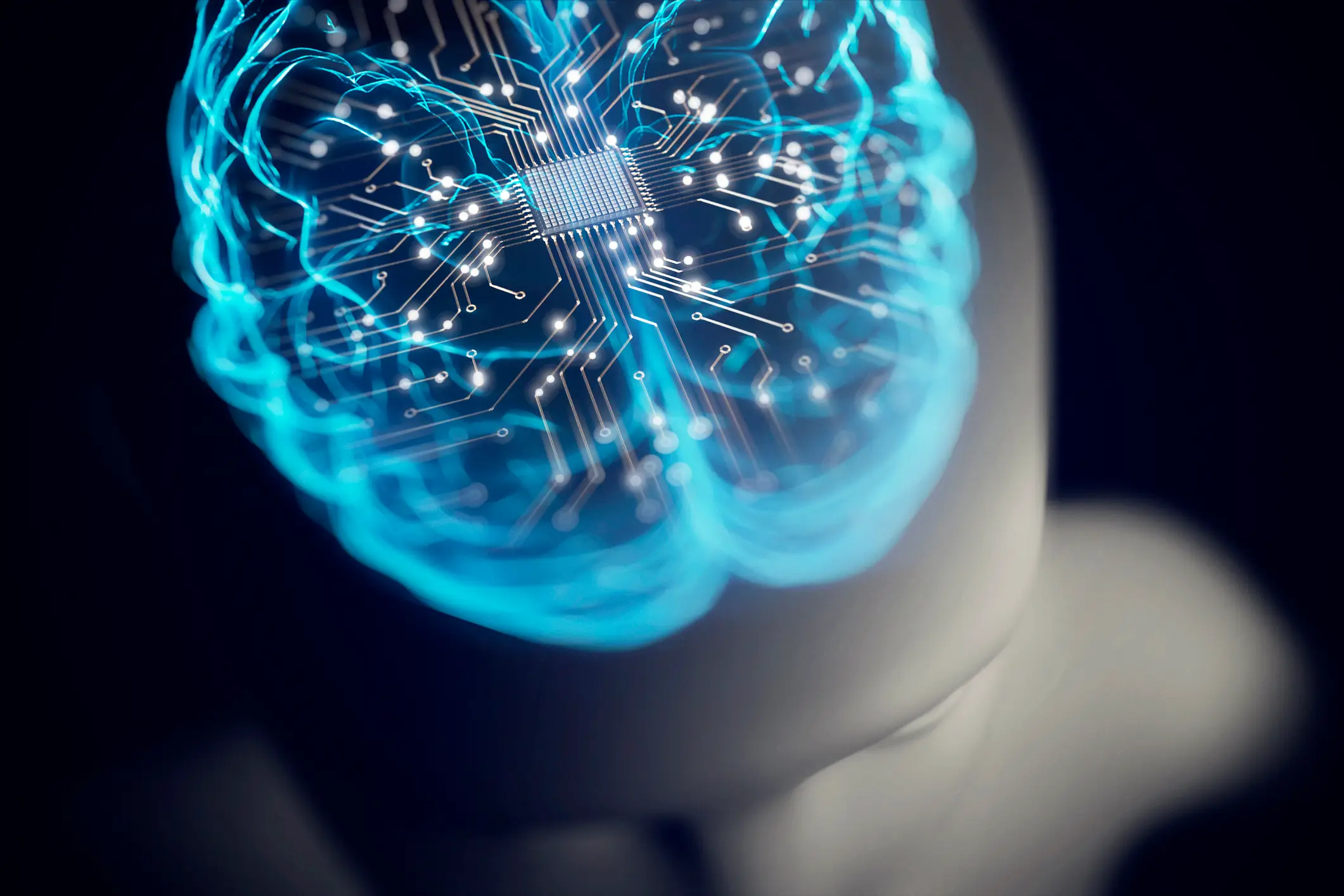
As reported by the BBC, the process known as 'organoid intelligence' uses brain cells forged from human stem cells, processing information and performing learning tasks within the computer. It supposedly replaces the silicon chips that currently act as the artificial 'brain' inside the machine.
This process of biocomputing starts when neurons are created from stem cells, which are then grown into organoids that eventually form their own neural networks that mirror the activity of a human brain.
These are placed onto a silicon chip or electrodes that are capable of sending and receiving electrical signals, transforming them into processing units that are effectively 'living'.
The neurons are then able to 'learn' from the signals they send and receive, adapting and forming new connections over time, and some have even been able to recognize certain forms of speech and complete simple tasks.
Outside of how impressive it is to complete the experiment in the first place, biocomputing can have numerous benefits as it continues to evolve.
Not only are human brains incredibly efficient – meaning that complex tasks could theoretically be completed with relatively little energy compared to standard computing – but these experiments could help us learn more about the human brain and how it works, providing a significant boost to medical research.
There are still a number of ethical considerations that will only increase as the project continues to grow, as playing around with something that's technically 'living' raises questions that don't necessarily have concrete answers right now.
Additionally, much like AI, there are fears regarding the development of a consciousness within machines that would both be challenging to control and impossible to predict, and that opens up a can of worms that could be potentially devastating for humanity.