Baby conceived using AI sperm-injecting robot born in historic world-first


Medical science has just taken another major leap forward, as the world's first baby to be conceived by a robot has just been born. While it's not quite in the sci-fi realms of Westworld, doctors have seemingly cracked the ability to fertilize an egg with the help of a sperm-injecting AI robot.
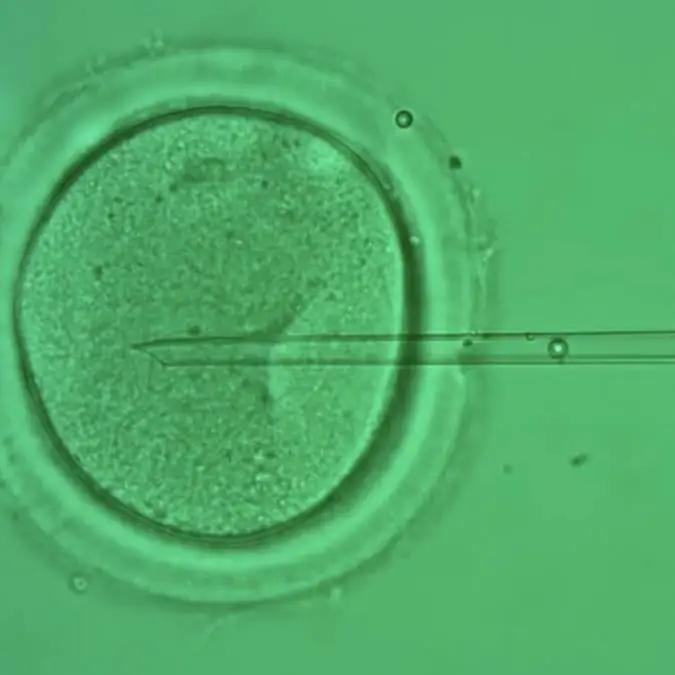
In vitro fertilisation (IVF) is designed to help those struggling to have a baby, leading to several ways to fertilize an egg. One popular method is intracytoplasmic sperm injection (ICSI), which deals with cases of male infertility. Here, a single sperm cell is injected into mature eggs, taking away the typical journey of sperm having to swim to reach an egg. If successful, the embryos are then inserted into the uterus. Another popular method of IVF is to mix the eggs with sperm in a lab dish, but as these have been around for a while now, the medical industry is adopting a futuristic new method that shows artificial intelligence can do some good.
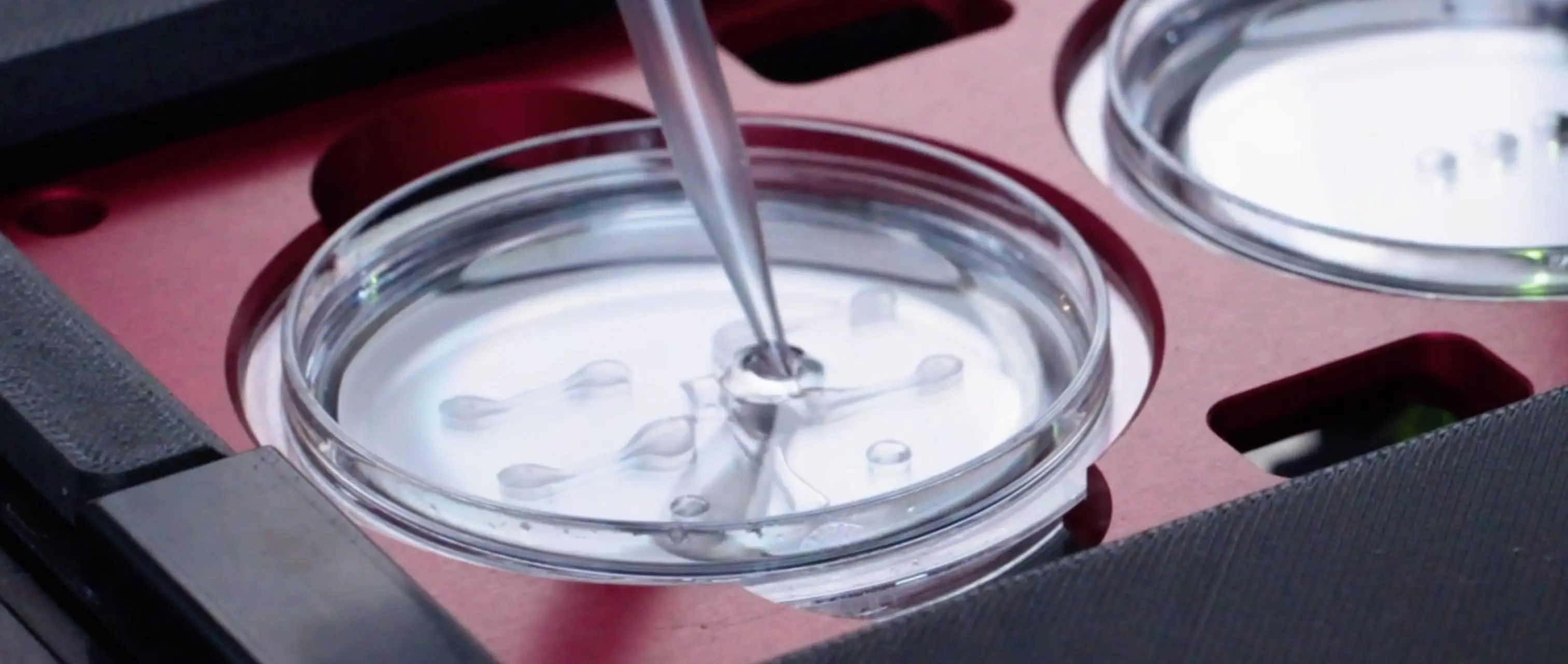
ICSI is seen as more accurate, but with it, there still comes human error. As Jacques Cohen at Conceivable Life Sciences told New Scientist, ICSI is typically performed manually by skilled embryologists who have to use microinjection systems. Studies have shown that the skill of ICSI embryologists can vary massively, with Cohen adding: "They become tired and distracted sometimes, just like everybody else in most professions, so errors happen that can reduce [the] odds of fertilisation and births."
Advert
Hoping to lead to a higher success rate with ICSI, Cohen and the team have created a robot that can perform 23 'key steps' of ICSI. Although each one is triggered by a human operator at the press of a button as they watch a stream of the process, it can be performed remotely from anywhere in the world.
Using AI, the machine selects the healthiest sperm with the best chance of fertilization based on its appearance. Another step involves zapping the sperm's tails with a laser, therefore making them easier to pick up and be injected into the eggs.
Even though a similar method has been tried before and resulted in two live births, not all of the steps were automated.
In the latest experiment, the Conceivable Life team recruited a couple where the man had sperm with low mobility. As the woman struggled to produce eggs, donor ones were also used.
Five of eight donor eggs were randomly fertilized by the new system and produced four embryos. The other three eggs were fertilized with the traditional ICSI methods, and all formed embryos.
A different AI model then selected the two 'best' embryos by looking at the appearance of the chromosomes, and it turns out that both were produced with the robot system. Cohen admits that this doesn't mean the robot produced healthier embryos due to the small sample of eggs involved.
Although one of the embryos failed to develop after being inserted into the woman's uterus, the other led to a successful birth. Even though Joyce Harper at University College London referred ot it as an exciting proof of concept, larger studies need to be undertaken to prove that automated ICSI procedures are superior to manual ones.
Despite this being a seemingly big step in the realm of IVF, Harper suggests it's likely to be adopted on a wider scale due to the extra costs involved. Still, Cohen is hopeful for the future and concluded: "As we optimise, standardise and refine the system, we expect the cost to the patient and clinic to decline."