• News
    • Tech News
    • AI
  • Gadgets
    • Apple
    • iPhone
  • Gaming
    • Playstation
    • Xbox
  • Science
    • News
    • Space
  • Streaming
    • Netflix
  • Vehicles
    • Car News
  • Social Media
    • WhatsApp
    • YouTube
  • Advertise
  • Terms
  • Privacy & Cookies
  • LADbible Group
  • LADbible
  • UNILAD
  • SPORTbible
  • GAMINGbible
  • Tyla
  • FOODbible
  • License Our Content
  • About Us & Contact
  • Jobs
  • Latest
  • Topics A-Z
  • Authors
Facebook
Instagram
X
TikTok
Snapchat
WhatsApp
Submit Your Content
Archaeologists uncover 13,600-year-old treasure in incredible breakthrough

Home> Science> News

Published 09:35 22 Aug 2024 GMT+1

Archaeologists uncover 13,600-year-old treasure in incredible breakthrough

The giant skull dates back to the time of the first humans

Rikki Loftus

Rikki Loftus

google discoverFollow us on Google Discover

Archaeologists have uncovered an ancient treasure in what has been an incredible breakthrough for them.

The artifact that has been unearthed by researchers is estimated to be around 13,600 years old, during the time of early humans.

The relic is a huge skull of a mammoth-like creature which archaeologists believe lived at the same time as early human civilizations.
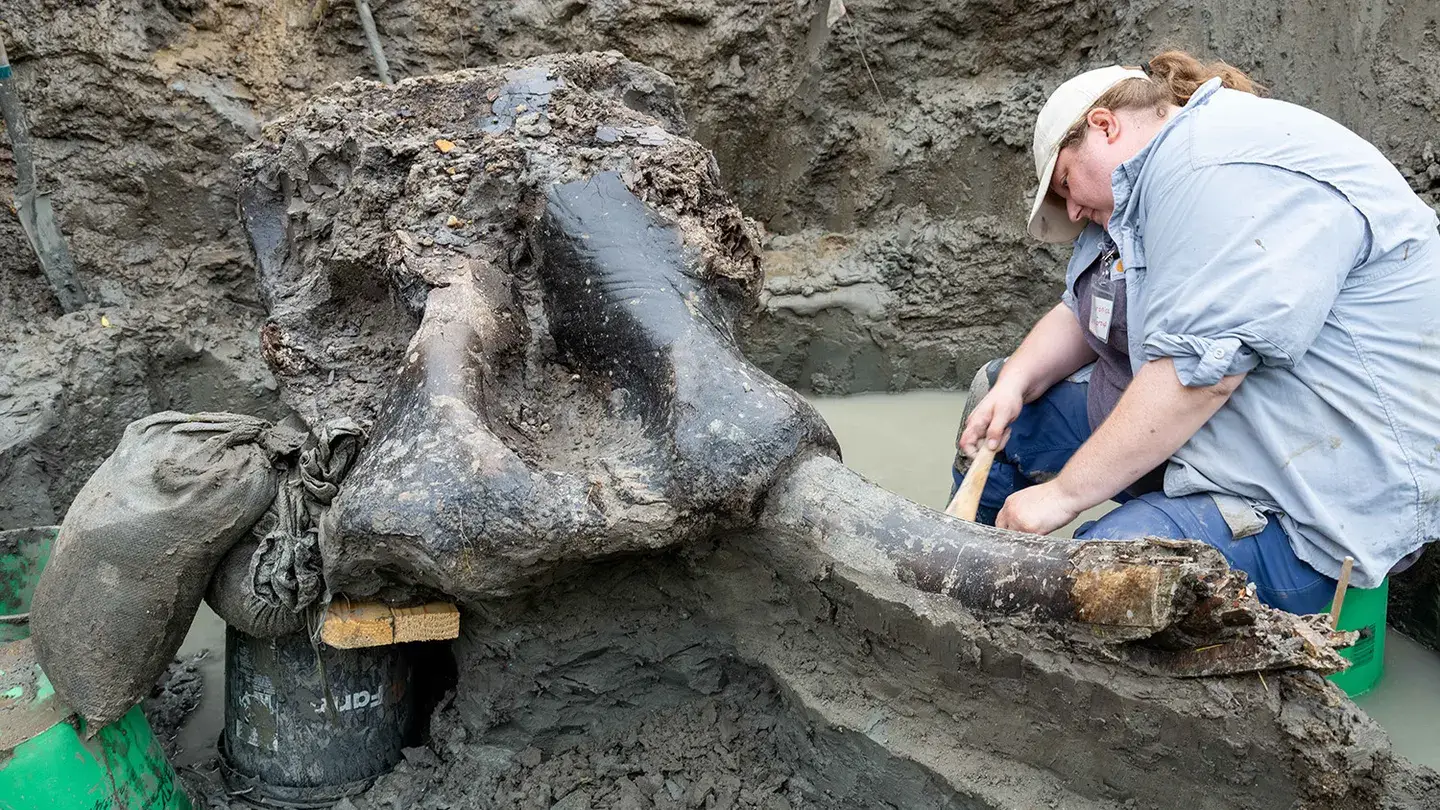
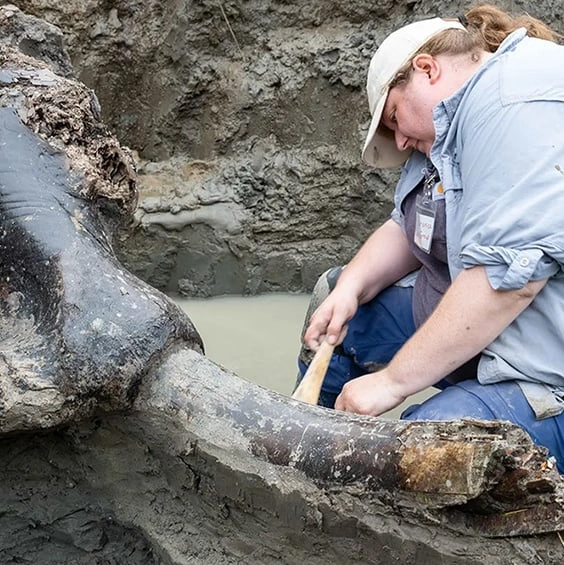
The team have excavated the skull (Kirk Murray/University of Iowa)

Advert

The mastodon was a mammal that predated the wooly mammoth, although there was some overlap between the two, and now a well preserved skull of the animal has been excavated in the US.

A team from the University of Iowa reckon that the creature might have been killed and eaten by primitive hunters thousands of years ago.

The skull was discovered after a member of the public contacted the team in 2022 after they found an unusually long bone which was sunken into a creek on private property.

The mastodon looked similar to mammoths and elephants, and lived across North America from around 3.5 million years ago until roughly 10,500 years ago.
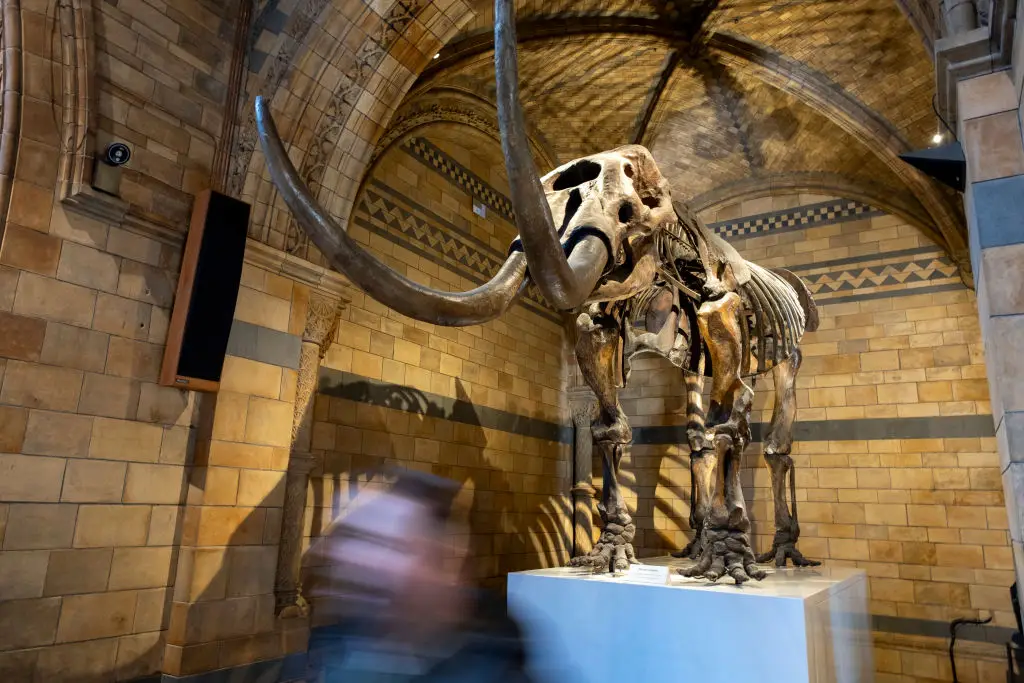
The mammoth-like creature lived among early humans (Mike Kemp/In Pictures via Getty Images)

The team of researchers was led by John Doershuk, who is the director and state archaeologist at the University of Iowa Office of the State Archaeologist (OSA), and they arrived at the site to discover that the object was a mastodon femur bone.

In 2023, a broken tusk was also uncovered sticking out of the creek bed, which archaeologists think was probably still attached to the skull.

With sufficient funding, a full dig started in August 2024 and the skull was carefully excavated along with several other mastodon bones.

Doershuk went on to say: “We’re really hoping to find evidence of human interaction with this creature. Perhaps the projectile points and knives that were used to kill the animal and do initial butchering.
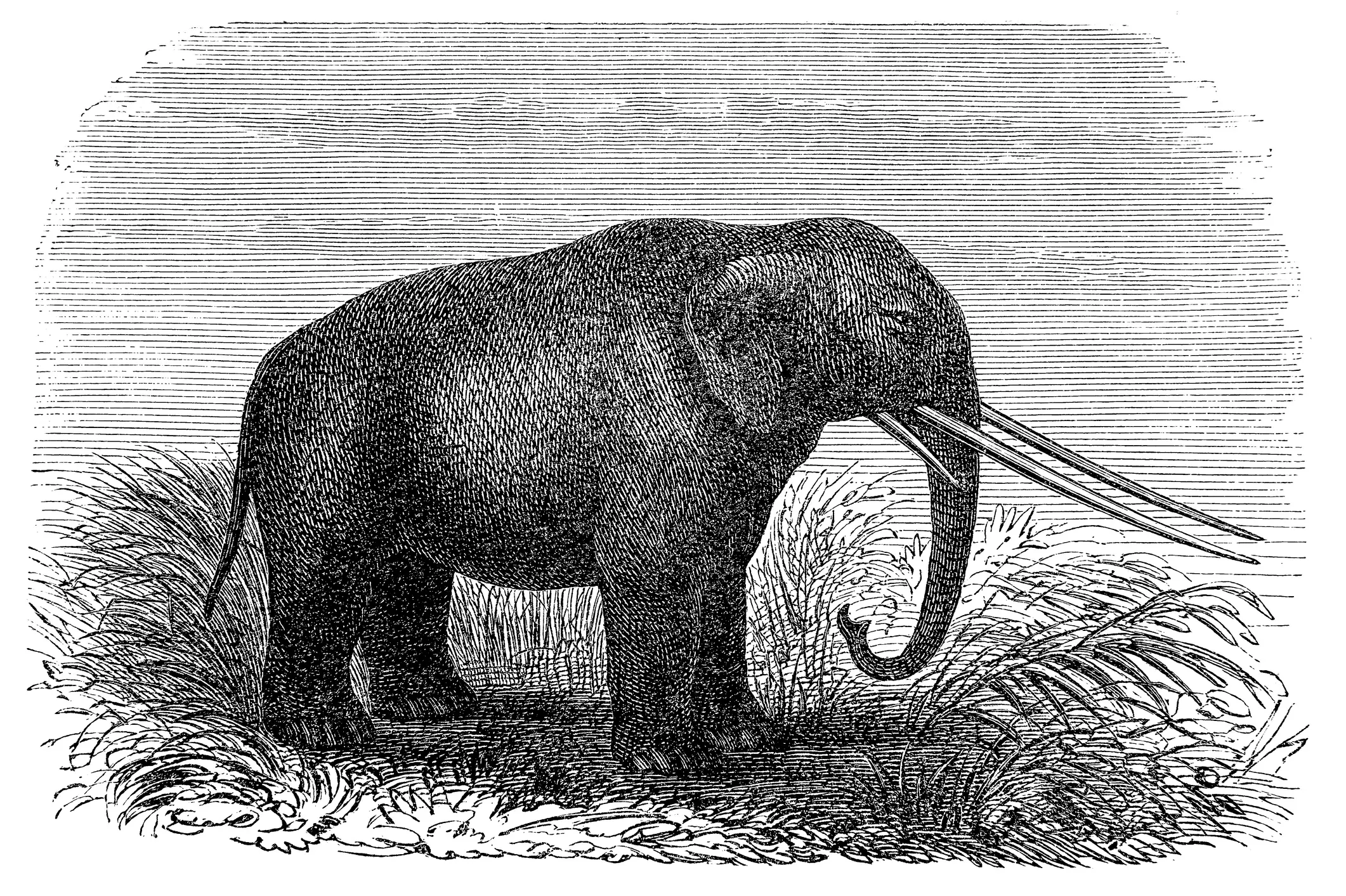
The mastodon went extinct thousands of years ago (Nastasic/Getty Images)

“There’s also potential evidence on the bones themselves - there could be identifiable cut marks.”

The dig lasted for 12 days and, on completion, the team had unearthed multiple human-made stone tools but seem to be aged a few thousand years after the skull.

Now, scientists are planning to investigate any interaction humans have had with the mammal in order to figure out how it came to lie in the creek.

The OSA and UI Palaeontology Repository, which is housed in the Department of Earth and Environmental Sciences, also intends to analyze the artifacts.

They will have a permanent home in an exhibit at the Prairie Trails Museum.

Featured Image Credit: Kirk Murray/University of Iowa/Mike Kemp/In Pictures via Getty Images
Discovery
News
Science

Advert

Advert

Advert

Choose your content:

8 hours ago
a day ago
2 days ago
  • supplied via Tyla
    8 hours ago

    How woman born without a vagina discovered her condition at age 16

    Only 1 in 5,000 women are affected

    Science
  • Oleg Breslavtsev/Getty Images
    a day ago

    Getting exactly seven hours and 18 minutes sleep a night 'prevents' these 'two major health conditions'

    Too much sleep can be just as bad for your health as not getting enough, according to experts

    Science
  • Andrew Francis Wallace/Toronto Star via Getty Images
    2 days ago

    'Boil in the bag' funerals where liquified bodies are flushed down a drain come to major western country

    It's an alternative form of cremation

    Science
  • wildpixel / Getty
    2 days ago

    Scientists warn men are losing their Y chromosomes and it could turn deadly

    The risk appears to increase with age

    Science
  • Archaeologists uncover mysterious 2,000-year-old coin that could link to Jesus' biblical prophecy
  • Archaeologists uncover the long-lost site of Jesus’ miraculous deed
  • Scientists uncover one of rarest minerals on Earth hidden in 75 year-old handwritten letter
  • Archaeologists uncover astonishing evidence of new human species living 2,500,000 years ago