USA's record-breaking heatwave set to get worse as experts warn climate change threat is 'here'


The warnings about climate change have been growing louder for years.
Scientists have warned about rising death tolls, collapsing ecosystems and increasingly extreme weather events that will make large parts of the planet difficult to live in.
Now, a record-breaking heatwave has descended across the western United States, pushing temperatures to dangerous levels.
Temperatures have surged by 20 to 30 degrees Fahrenheit above average across much of the region, with some areas recording spikes of up to 40 degrees above normal.
Advert
At its peak last Thursday (26 March), the heatwave shattered more than 400 daily temperature records in a single day, driven by a large dome of high pressure that has locked itself over a vast stretch of the country.
And it isn't going away quickly.
"This is not going to be a heat event that suddenly goes away”, climate scientist Daniel Swain said in a post about the heat in a post. “We are still going to be experiencing record warmth and dryness next week – at least for the next seven to 10 days.”
“High temperatures are forecast to reach 20-25 degrees above average,” forecasters at the National Weather Service announced, adding that hundreds more records could be surpassed this week as the extreme heat pushes east.
The western US relies heavily on winter snowpack to feed its rivers, reservoirs and soil moisture throughout the drier summer months. This year, that snowpack was already in a desperate state before temperatures spiked. After one of the warmest winters on record across nearly every major river basin in the west, the region entered spring in the grip of a severe snow drought.
“Anomalous warmth and historic snow drought will still lead to ecological and wildfire-related impacts as soon as this spring, and possibly wider water challenges by late summer and beyond,” Swain added.
By early March, water measurements within the snowpack were below the median at 91% of western monitoring stations. By mid-March, more than half of the continental US had already been classified under moderate to exceptional drought conditions.
The expert added that the Colorado River basin could face 'water supply and hydroelectric shortfalls, an early and intense fire season, and ecosystem degradation' if the high temperatures continue.
“This is a big deal,” Swain stated.
Meanwhile, Jon Gottschalck, chief of the Operational Prediction Branch at NOAA's Climate Prediction Center, reported via the Guardian): “Drought conditions worsened or developed for much of the Great Plains, Lower Mississippi valley, and south-east US due to warmer and drier than normal conditions this winter.”
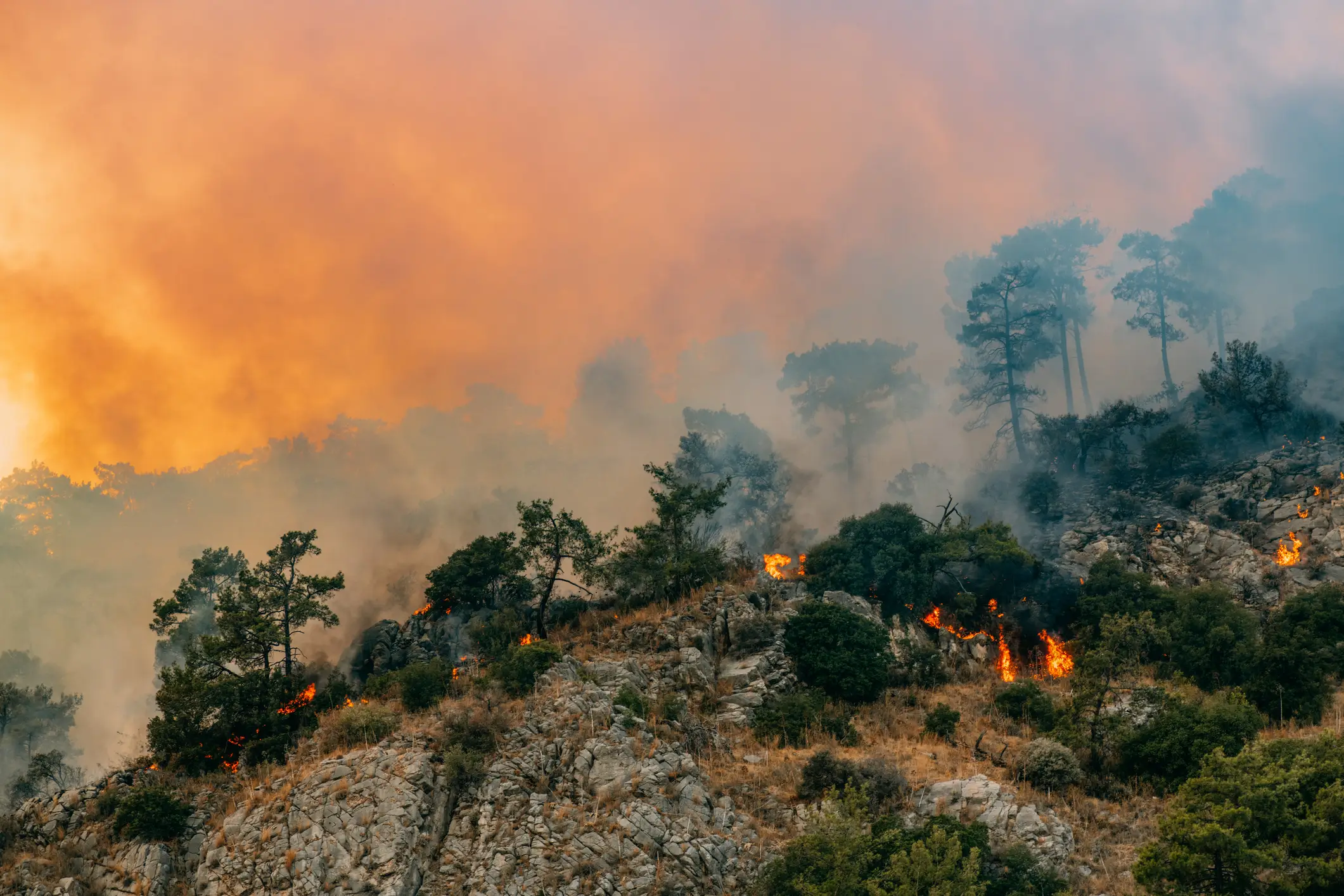
As rising temperatures take the moisture out of the land, vegetation is at risk, as well as the spread of wildfires.
Officials at the US National Interagency Fire Center warned on Friday that fuel moisture levels are 'trending near record lows for this time of year,' creating conditions where 'fast-moving fires' could ignite and spread rapidly whenever winds pick up.
More than 1.4 million acres have burned across the US so far this year which is more than double the ten-year average for the same period.
“These findings leave no room for doubt. Climate change is pushing weather into extremes that would have been unthinkable in a pre-industrial world,” Friederike Otto, a climate science professor at Imperial College London, previously told the Guardian.
“In the US west, the seasons that people and nature were used to for centuries are disappearing, putting many, including outdoor workers and those without air conditioning, in danger,” he added. “The threat isn’t distant – it is here, it is worsening and our policy must catch up with reality.”