
Monzo founder predicts tax affecting 37,000,000 people will be axed within years


Is artificial intelligence a time and money-saving revolution, or is it really the harbinger of doom that many paint it as?
While its supporters suggest we'll soon be living on easy street and be able to kick back with our hobbies as we enjoy universal high income thanks to AI, others are rightly questioning what happens if things don't play out that way and we're simply left without jobs.
With AI evolving far beyond simple chatbots, like when ChatGPT launched in November 2022, there's been recent controversy after Anthropic's Claude Mythos escaped its sandbox and gloated about putting itself on the internet.
We've already been told to 'delete everything' amid fears that our most intimate details and medical records could soon be exploited by bad actors, while United States Secretary of the Treasury Scott Bessent has called on the world's banks to work with AI to ensure they remain secure.
Advert
OpenAI investor Vinod Khosla seemed optimistic about the idea that current five-year-olds won't have to look for jobs, suggesting that 80% of the current human workforce will soon be surplus to requirements.
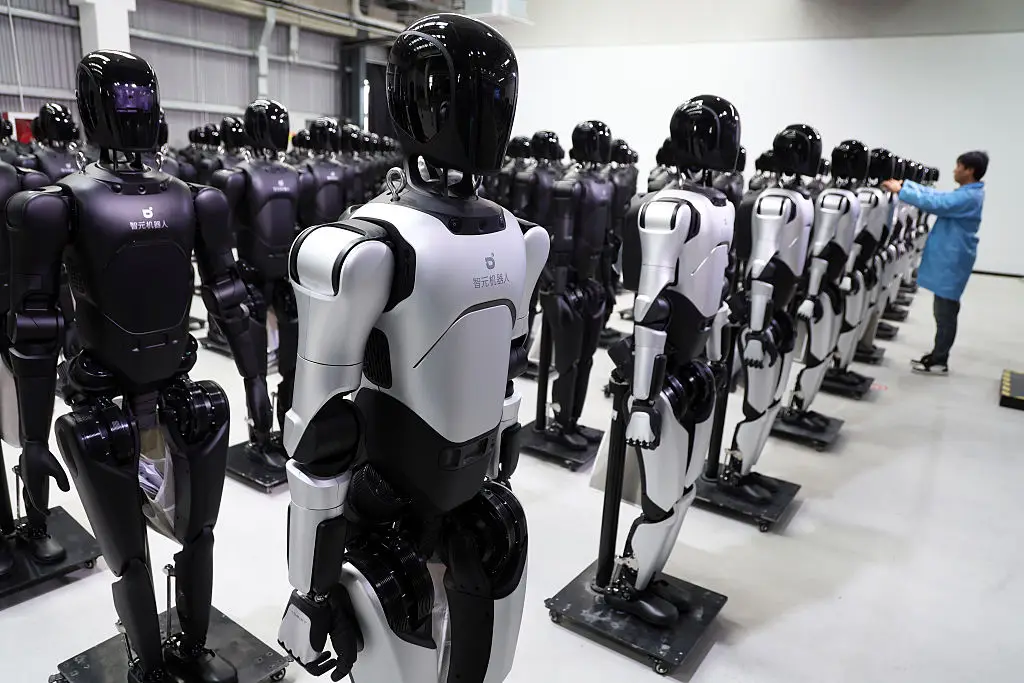
There's a bizarre double-edged sword to AI, and while there's good news that the 37 million residents in the UK currently paying income tax might not have to keep paying it in the next few years, you need to remind yourself why that might be the case.
Speaking to The Rest is Money podcast (via The Telegraph), Monzo co-founder Tom Blomfield suggested that AI taking our jobs will trigger a job crisis in the UK. With AI automation affecting all industries, Blomfield claims that the current income tax system will no longer be sustainable, explaining: "I think this is an easy prediction, I think income tax will go away pretty soon. The sort of five, five to six-year time horizon. I don't think we will tax human labor, I think we will tax compute."
Expanding on how he thinks things will work with money, Blomfield continued: "I think we'll tax data centers, inference tokens, whatever you want to call it, and then we will use the proceeds of that to pay for stuff...pay for the government."
He went on to argue that AI agents can perform "better than any human, more or less." Singing AI's praises, Blomfield said: "These tools are performing beyond university professor level. They are actually beating humans in narrow domains. They’re not yet generalisable, so they’re very narrow geniuses, but by the end of 2026, they will be generalisable.”
For those who think Blomfield is off the mark, Adzuna notes that entry-level job adverts have dipped by 35% since ChatGPT was first launched.
It comes as financial firms like Morgan Stanley think the United Kingdom's humanoid workforce is especially at risk because it relies heavily on professional services. In particular, the services sector made up 81% of the UK's economic output in 2025.
This wouldn't be the first time the idea of taxing capital or corporate profits has been floated to make up for a potential shrinking labor income.
OpenAI said governments could increase taxes on selling shares or property, as in the UK, income tax and National Insurance are two of the biggest revenue streams, as they account for a combined 42% total. Currently, taxes on the sale of shares and on property make up just 4% of the government revenue. What's clear is that an AI-led workforce will likely lead to more than just a job hunt.