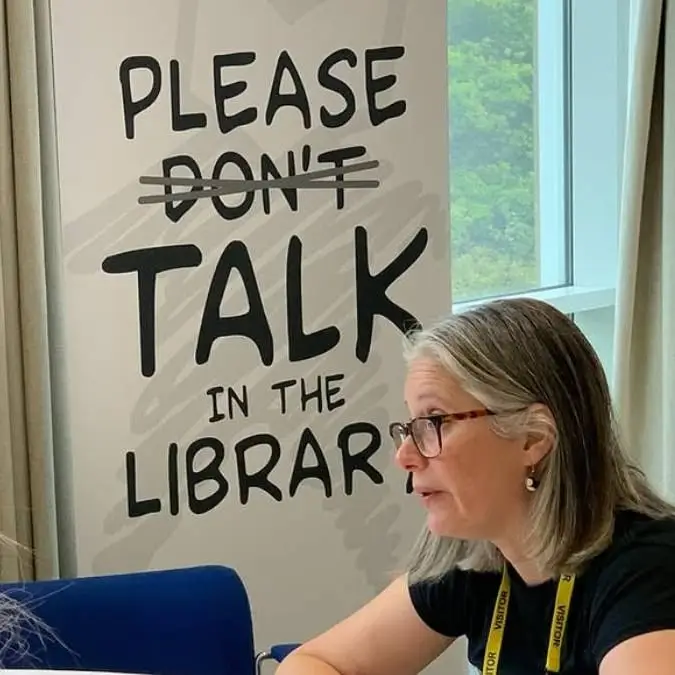
Inside the library where you can borrow a person instead of a book


You can get just about anything out of a book these days, with the endless possibilities of fiction tales and the breadth of knowledge available through non-fiction works, yet one rather special library offers something very different, and arguably, more valuable than a book ever could.
With an increased reliance on the internet and social media for communication and the rapid decline of communities worldwide, it's harder than ever to meet and learn about other people.
This leads many to feel isolated, especially on the romantic side of things, where dating predominantly occurs through various apps, and it can even have a significant effect on your mental health over time.
As reported by Forbes, there does exist a solution of sorts that helps people connect with others that they'd otherwise never meet, and it's something that's growing in popularity as it spreads across the world.

Advert
Whereas traditional libraries allow you to loan books, the Human Library serves a purpose to let anyone 'borrow' another human and have a conversation with them, often 'reading' their life story and perhaps even shedding any judgements that they might have.
Originating in Denmark in 2000, the idea began through the intent to "publish people as open books" according to the library itself, letting others ask questions about the borrowed human's life and understand their experiences.
It's specifically designed to deal with various conditions, ways of living, and experiences that others might find either fascinating or challenging to deal with — and it's often both at the same time.
For example, the board will show 'Alcoholic', 'Polyamorous', 'Autistic', 'Molested', and so much more, allowing you to forge a conversation and learn about someone else's life.
"The broad selection of books provided readers with ample choice to challenge their stereotypes and so more than a thousand readers took advantage, leaving books, librarians, organisers and readers stunned at the reception and impact of the Human Library," the project's website reads.
Interviewed by euronews, Anders Fransen, one of the Human Books at the library, revealed why he decided to participate in the project as someone with a prominent disability.
"I come to the Human Library because I want to give people awareness that behind my conditions, I'm a person," he illustrated. "I want [them] to see the person, first of all, and not just the conditions."
The project has since expanded significantly and is now operational across six continents and in more than 80 different countries, and has even partnered with the University of Glasgow to provide 300 medical students with the chance to become 'readers', aiding with the experience of others in their path towards becoming doctors.