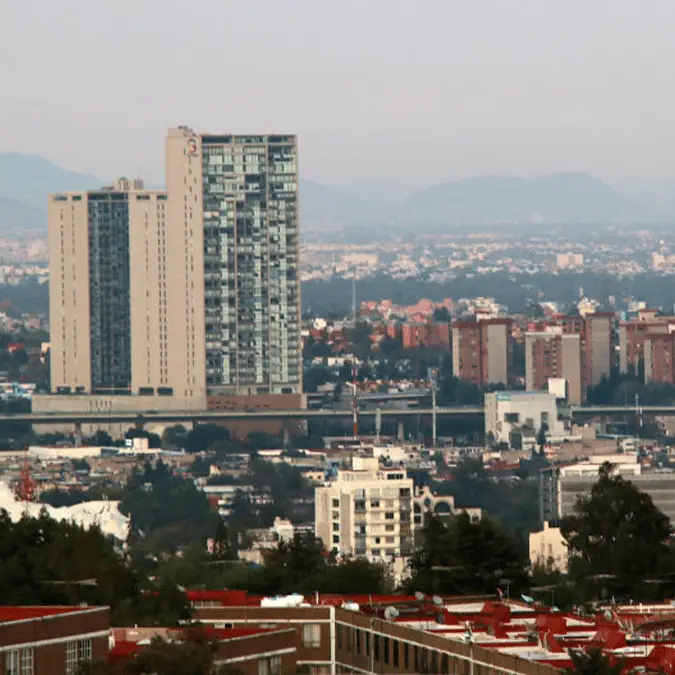
One of planet’s biggest cities with population over 22 million is sinking so rapidly it’s visible from space


The latest bit of doom and gloom has given us that sinking feeling, and while climate change deniers continue to claim everything's all rosy as we're battered by more extreme weather than ever before, it's not looking good for one of the world's biggest cities and its 25 million residents.
We're sure you've all heard those concerns that Venice is sinking, with a mix of factors like its construction, groundwater extraction, and rising sea levels causing it to sink by up to 2mm a year. In a very different part of the world, alarm bells are ringing that Mexico City is under threat. Things are apparently getting so bad that the dramatic sinking is visible from space.
In the aftermath of climate change fears that Alaska's capital was going to be flooded by glacial meltwater, and with warnings that millions of UK homes could be abandoned in the next 20 years, it's Mexico City's turn to face the wrath of Mother Nature.
Even though the Trump administration is more than happy to mock climate change, the Associated Press has highlighted the plight of Mexico City, noting that it's sinking by around 10 inches a year. Given that the global average sea level has risen by around eight to nine inches since 1880, eclipsing that every year is more than a little alarming.
Advert

Mexico City and its 22 million residents are spread across 7,800 square kilometers, with it first being built as Tenochtitlan around 1325. It was almost completely destroyed in the 1521 siege of Tenochtitlan and rebuilt under Spanish urban standards.
Due to being built on the bed of a lake, Mexico City has been noticeably sinking since the 20th Century. Despite the entire lake bed now being paved over and most of the forested areas lying in the southern boroughs of Milpa Alta, Tlalpan, and Xochimilco, the problem is only getting worse.
Similar to Venice's groundwater pumping, this has only exasperated the situation in Mexico City, which isn’t helped by the fact that many downtown streets used to be urban canals – a tradition that continues in rural fringes.
The aquifer (an underground layer of water-bearing, permeable rock, gravel, sand, or silt) has been shrinking, with Enrique Cabral, a researcher studying geophysics at the National Autonomous University of Mexico, warning: "It damages part of the critical infrastructure of Mexico City, such as the subway, the drainage system, the water, the potable water system, housing and streets. It’s a very big problem.”
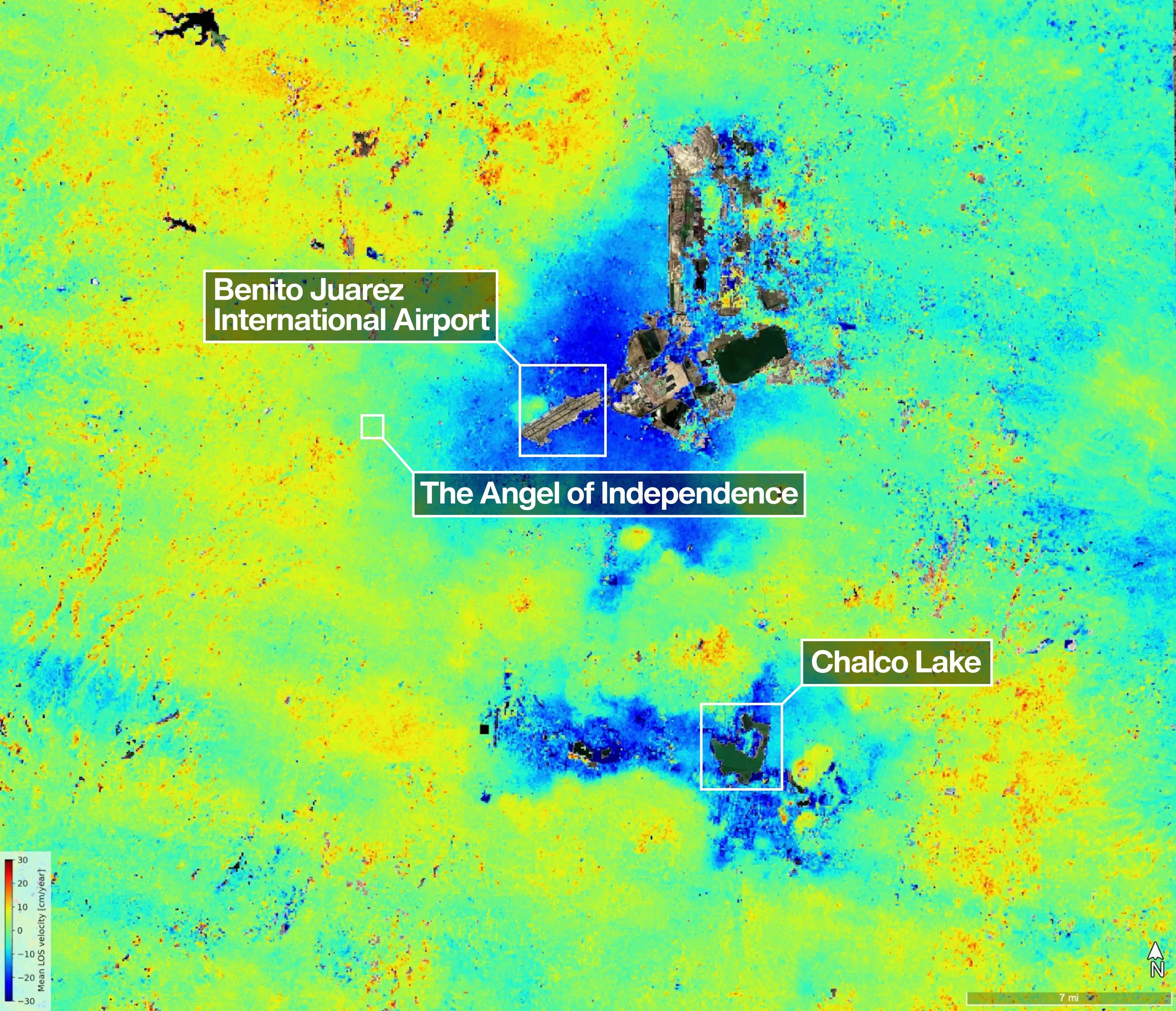
A new report from NASA has spotted the problem from space, as Mexico City is said to be dropping at a rate of 0.78 inches a month. NASA used its NISAR satellite to track real-time changes on Earth's surface, noting a yearly subsidence rate of about 9.5 inches. Tracking a period of less than a century, that's a notable drop of over 12 meters.
NISAR scientist Paul Rosen reiterates that the project is “telling us something about what’s actually happening below the surface," adding: It’s basically documentation of all of these changes within a city. You can see the full magnitude of the problem."
Cabral hopes that this will explain the full extent of the problem to the government, which is accused of ignoring the problem for decades. The government has stabilized foundations under certain monuments, but with a recent water crisis making things worse, officially are finally starting to fund more research. He says that the NISAR satellite data can help address the problem, and concluded: "To do long-term mitigation of the situation, the first step is to just understand."