
Google searches for abolished execution method soar by 1,600% as Crista Pike survives execution


The horrifying case of Christa Pike has never been far from some people's thoughts, with the 50-year-old being arrested and charged over the 1995 murder of 19-year-old Colleen Slemmer. Pike was just 18 at the time, and having sat behind bars since 1996, she's one of the youngest women to be sentenced to death in the USA since 1972's Furman v. Georgia case that overhauled how the death penalty works.
While Pike's long-awaited execution was always destined to dominate the news, it's cast a shadow over the already dark world of crime in America due to the botched use of lethal injection.
Although the most common method of execution in the United States, witnesses describe how they saw Pike 'snoring' after being administered two supposedly deadly doses of pentobarbital.
Christa Pike case leads to spin in guillotine interest

Pike's legal team lobbied around a month before her execution, claiming that a pre-existing condition of thrombocytosis could increase clotting during the procedure. With her veins apparently being small and hard to access, medical expert Dr. Joel Zivot suggested Pike would feel like she was "burning alive." Still, hematologist Dr. Richard Mansour reiterated that Pike's recent medical history showed her veins were accessible, leading to her lethal injection to move ahead as planned.
Advert
The aftermath of Pike's botched execution has backed up ethical concerns that the lethal injection might not be as ethical as proposed, as well as adding to statistics that it's not as successful as many think.
With this, interest in the guillotine has spiked as some call for its return.
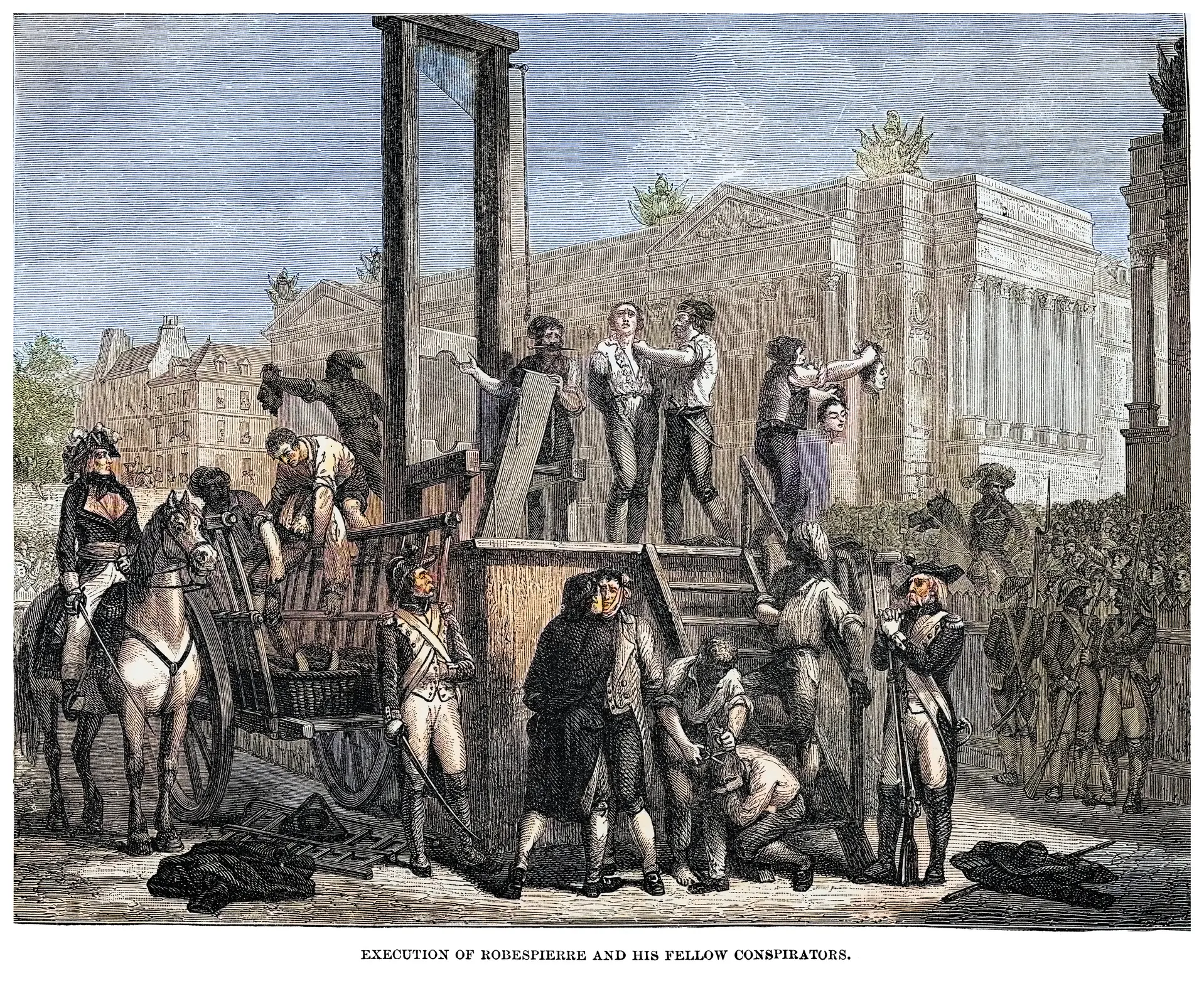
First used during the French Revolution of 1789-1799, the guillotine was designed by French surgeon Antoine Louis, and a prototype was built by German harpsichord maker Tobias Schmidt.
The idea was to introduce a more humane method of execution to replace breaking on the wheel or the uneven strikes of an executioner's axe.
While immortalized for its use during the French Revolution's Reign of Terror (1793–1794) and mass executions that claimed the lives of King Louis XVI and Queen Marie Antoinette, the guillotine was used well into the 20th Century.
It's thought that the last person in the world to be executed via guillotine was Hamida Djandoubi, on September 10, 1977, in France. As France later outlawed the death penalty in September 1981, the reign of the guillotine went with it.
Google Trends shows how searches for guillotine have skyrocketed by 1,600% since Pike's September 30 lethal injection failed to go as planned.
It's much the same on X, with many calling for the guillotine to be returned to active use.
On the social media platform, one supporter wrote: "If the state of Tennessee used the guillotine instead of lethal injection, Christa Pike would have died instantly, painlessly and on schedule.
“It is, clearly, one of the most 'humane' methods of execution. Governments only phased it out because it's too grisly *for the audience*."
Another added: "France last used it in 1977, but there is no reason a modern version couldn't be built. That would be more reliable than lethal injection, which has sometimes required repeated doses of potassium chloride and still left the condemned person alive and in unimaginable agony."
A third concluded: "Say what you will, but at least with the guillotine, you can't make mistakes and you don't have to start over..."
Even as you pitch the guillotine as a humane way to dispatch death row inmates, remember that some experts suggest the brain could remain conscious for anywhere between 10 and 15 seconds following decapitation.
What methods of execution currently exist in the USA?
At the time of writing, there are five methods of execution currently used in the USA. This varies depending on the state, although lethal injection is far and away the most popular choice.
According to statistics from the Death Penalty Information Center, there have been 1,683 executions in the USA since the modern era of the death penalty was introduced in 1977. As of July 1, 2026, there are currently 1,973 inmates on death row.
Interestingly, 32 states haven't had a single execution since 2016.
Lethal injection is authorized for use in executions in 28 states, as well as the federal government and the U.S. military. There's also electrocution being used in nine states that include Florida and Oklahoma; nitrogen hypoxia is used in a handful of states like Alabama and Louisiana, firing squad can be requested in five states, natural gas is a rarely used method in a few states, and hanging can be requested in even fewer.
Of the 1,683 US exectuions since 1977, 1,492 have been via lethal injection, followed by 163 from electrocution, 19 from gas, six by firing squad, and just three from hanging. While not quite as archaic as the guillotine, hanging is often seen as an outdated form of execution that means Billy Bailey was the last person to opt for this method back in 1996.
It's said that drug shortages have pushed some states to look more frequently at alternative methods, but in 2026, all 29 people who have been executed have been male, and all have been by lethal injection.
While we don't see Tennessee suddenly bringing the guillotine back as a way to combat lethal injection complaints, Tennessee Governor Bill Lee has postponed the final planned execution of 2026 and ordered "a comprehensive, third-party review to determine exactly what occurred."