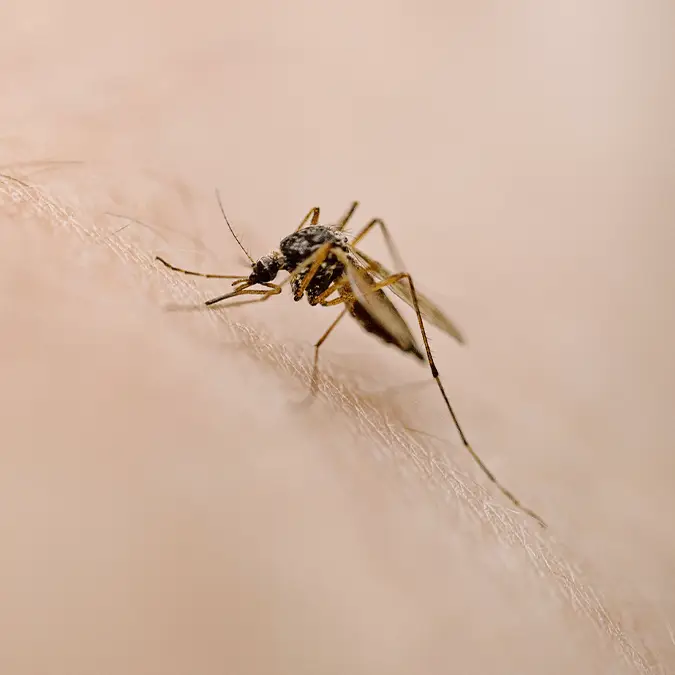
Company trying to eradicate mosquitos gets first kill in major step forward


Drones have made their way from aerial content creation to Amazon parcel delivery, but I bet you didn't picture a future where they hunt down mosquitoes in mid-air.
It's actually not the first time the two worlds have collided, after China unveiled a terrifying mosquito-sized drone built for covert missions.
Now, a company has flipped the idea around and pointed a drone at the mosquito itself, notching up its first kill in the process.
Engineers at Tornyol have reportedly claimed their first mid-air kill of a moth with their autonomous micro-drone.
Advert
Founded by Alex Toussaint and Clovis Piedallu and backed by startup accelerator Y Combinator, the company is building 40-gram drones aimed at wiping out mosquito infestations.
Toussaint posted a video of the test on 14 July showing the drone chasing a moth around a black-curtained room before striking it in the air.
“Extremely excited to announce our first air-to-air kill of a flying moth by an autonomous micro-drone,” he shared. “This is a big step towards completely eradicating mosquitoes.”
The kit borrows from technology already in your pocket and your car, combining smartphone microphones, the ultrasonic sensors found in parking-assist systems, and Tornyol's own signal-processing software.
The finished drone is meant to fire out ultrasonic pulses and listen for the echoes through an array of microphones.
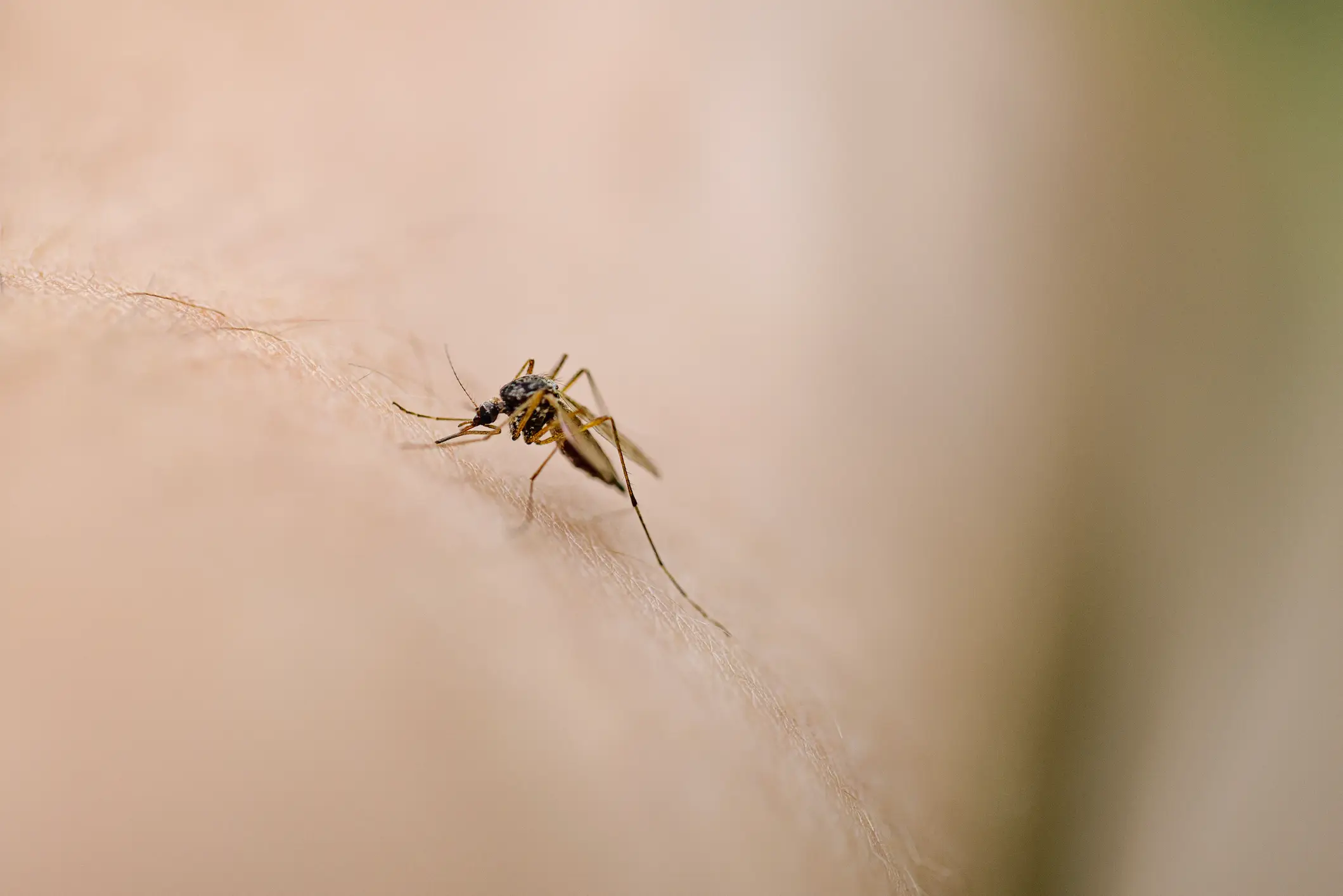
Because beating wings produce a distinct Doppler signature, Tornyol reckons it can tell a mosquito from other insects, and possibly even work out its species and sex, before intercepting the target.
According to the company website, the process works in four steps. The company pictures a drone and base station that patrol a garden without pause. You draw a protection zone on a map with 'no installation, no wiring.' The drone then patrols and returns to charge itself 'autonomously' as it hunts around the clock.
A motion-capture system tracked infrared lights on the drone and a ping-pong ball standing in for the target, while the sonar rendering and control algorithms ran on a separate computer that fed movement commands to the aircraft.
The World Health Organization estimates vector-borne diseases kill more than 700,000 people a year, with malaria alone responsible for an estimated 610,000 deaths in 2024.
To tackle this, Tornyol claims its approach could cut the cost of mosquito control a hundredfold and clear the insects from whole urban areas. They estimate that 10 drones could cover a square kilometre, though further testing is needed to prove the concept.
While the catch was not actually a mosquito, it's a clear step up from the firm's earlier simulations and suggests mosquito control could eventually move from sprays and nets to autonomous drones.