Nikon launches emergency investigation after £2,250 photo contest winner makes scandalous admission


Photography giant Nikon is being pulled into a swarm of controversy after the winner of its prestigious Small World in Motion contest is accused of enhancing their winning submission through the use of artificial intelligence.
We're warned more than ever not to trust everything online in 2026, and while it's fairly easy to spot President Donald Trump's AI slop being posted on his Truth Social feed, this was highlighted by the fact that the military had to step in to reiterate that America hadn't launched an attack on Iran's Kharg Island.
Away from kids using ChatGPT to do their schoolwork for them, there are complaints that the annual Small World in Motion contest has been mired by AI.
Small World in Motion gets up close and personal with viewpoints we might not typically see, encouraging applications for photos and videos taken under a microscope.
Advert
As reported by the BBC, the winner of 2026's competition was Dr Ning Xu, a researcher at Tsinghua University in China. Dr Xu bagged himself a £2,250 prize for his efforts.
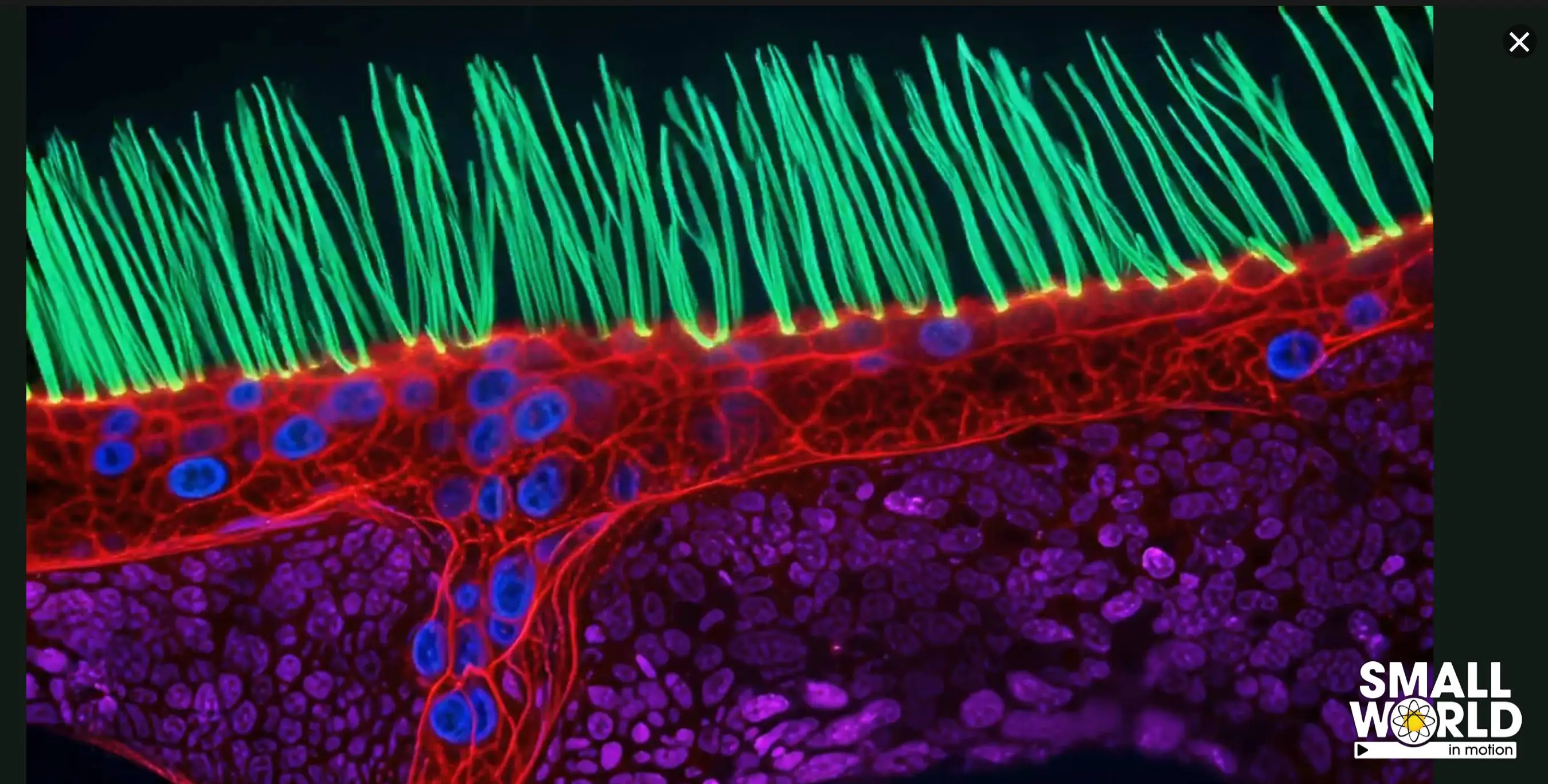
Xu appeared to show off tiny cilia moving in the airways of a child suffering from a rare disease called Primary Ciliary Dyskinesia (PCD), looking haunting and oddly beautiful at the same time.
The video caught the attention of Edward Phelps, an associate professor at Florida University, who said there were “many serious problems” with Xu's Small World entry. This included nuclei that are apparently behaving oddly, scaling that “does not occur in biology,” and cilia that “appear from nowhere and do not match the known size."
Phelps was joined by former Small World In Motion judge Andrew Moore, who said the footage "pointed toward incompatible interpretations." Moore says it reminded him of "old photographs restored with AI," adding: "The high-res, colorised photo may look nice. but if it was your grandma who was face-swapped, it’s going to be unsettling.”
Posting on LinkedIn, Nikon confirmed it has launched an investigation into Xu's video amid allegations that it was created with AI.
Nikon said it is "carefully re-reviewing the information provided during the initial vetting, along with additional supporting materials from the entrant."
Xu is "respectfully complying and has provided detailed technical documentation outlining the microscopy equipment, imaging methods, and processing techniques used to create the source video."
The Nikon Small World community will be informed of any updates. Although Xu didn't respond to the outlet's request for comment, he posted online and denied breaking any rules.
In an interview with Nikon, Xu admitted using AI and encouraged other researchers to “embrace AI to reveal the hidden beauty in your data."
Posting on LinkedIn, he explained that "AI was not used to generate the experimental movie, the cilia, or their motion”, but instead was used to "distinguish and visualise features in the reconstructed greyscale images."
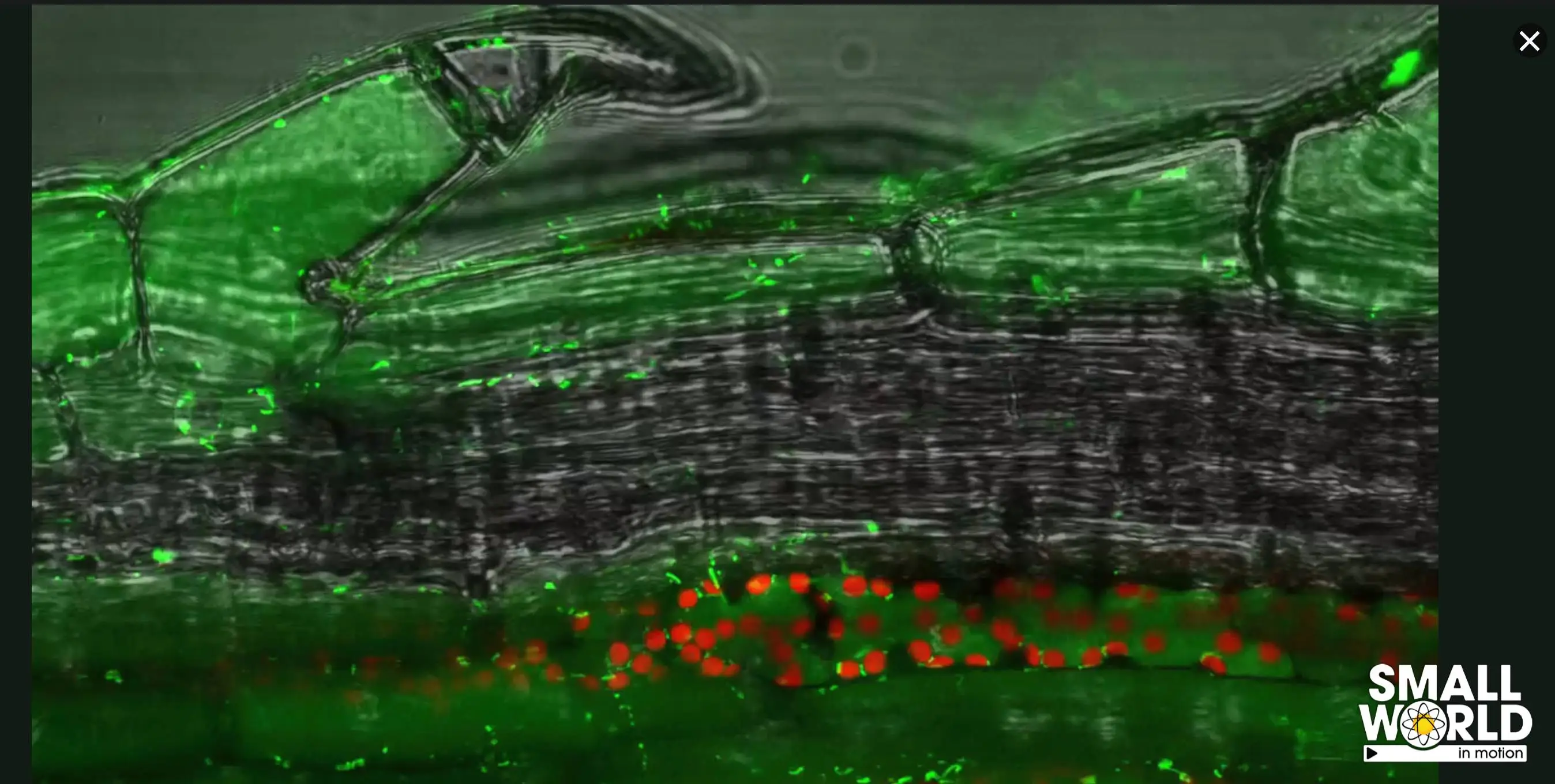
Defending himself, Xu concluded: "The regions beneath the cilia were rendered mainly to improve the visual presentation."
This has still caused a backlash from the scientific and photography communities.
Dr Patrick Hickey came fifth for his video showing off the dynamics of mitochondria and chloroplasts in Turtle Vine leaf cells, saying that the competition means much more than just the prize money: "If you spend a lot of your time in a dark room looking down a microscope, it's really nice to be able to show people and to show the public.'
"There's an interesting fusion between science and art, and a lot of the images that scientists are making have some very abstract and artistic qualities to them."
Reminding us there's a specific set of rules, Hickey continued: "One of them was quite clearly that you couldn't use generative AI to produce things, and the other was obviously that it has to be taken under a microscope.
In its own statement, Nikon summarized: "At this time, we don't see that any rules were violated."