
Unsettling simulation shows exactly what happens to your organs when you go 24 hours without eating


A simulation details what really happens to your body when you stop eating for 24 hours, causing your organs to switch from glucose to fat.
Revealing the science behind fasting, the YouTube channel known as Life According to Science posted a video which explores how the body adapts to going an entire day without food.
The simulation breaks down the changes hour by hour, explaining how different organs respond as the body gradually moves away from relying on glucose for energy and begins making greater use of stored fat.
Advert
During the first few hours, the body is still adjusting to its usual eating routine being interrupted. Hunger hormones, including ghrelin, can rise around the four-hour mark, potentially leaving you feeling hungry despite your energy levels remaining relatively stable.
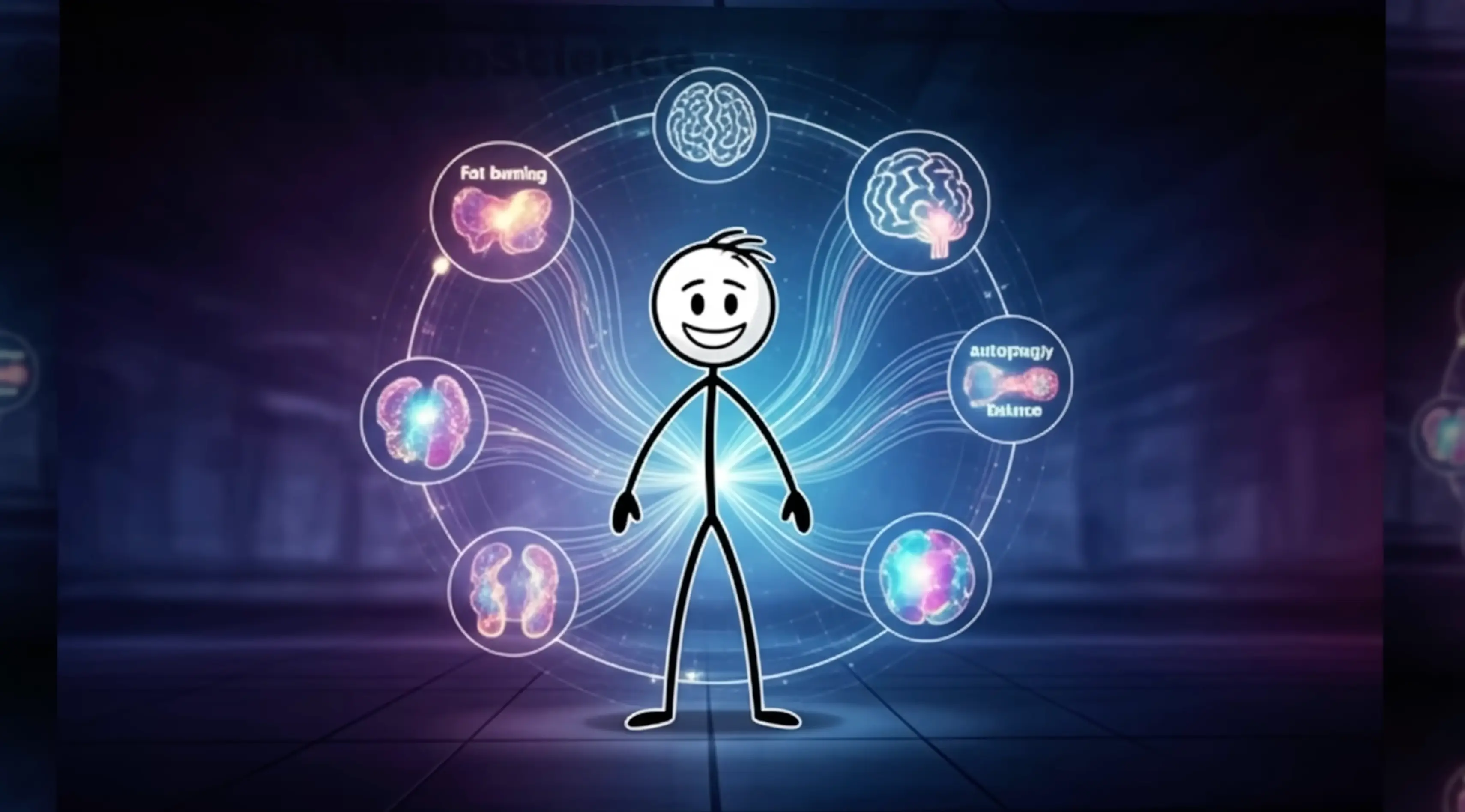
By around six to eight hours, blood sugar levels begin to fall and the pancreas releases less insulin. The liver then steps in, breaking down its stored glycogen to release glucose and help maintain blood sugar levels.
This acts as a backup energy supply while the body prepares to use other fuel sources.
As the fast approaches the 10-hour mark, the liver begins preparing for a greater shift towards fat metabolism. As glycogen stores become depleted, it starts producing ketones, which are molecules made from fat that can be used as an alternative energy source by the brain.
The video explains that this transition is part of the body’s natural ability to adapt to periods without food.
Organs switch from glucose to fat for its energy supply
As the fast progresses towards the 12 to 14-hour mark, insulin levels continue to fall, allowing fat cells to release more of their stored energy into the bloodstream.
The video describes this as the point at which the body moves away from its fed state and further into its fasting state.
By hour 15, attention turns to the digestive system. Although the stomach may be empty, it continues producing acid and digestive enzymes, which can cause the familiar growling sensation associated with hunger.

Around the 17-hour mark, the brain is also adapting to the changing energy supply, and between hours 18 and 20, the body increasingly turns to stored fat for energy.
The video does warn that prolonged fasting can affect electrolyte levels, potentially contributing to dizziness or heart palpitations in some individuals.
By hour 22, the simulation introduces autophagy, a process in which cells break down and recycle damaged proteins and other components.
As the 24-hour mark approaches, the body has increased its reliance on fat-derived energy, while ketones are becoming a more significant alternative fuel source.