Google's 'moonshot' experiment could threaten Elon Musk and Sam Altman


Google might be cooking up a major AI plan that could threaten the prominent positions of Elon Musk and Sam Altman's companies, as it aims to experiment with an unconventional location.
As we're still in the relatively early stages of generating artificial intelligence, we're yet to see which company will truly reign supreme for years to come in this new technology.
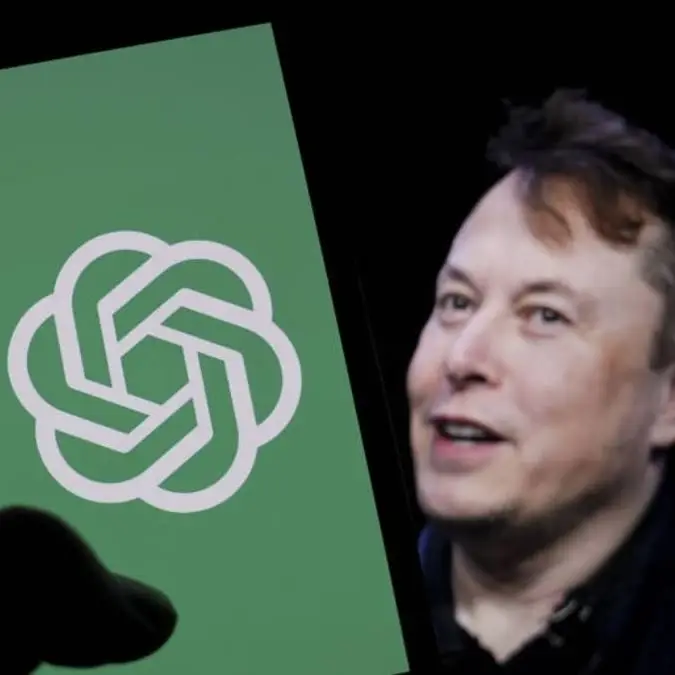
OpenAI's ChatGPT definitely has the lead right now, if only for the merit of getting there 'first', yet many of its strongest competitors from Google, Microsoft, and even Elon Musk's xAI are hot on the heels of Sam Altman.
As reported by the New York Post, an experimental plan from Google dubbed 'Project Suncatcher' could completely shake up the war for AI dominance, all as the tech giant has revealed 'moonshot' plans to open up data centers in space — an idea that has already been floated by Jeff Bezos and Elon Musk.
Advert
One of the key concerns for almost every major AI company right now is power, as you can only match growing demand if you have the supply to provide services to the millions of people worldwide who are using AI every single day.

Companies like Meta already have multiple data centers across the United States that act as the proverbial brain for its AI tools, including one that Mark Zuckerberg has dubbed a 'mammoth' due to its immense size, but that will eventually reach a limit.
Concerns surrounding the effect of these data centers on local residents and on the wider environment as a whole are paired with fears that there simply isn't enough space in the world to match the growth expected of AI, so it's only natural for a company like Google to look elsewhere.
According to Google, this experimental project would involve several "solar-powered satellites" equipped with the company's AI chips that would then "harness the full power of the Sun," although it wouldn't be without difficulties.
CEO Sundar Pichai has admitted that getting this up and running wouldn't be easy, as it's inevitable that "significant challenges" would emerge, especially involving "thermal management" of the chips on board the satellites, alongside "on-orbit system reliability."
Pichai added on X that "like any moonshot, it's going to require us to solve a lot of complex engineering challenges," illustrating that "early research shows our Trillium-generation TPUs (our tensor processing units, purpose-built for AI) survived without damage when tested in a particle accelerator to simulate low-Earth orbit levels of radiation."
These tests will continue with the launch of two experimental satellites in 2027, which will then provide valuable evidence and research opportunities to Google, allowing for the continued development of this bold project, but don't expect to see it any time soon.