
uniladtech homepage
  • News
    • Tech News
    • AI
  • Gadgets
    • Apple
    • iPhone
  • Gaming
    • Playstation
    • Xbox
  • Science
    • News
    • Space
  • Streaming
    • Netflix
  • Vehicles
    • Car News
  • Social Media
    • WhatsApp
    • YouTube
  • Advertise
  • Terms
  • Privacy & Cookies
  • LADbible Group
  • LADbible
  • UNILAD
  • SPORTbible
  • GAMINGbible
  • Tyla
  • FOODbible
  • License Our Content
  • About Us & Contact
  • Jobs
  • Latest
  • Archive
  • Topics A-Z
  • Authors
Facebook
Instagram
X
TikTok
Snapchat
WhatsApp
Submit Your Content
AI discovers astonishing 5,000-year-old lost civilization hiding beneath the world's largest desert

Home> News> AI

Published 16:49 13 Mar 2025 GMT

AI discovers astonishing 5,000-year-old lost civilization hiding beneath the world's largest desert

It uncovered trade routes and cities buried underneath the sand

Harry Boulton

Harry Boulton

google discoverFollow us on Google Discover
Featured Image Credit: owngarden/Getty Images
AI
Discovery
History
Science

Advert

Advert

Advert

Archaeologists using AI-powered technology have managed to uncover a 5,000-year-old lost civilization hidden and buried underneath the world's largest desert, complete with trade routes and ancient cities.

There is so much of ancient history that we've still yet to find due to the obscuring of time, but recent innovations in technology have allowed scientists and archaeologists to uncover what was previously inaccessible.

While sometimes natural occurrences like global warming can reveal things like forests hiding in plain sight, and some lucky individuals can stumble upon relics of ancient Mayan cities by accident, and even 'lost cities' at the bottom of the ocean that would remind anyone of Atlantis.
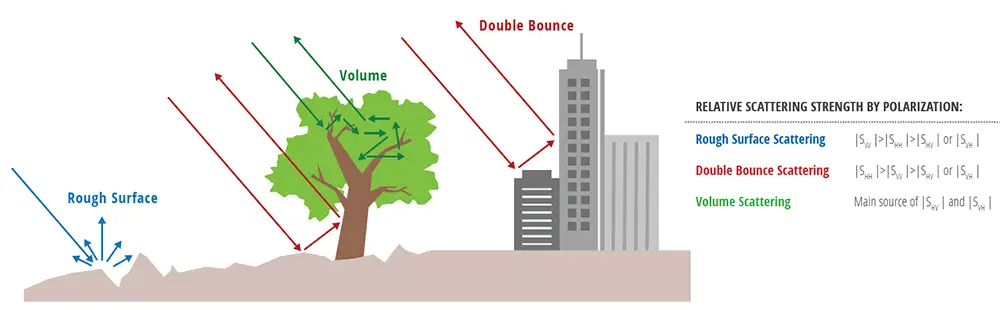
Synthetic Aperture Radar technology uses scattering data to evaluate subtle difference in surface detail, which is then analyzed by AI (NASA SAR Handbook)

Advert

Technology has also played a key part in revealing lost and hidden mega cities across the world, and joining these is a new revelation thanks to the combination between artificial intelligence and what's called Synthetic Aperture Radar (SAR), as it's allowed researchers to uncover a staggering lost civilization that stretches back over 5,000 years, as reported by IDR.

Led by Maria Gonzalez, this project studied the Dubai desert, finding traces of human activity in remnants of settlements and lengthy trade routes.

The SAR technology is able to 'scan' thousands of square kilometers in a matter of hours, analyzing the data in relation to existing archaeological sites in order to spot subtle differences in the land.

What this saves is not only time but also money, as sending specialists into the field is incredibly costly, whereas these new innovations can predict previously hidden locations that would be near impossible to spot by humans alone.

On top of this, the AI and SAR combination is not only capable of uncovering where ancient civilizations and human movements might have existed, but it's also able to conjure what settlements and multiple-millennia-old living might have looked like.
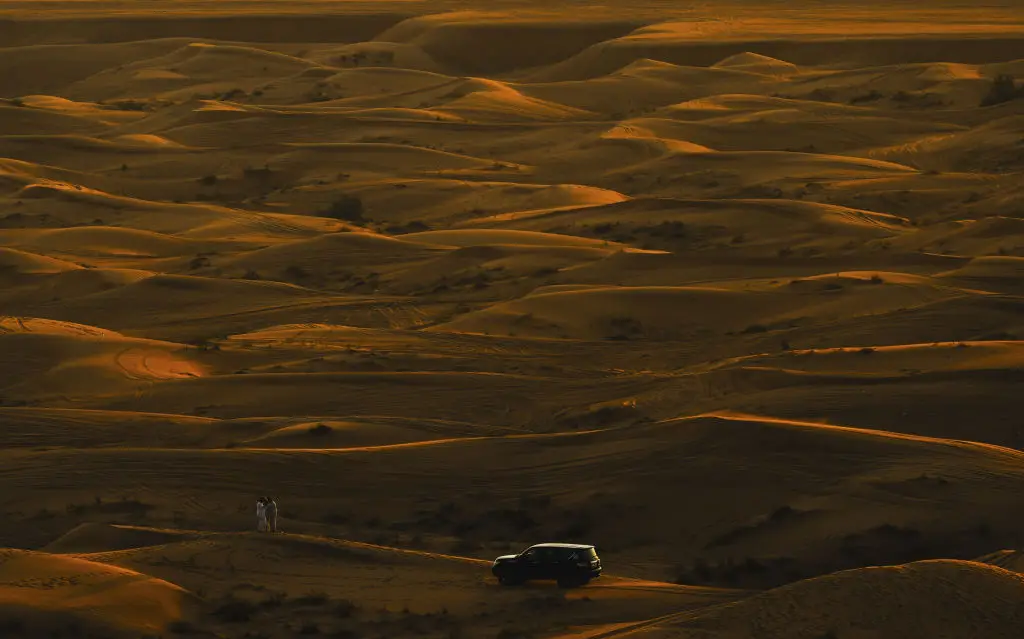
The Dubai desert is home to this ancient civilization, challenging previous archaeological understandings (Ercin Erturk/Anadolu via Getty Images)

The sourcing of this information also challenges previous assumptions that indicated little movement and connection between the surrounding regions, which represents a major breakthrough in associated research.

Archaeologists have been able to use the information to link caravan routes between Mesopotamia, the Indus Valley, and the Levant, which were likely used to trade valuable goods like incense, textiles, and metals.

Trade routes like this were likely in use for thousands of years before disappearing from sight, and it's only now through the utiliszation of machine learning artificial intelligence that archaeologists were able to spot it - especially at the rate at which it has been uncovered.

Choose your content:

a day ago
  • Bloomberg / Contributor via Getty
    a day ago

    How Trump's digital footprint is being used to push for his removal as Dems file bill to remove president

    It comes after the POTUS was blasted for posting an AI picture of himself as 'Jesus Christ'

    News
  • JIM WATSON / Contributor via Getty
    a day ago

    Trump responds as Mamdani sends multi-million dollar tax bill to the White House

    The President of the United States could be about to foot a massive bill

    News
  • Noam Galai / Stringer / Getty
    a day ago

    Monzo founder reveals two jobs that will seem like a 'joke' in a matter of years thanks to AI

    These careers will seemingly be eradicated by advancements in the tech

    News
  • PonyWang/Getty Images
    a day ago

    Simulation shows what's going on in the body during female ejaculation

    Female ejaculation has been shrouded in mystery for decades

    Science
  • 5,000 year-old city hiding underneath vast desert uncovered in astonishing discovery
  • World's largest lithium deposit worth $1.5T is hiding beneath an Oregon supervolcano
  • Scientists share images of 250,000,000-year-old fossil that proves our ancestors laid eggs
  • Bizarre triangle in desert spotted on Google Earth sparks eerie 'lost civilization' theories