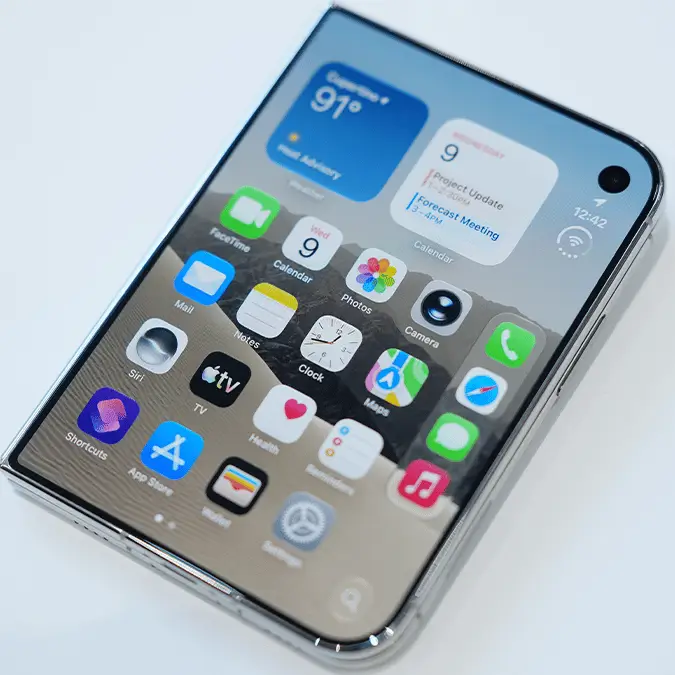
iPhone Duo is missing 10 key features found on older models


While the wider smartphone industry has had foldable devices for a number of years now, the iPhone Duo is not only the first of its kind for Apple, but also the first major design revision for the iPhone since it launched back in 2007.
It merges the convenience of a phone with the productivity and performance of an iPad – so much so that Apple even joked that it was the 'baby' of an iPhone and iPad Mini in a wild social media post – yet that does come with some compromises.
You can't fit everything into a foldable phone and expect it to be usable, as the nature of the design means that you have to fit nearly the same amount into effectively half the space.
That's why you might be shocked to discover that the iPhone Duo is missing at least 10 key features from the flagship version of the 'standard' iPhone design, making it a question of compromise when deciding which one to go for from this year's line-up.
What features are missing from the iPhone Duo?
As reported by MacRumors, there are several notable features that are 'missing' from the iPhone Duo compared to the iPhone 18 Pro, although not all of them are disadvantages in the eyes of some.
- Telephoto camera with 8x optical zoom
- Variable aperature on the main primary lens
- Higher resolution front camera
- Action button
- Face ID
- LiDAR Scanner
- Pro camera controls
As you can see, most of these relate to the camera systems available on the iPhone Duo, as it suffers many of the same compromises that the ultra-thin iPhone Air had to deal with last year.
Advert

It only has two camera lenses – a main and wide-angle – compared to the three on the iPhone 18 Pro, and it's no surprise that the telephoto is the one to be lopped off considering the space required to house mirrors inside the phone that let you achieve a more zoomed-in look.
That means you're only able to access a maximum optical zoom of 2x with the iPhone Duo's main lens, cutting down signficantly from the 8x optical zoom from the 18 Pro's telephoto camera.
Additionally, you're also having to suffer from a notable reduction in quality for the front camera — especially when you use the one on the folded-out screen. Not only the 'outer' option capped at 12MP – although it still has Center Stage – the inner option is merely shown as a 'FaceTime camera' with severe limitations in quality.
Newly introduced this year in the iPhone 18 Pro too is a variable aperture lens, which lets you manually shift between ƒ/1.48, ƒ/1.8, ƒ/2.8, and ƒ/4.0 for greater control over the depth of field and exposure of your shots, truly earning the 'Pro' name.
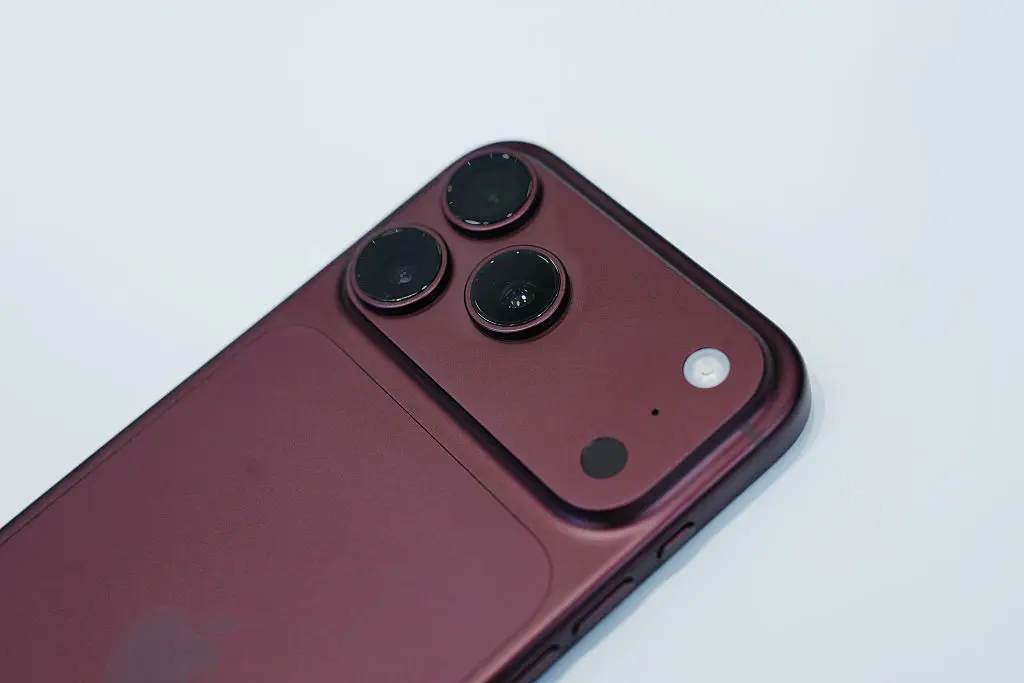
Unfortunately this is something that's completely absent from the main lens on the Duo, so if photography is something you really care about, you might want to opt for the 18 Pro instead.
The lack of a LiDAR Scanner could also be a major loss for photography, as it helps you achieve autofocus at a faster and more reliable rate, especially in low-light scenarios, but the new design made it difficult to fit into the foldable shape.
Gone is the action button too – although it's surprising how many people might not miss that in the Duo – and another major shift is the transition from Face ID to Touch ID, as while that seems like a downgrade, some might actually prefer the consistency of the latter going forward.
How does it compare to older iPhones?
It's not just the iPhone 18 Pro that the iPhone Duo looks lacklustre next to, as many of these missing features have also featured in previous versions across the past few years, making the jump over to the foldable less of a guarantee than you might think.
Telephoto lenses, for example, have been available in some of the higher-priced iPhones for over a decade now, with the iPhone 7 Plus being the first to introduce the capacity for closer shots.
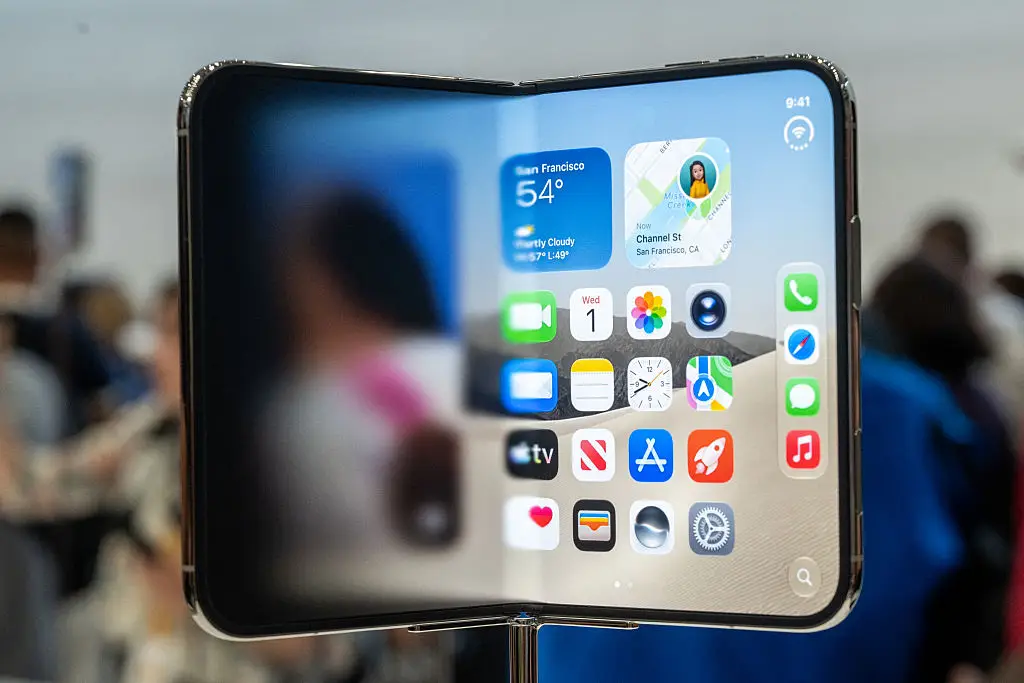
Even the base iPhone 17 has a better front camera than the iPhone Duo, posessing the same 18MP Center Stage option at the upcoming Pro line, and the main Dual Fusion camera system present in the base 17 mirrors that found in the Duo.
From a performance perspective, however, the iPhone Duo is definitely up to par, as it features the exact same A20 Pro chip as the iPhone 18 Pro, offering that performance over a far larger 7.6" screen when unfolded — and that's undoubtedly the biggest selling point of Apple's new flagship device.