iPhone found to be millions of times more powerful than NASA's moon-landing computer


It's been 57 years since we took one small step for man, one giant leap for mankind, and it's fair to say that the world has changed a lot since we first stepped foot on the Moon. From the invention of the internet to GPS, the artificial intelligence boom to personal computers, let's also remember that the IBM Simon Personal Communicator is largely regarded as the world's 'first' smartphone and wasn't released until August 1994.
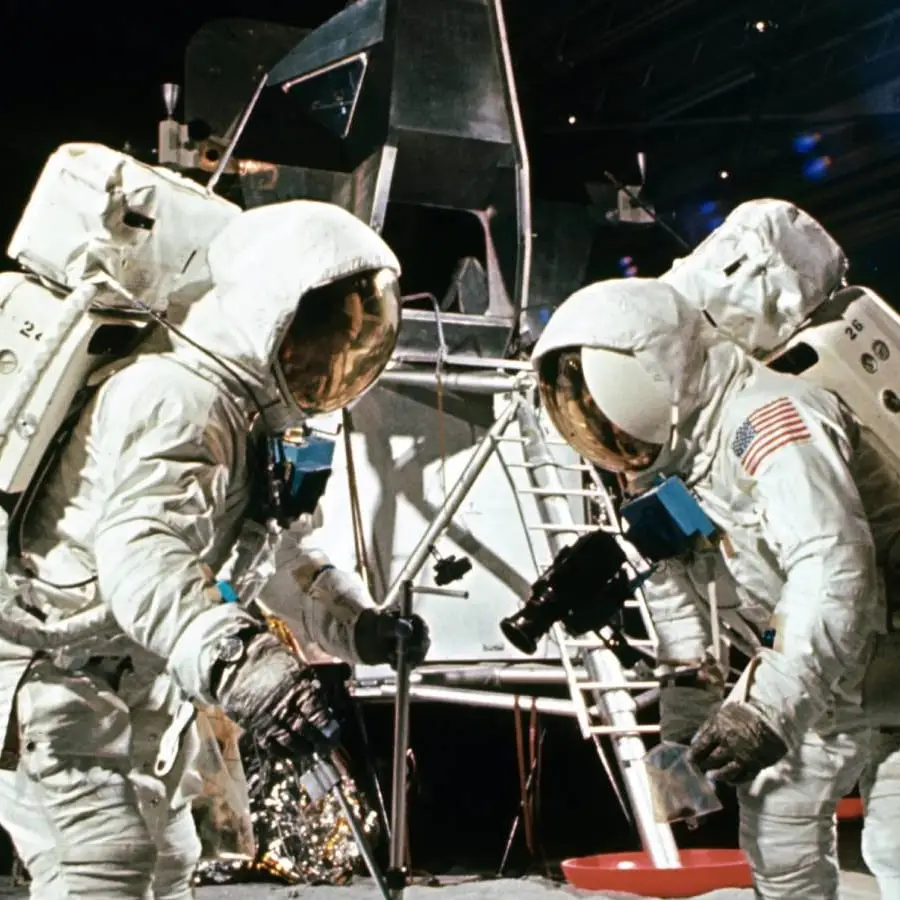
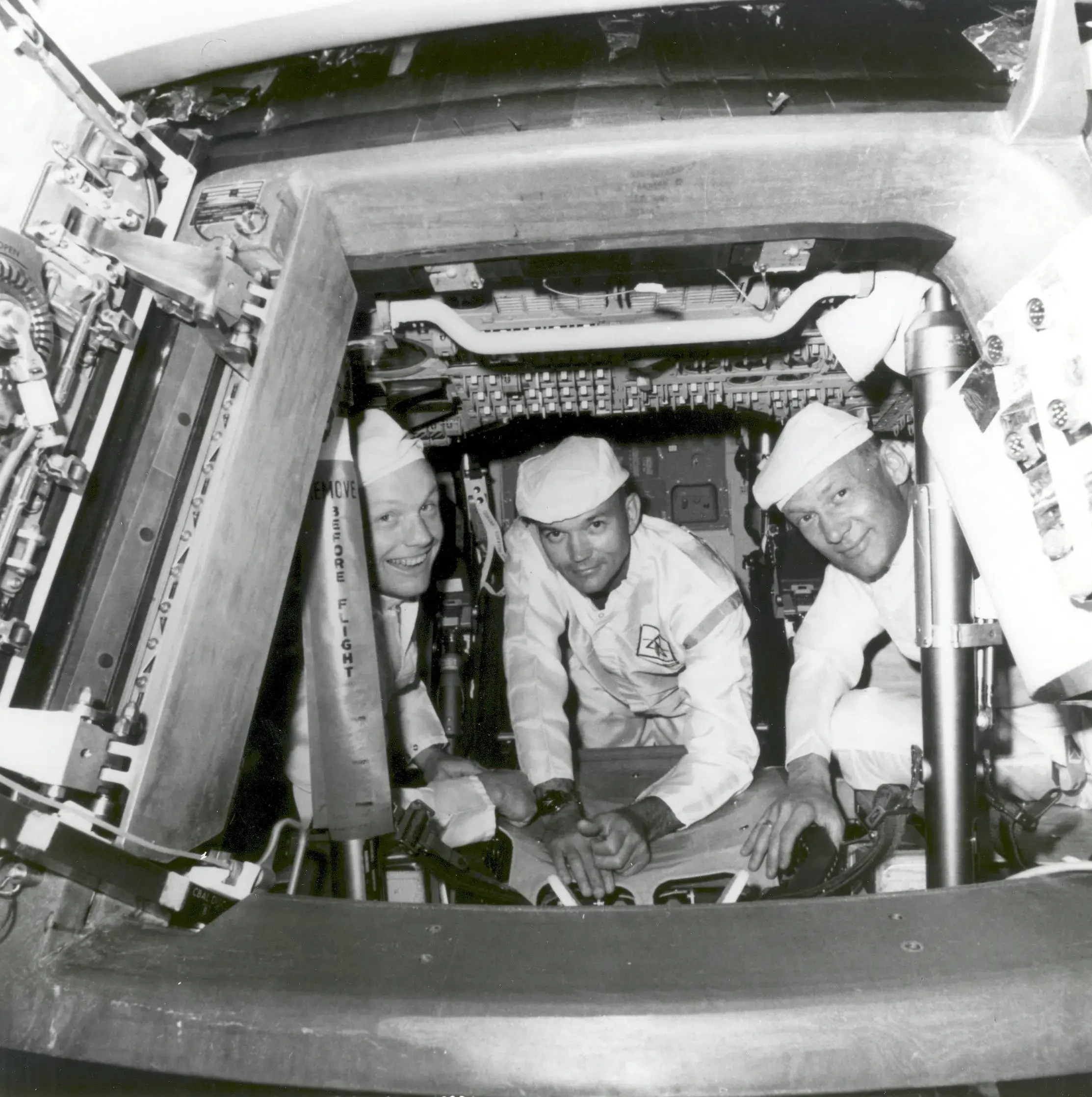
The Apollo 11 lander helped put Neil Armstrong, Michael Collins, and Buzz Aldrin on the Moon in 1969, and while it pushed the boundaries of technology for the time, it's long been eclipsed by more modern tech.
While it might be hard to comprehend, your average iPhone is millions of times more powerful than the Apollo Guidance Computer that landed on the lunar surface. Astronauts communicated with the AGC using a numeric display and keyboard called the DSKY (display and keyboard), both created by the MIT Instrumentation Laboratory. According to MIT documentation, each AGC contained 2,048 'words' of RAM.
Advert
With each word consisting of 16 binary bits, that meant an AGC had 32,768 bits of RAM. Considering the iPhone 17 Pro has an impressive 12GB of RAM, the 2025 model has 2,928,257.69 times more RAM than the AGC.
The AGC's processor operated at 2.048 MHz and had an expected speed of around 0.043 MHz, whereas the iPhone 17 Pro's efficiency cores run at up to 2.6 GHz. Also, as the AGC's ROM included 72 KB of non-rewritable data, it's outshone by the 17 Pro's ability to hold either 256GB, 512GB, or 1TB.
Even the OG iPhone from 2007 had 128 MB of RAM, making it 4,096 times more powerful.
Giving us more bang for our buck, each Apollo Guidance Computer (AGC) cost around $200,000 to produce in 1966 dollars, which works out to about $1.9 million per unit in 2026. You might've balked at the iPhone 17 Pro costing $1,099 when it launched in September 2025, but that's nothing compared to the price tag Apollo 11's AGC set NASA back all those years ago.
In general, the specific hardware production cost for the Apollo 11 Eagle lunar module was $40 million in 1969, meaning that would be a hefty $337 million today.

Modern smartphones are effectively giant computers in the palm of your hand, but then again, we're not trying to land humans on the Moon with them – don't give Apple the idea.
Of course, it's also not that simple because even today's beefiest smartphones would fall short of being able to power an upcoming Artemis mission.
Even though SpaceX keeps specifics under lock and key, it's said that a Falcon 9 rocket uses dual-core x86 processors.
Assuming the company uses modern chips, you'd need a processor that has a minimum running power of 4.10 GHz. This is nearly double the iPhone 17 Pro's four efficiency cores clocking 2.60 GHz.
As we've seen with the various issues with the International Space Station and problems with SpaceX's Starships, the brightest minds in the world are working on getting us back on the surface of the Moon for the first time since 1972.
We'll need a little more than the upcoming iPhone 18 to help us do it.