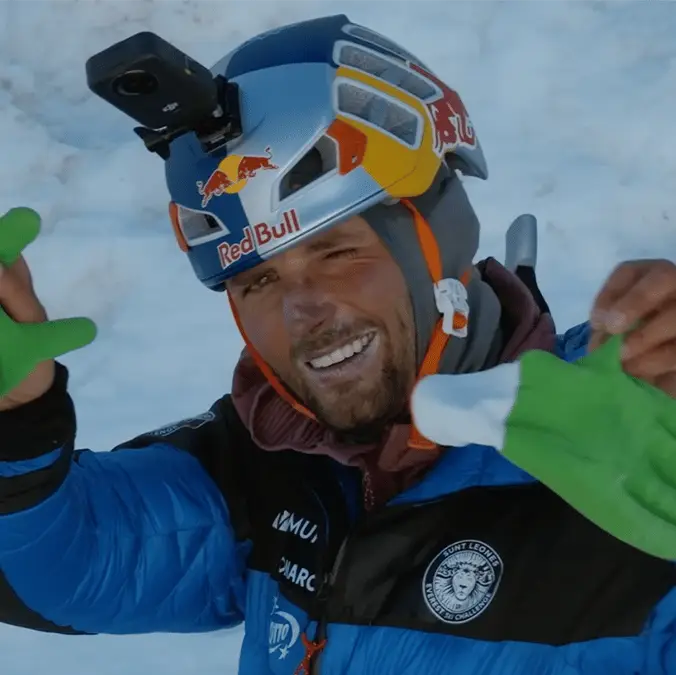
Viral footage captures man skiing down Mount Everest with no oxygen in 'insane world-first'

Climbing Mount Everest is a dream that many of you might have, but chances are, it's one that most will never achieve. Still, even though you might think of climbing Everest as being up there with going to space, an impressive 7,000 individuals have made some 12,8000 successful summits. It's not just about the journey up, as one intrepid skier has made his expedition all about how he got back down.
There are some pretty grim travel statistics about deaths on Mount Everest, with over 344 people losing their lives since Alexander Mitchell Kellas died of a heart attack back in 1921. Even in 2025, there have been five tragic passings from heart attacks, possible exhaustion, and altitude sickness.
The majority of Everest deaths take place in the aptly named 'death zone'.
This is a mountaineering term that refers to altitudes above 26,000ft or having less than 356 millibars of atmospheric pressure – where the oxygen pressure can't sustain human life. As the summit of Everest towers above the clouds at a whopping 29,032 feet, a fair chunk of its final ascent lurks in the death zone.
Advert
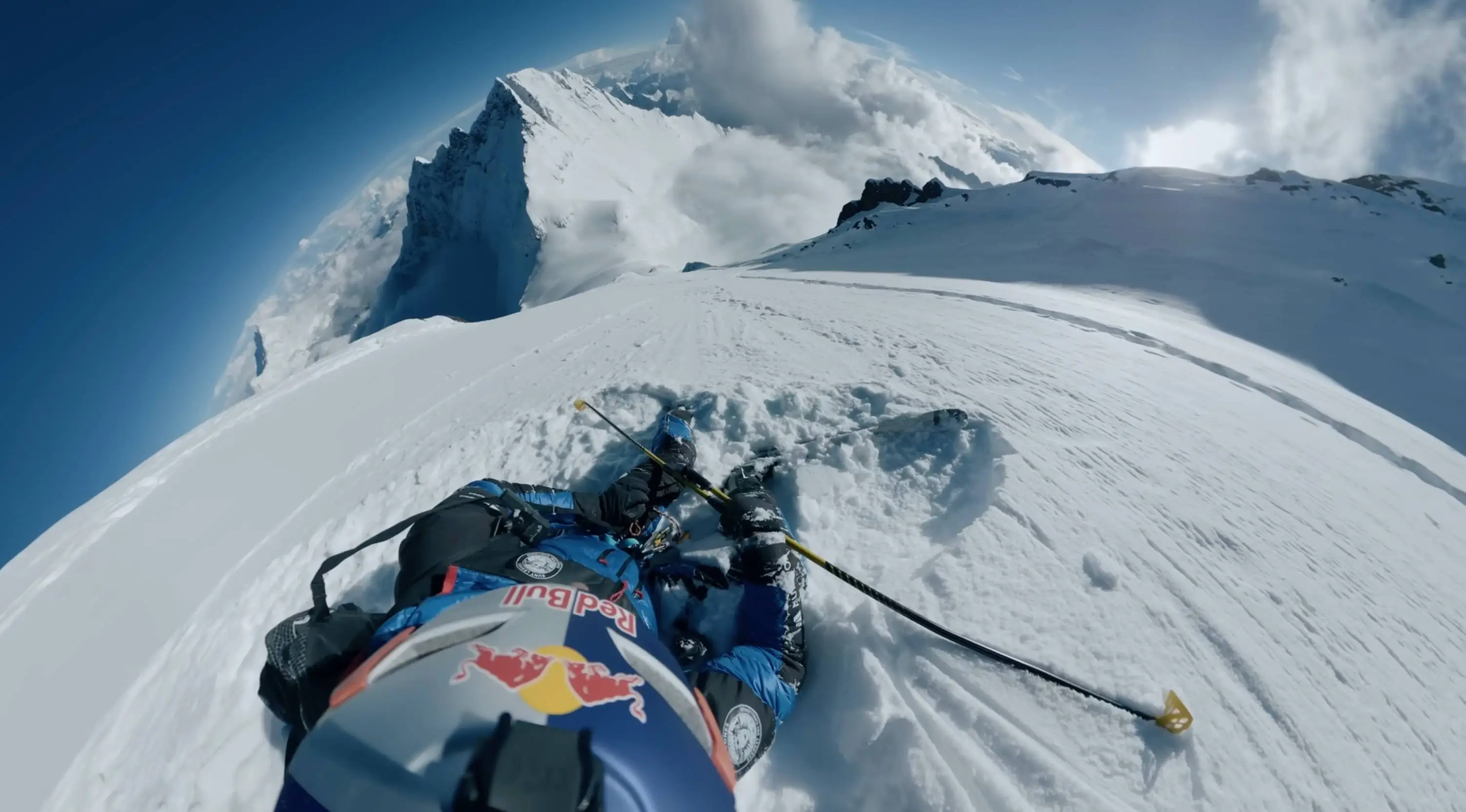
In partnership with Red Bull, 37-year-old Andrzej Bargiel has done the unthinkable and climbed to the top of Everest without the aid of oxygen, then skied all the way back down to the bottom of the deadly Khumbu Icefall.
The three-time Polish ski mountaineering champion is known for his particular set of skills, but taking on his toughest challenge yet in September 2025, he climbed up through the 'death zone' on a 16-hour trip that took him to the summit of Everest.
Not wasting any time, he clipped on his skis and quickly began his descent down the South Col Route. In the footage, Red Bull explains how humans can typically only survive up there without supplementary oxygen for between 16 and 20 hours, but only partway through his endeavour, Bargiel had already spent 17 hours on the mountain.
Hardly the quick zip down the mountain you'd think, Bargiel arrived and rested overnight at Camp II (around 21,000 ft) at 8.30 pm due to darkness, making it too dangerous and difficult to carry on that day.
Feeling rested, Bargiel navigated the perilous Khumbu Icefall and was guided by a drone led by his brother the next day. By 8.45 am, an emotional Bargiel had reached the snow line just beneath the base camp.
Most impressively, out of the thousands who've climbed Everest, only 200 have ever done it without supplementary oxygen. More than that, none have ever skied back down.
Discussing the expedition with Red Bull, Bargiel said: "It’s one of the most important milestones in my sports career. Skiing down Everest without oxygen was a dream that had been growing inside me for years.
“I knew that the difficult autumn conditions and plotting the descent line through the Khumbu Glacier would be the greatest challenge I could ever face."
Replying to footage of his world-first and once-in-a-lifetime achievement, one impressed viewer said: "This is somehow simultaneously one of the most peaceful and terrifying videos I've ever seen."
Another added: "This is one of the most insane things any human has ever done and we have it in 4k."
A third concluded: "These shots of Everest alone should get a nomination for best nature documentary of the year."