Facebook, WhatsApp and Instagram to test controversial new feature


Meta, the owner of social media platforms including Facebook, Instagram, and WhatsApp, is set to soon begin a controversial trial with its core services leading some to speculate that it will end up prompting '80 percent' of the user base to leave.
It's undeniable that a fundamental reason behind the success of the internet – and social media on a smaller scale – is the ease of access that is provided to anyone across the world.
The creator of the world wide web himself has emphasized this in recalling his efforts to keep his invention free for all, and that level of mass adoption has caused the world to change significantly since its creation — perhaps both for better and for worse.
Some might argue that we're now 'paying' for social media not only through the amount of ads we're subjected to on a daily basis but also through our data, yet that could soon change if a controversial new trial from Meta goes ahead.
Advert
As reported by the BBC, the owner of Facebook, Instagram, and WhatsApp has proposed a test period for premium subscriptions, introducing the possibility of locking content behind a paywall across its social media empire.
The focus for this isn't what you might expect though, as it appears to be solely centered on advanced AI tools that Meta has recently acquired through the purchase of Chinese-founded firm Manus for $2 billion back in December 2025.
It appears as if paying subscribers would be able to take advantage of 'agent-like' AI tools that require fewer instructions from users and can perform more complex, multi-level tasks, alongside access to its AI video-generation app Vibes.
This already follows on from changes put in place last year that limited the amount that you can post on Facebook without a subscription, alongside paid tiers for ad-free browsing, leading some to speculate that it won't be long until entire platforms are locked behind a paywall.
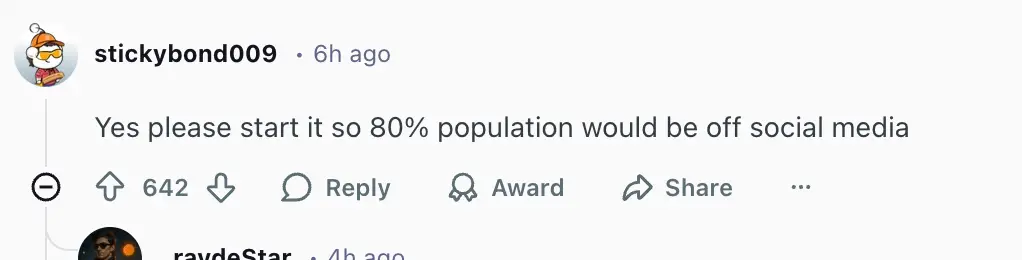
One commenter on Reddit appeared to revel in the possibility of this, however, requesting Meta to "please start it so 80% [of the] population would be off social media."
It is certainly intriguing to consider how many people would stick around if it became mandatory to pay subscriptions to access social media, but considering how long these platforms have been free, there would have to be a good enough justification for the change.
"What features could he create that I would pay $20/month for," questioned another commenter, with a third half-joking that they would pay for "the 2012 version of Instagram where you only see posts from people you follow."