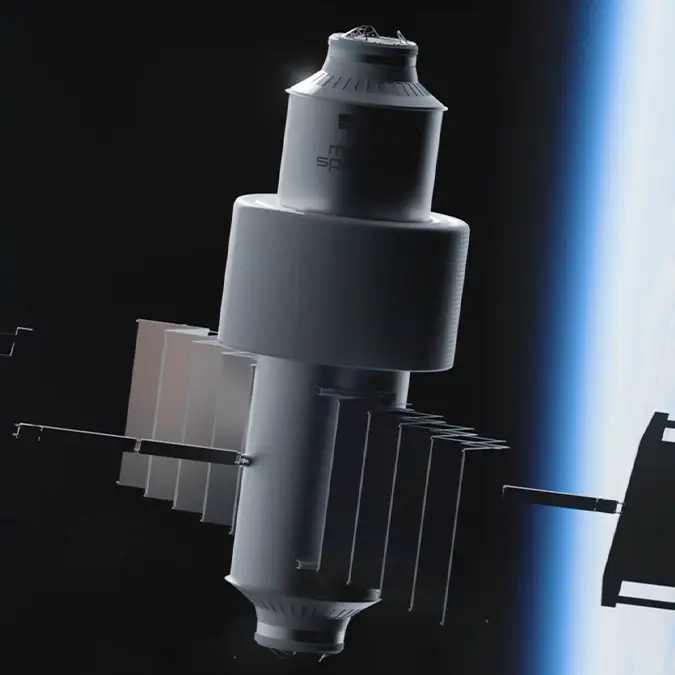
Mind-blowing video shows how new space station blows up to full size from one single capsule


The International Space Station is scheduled to retire in 2030, bringing down the curtain on a landmark chapter in space exploration.
SpaceX founder Elon Musk secured a whopping $838 million NASA contract to deorbit and destroy the space research facility safely.
The decommissioning plan calls for the ISS to descend to an altitude of 280 kilometres (174 miles), where a specially designed SpaceX tug (adapted Dragon capsule) will push it further down to 220 kilometres (137 miles).
At that point, Earth's thicker atmosphere will take over, gradually stripping away the station's remaining orbital momentum until it plunges into the ocean.
Advert
Way back in 1998, the ISS was built through a complex assembly process that was launched thanks to several expensive and logistically complex rockets.
Now, a radically different model could be in the works.
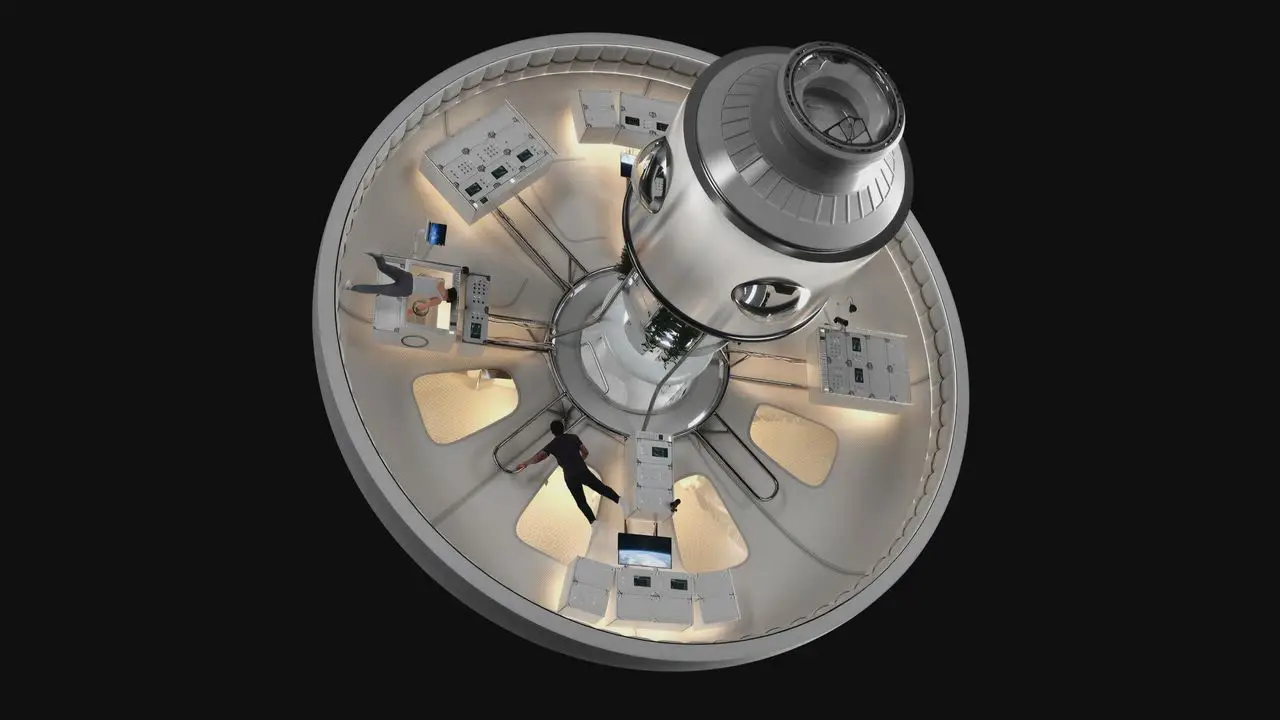
These new space habitats could become inflatable once they reach orbit, creating massive interior space for astronauts using just a single rocket launch.
A startup called Max Space recently unveiled its Thunderbird station, what they've described as 'the most spacious space station ever built'. Once inflated in orbit, it expands to 12,300 cubic feet (roughly a third the size of the entire ISS), yet it only needs one SpaceX Falcon 9 rocket to get there.
Their website reads: "Max Space builds expandable habitats, immense, super strong and radically economical. An evolutionary leap, we uniquely accelerate human presence in Earth orbit, to Moon and to Mars."
Whether the company can pull this off by its target date of 2029 remains to be seen, but it's an exciting glimpse of a more spacious, comfortable future for living in orbit. Here's Max Space's video of the station blowing up to full size:
The Thunderbird Station is said to include 'optimal and unencumbered views and superior privacy' plus massive screens for live feeds, entertainment and communication.'
The 'unique morphic paces' can also 'adapt and create working and living areas inside the space station that are fit for purpose,' the firm noted.
Following NASA's revision of its Commercial Low Earth Orbit Destinations (CLD) program last August, Max Space jumped at the opportunity. They're aiming to launch a scaled-down test version as early as 2027 aboard a SpaceX rideshare mission.
Speaking to SpaceNews, Max Space CEO Saleem Miyan said: “It was pretty clear that was an opportunity for us to put a proposal forward to show how these modules can really be used for human habitation.
“That CLD proposal gave us an incentive to strategically look at how we would bring forward the roadmap, and so that’s exactly what we’ve done.”
He added: “We see so many interesting applications where habitats, whether human-rated or not, are required. Those are the areas where I think we’re going to stand out.”