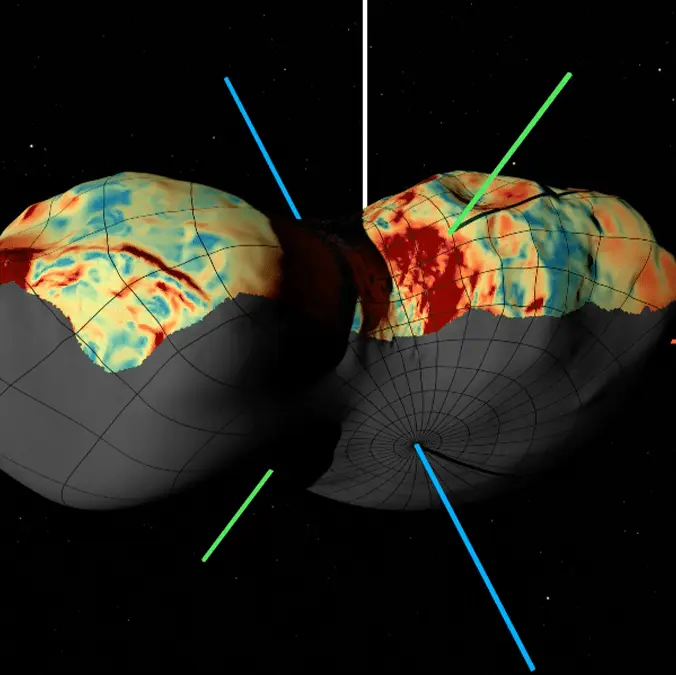
NASA finds remnants of an ancient world blasted apart 155 million years ago


One of NASA's spacecrafts has just made a fascinating discovery, as it has completed a flyby of an oddly-shaped asteroid known as 'Donaldjohanson', and this is understood to be the remnants of an ancient world that was split apart over 155 million years ago.
Part of the wider Lucy mission at NASA, which aims to explore a record-breaking number of asteroids in proximity to Jupiter's belt, the discovery of Donaldjohanson – named after the man that first spotted it – offers a vital look into the history of the universe and our solar system.
The Lucy spacecraft made its closest approach to the asteroid on April 19 earlier this year, noting that it holds a shape oddly similar to that of a peanut, and further analysis of its surface indicates that it was part of a wider family that existed as one single asteroid in the distant past.
What is the Donaldjohanson asteroid?
The discovery and further investigation into Donaldjohanson has been detailed within a new study published in the journal, Science, with researchers indicating that it is likely part of the wider Erigone asteroid family.
Scientists have described its shape as 'biolbed', although most would instantly liken it to a peanut as mentioned, and hints towards a larger impact in the past are witnessed through the erasure of small craters across its body which came as a result of 'seizmic shaking'.
Advert
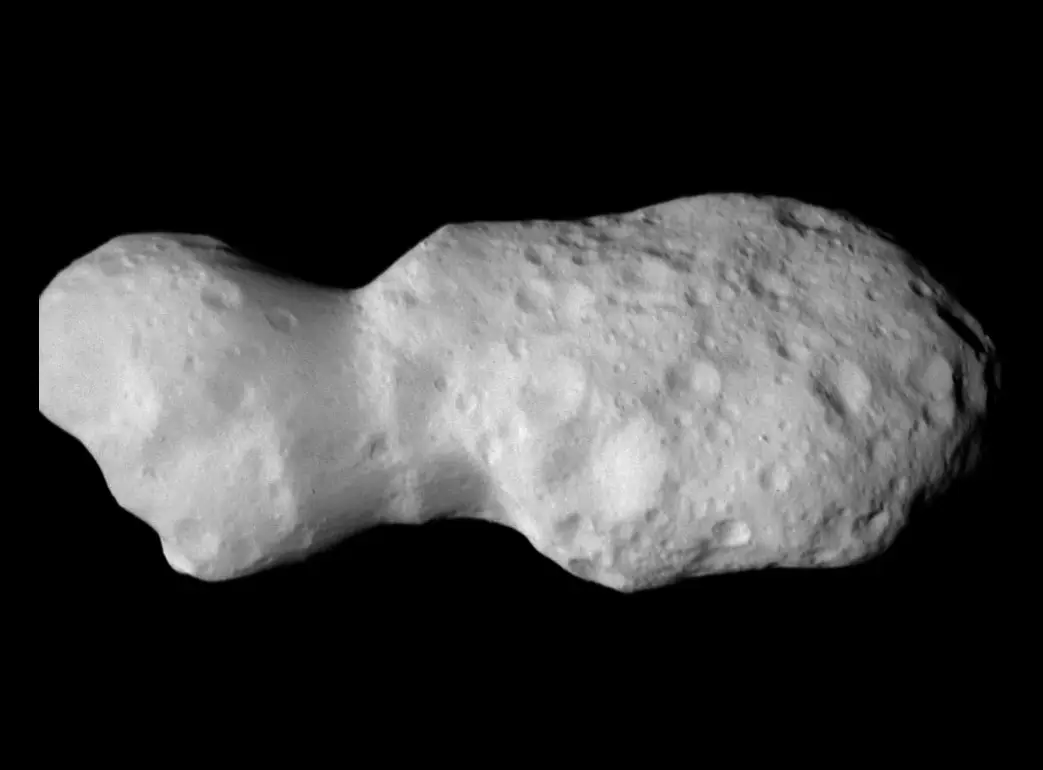
Furthermore, NASA's investigation has revealed that Donaldjohanson is "slowly tumbling, not simply rotating," which is explained as a result of "a resonance that arose while it gradually slowed from an initially fast spin rate."
Following the successful pass by and encounter with the asteroid, the Lucy spacecraft has now transmitted data back to scientists on Earth, who will "analyze the data to better understand the relatively young asteroid and to ensure that the spacecraft and team are well prepared to observe the mission's main targets: the Jupiter Trojan asteroids, beginning on 2027."
NASA's Lucy mission explained
Launched all the way back in October 2021, the Lucy spacecraft has been on a journey that will eventually last just under 12 years, traveling roughly 4 billion miles (6 billion kilometers) in the process.
Lucy was named after the discovery of a fossil in Ethiopia, which dates back 3.18 million years and is one of the earliest signs of human ancestry — and NASA is hoping that its own similarly-named spacecraft offers an equal level of discovery in outer space.
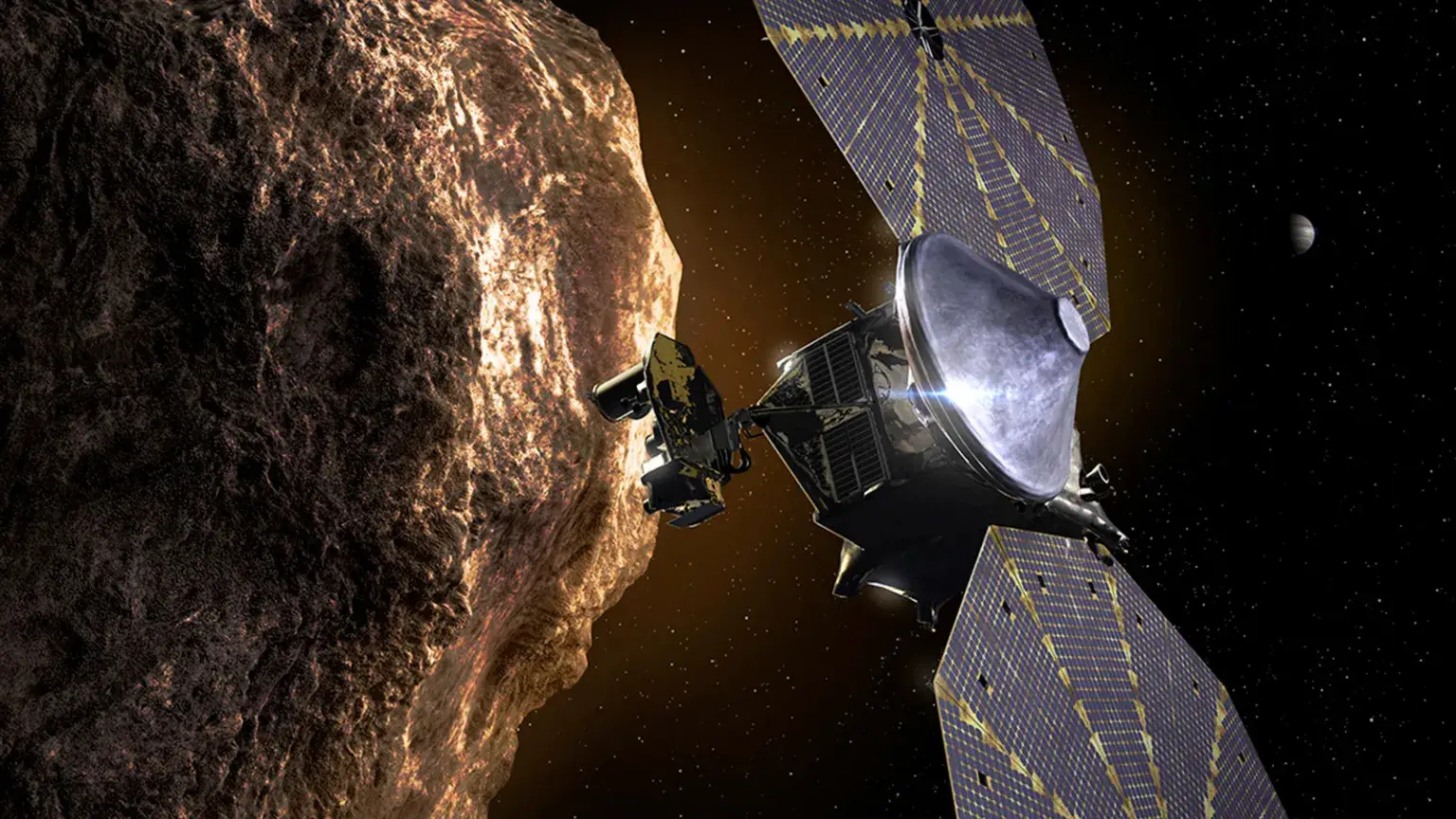
Its mission is to explore and analyze the Trojan asteroids around Jupiter, and these are important as 'time capsules' of our solar system's earliest days, with some expected to date back over 4 billion years into the past.
That's why the discovery of Donaldjohanson is particularly relevant too, as its comparatively youthful age could provide an interesting perspective relative to the fragments of space history its situated near to.