NASA confirms Mars rover has discovered the strongest evidence of 'ancient life' yet


NASA might just have made a major discovery using the Mars rover, as it has seemingly spotted traces of ancient life that people are immediately wanting to believe is related to aliens.
The chances of Earth being the only planet with life in any possible form is extremely slim, and while it might not necessarily manifest itself in the stereotypical alien form you might recognise from controversial autopsies, it's fascinating regardless.
Scientists and astronomers at the world's biggest space agencies are constantly on the hunt for signs and traces of life across the universe, with Mars a particular focus due to the technology available that can explore its rocky red surface.
NASA's Perserverance, otherwise referred to as the Mars rover, might just have found just that though, as chemical activity has been uncovered that could suggest that the planet was once habitable years and years into the distant past.
Advert
As reported by the Independent, this discovery was made in the Jezero crate, which is now believed to have once held water, as mudstones holding carbon matter and unusual mineral assemblages could very well have been created within conditions that would prove suitable for life.
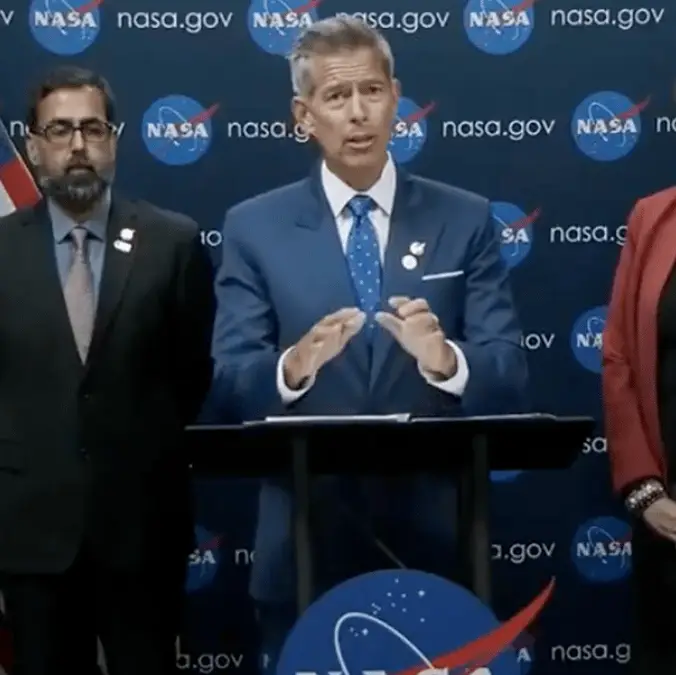
Speaking at a conference following the find, acting NASA administrator Sean Duffy exclaimed that "this very well could be the clearest sign of life that we've ever found on Mars," although it remains still an uncertainty and only proof of the possibility of life, as opposed to life itself.
This discovery, according to NASA, could "revolutionize our understanding of Mars, our solar system, and prepare for human explorers to the Red Planet," yet researchers are remaining hesitant to definitively claim anything either way.
Speaking about the discovery, geobiologist and astrobiologist Dr Michael Tice of Texas A&M University explained:
"When the rover entered Bright Angel and started measuring the compositions of the local rocks, the team was immediately struck by how different they were from what we had seen before.
"They showed evidence of chemical cycling that organisms on Earth can take advantage of to produce energy. And when we looked even closer, we saw things that are easy to explain with early Martian life but very difficult to explain with only geological processes."
Understandably many people's first thoughts have gone to aliens, with people desperate to have this be proof of some kind that there is (or at least, was) some form of extraterrestrial life out there beyond Earth.
"I WANT TO BELIEVE," wrote one impassioned user on X in response to NASA's announcement, with another joking that "we found life on Mars before GTA 6."
It's probably best to temper your expectations though, as SpaceX Falcon Launch Vehicles VP Jon Edwards explains: "My guess is that someday we'll determine that life is extremely common in the universe, but intelligent life is extremely rare."
That doesn't make the discovery any less exciting at the moment, but anyone with dreams of communicating with this life beyond Earth might end up being disappointed.