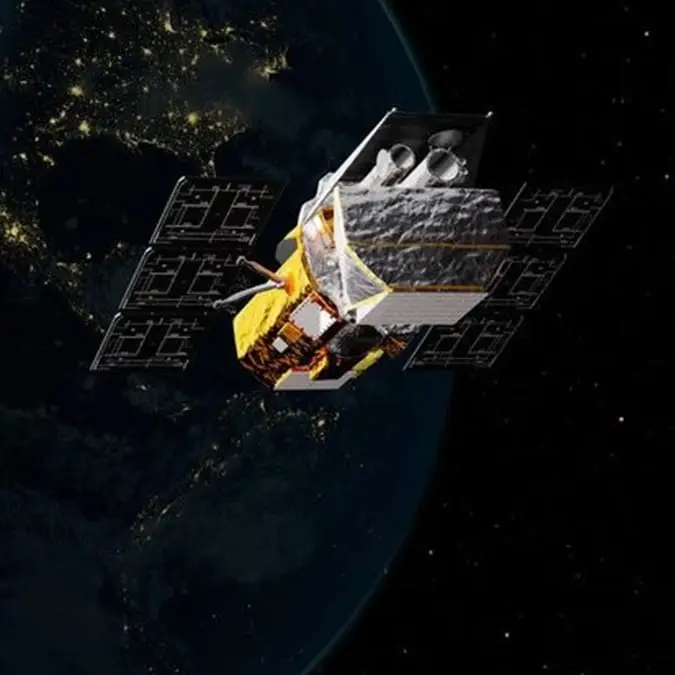
NASA's critical mission to save falling telescope delayed after hitting last-minute roadblock


NASA is facing delays with its critical mission to save a falling telescope after the space agency hit a last-minute roadblock.
Scientists are concerned that NASA’s Swift Observatory could end up crash landing back on Earth unless experts intervene.
However, despite a plane taking off last week carrying the Pegasus rocket, it was unable to launch.
Aboard the rocket was a robotic spacecraft which was due to catch the telescope in order to prevent it from re-entering the earth’s atmosphere.
Advert
So far, there hasn’t been any update from NASA as to when a new launch date might take place and, if a successful capture of the telescope isn’t made, then it could be set to crash back on Earth later this year.
The telescope dates back to the 1990s when astronomers were trying to solve one of the biggest mysteries in space. They knew that gamma-ray bursts were incredibly powerful explosions that appeared without warning, but by the time ground-based telescopes were pointed in the right direction, the events had often faded away.
Scientists needed a spacecraft that could spot these bursts instantly and react fast enough to capture what happened next.
That idea became the Swift Observatory, which was launched by NASA in November 2004, as it could automatically detect a gamma-ray burst and quickly rotate towards it in less than a minute.
Over the years, Swift has transformed scientists’ understanding of the universe, with its observations confirming that many long gamma-ray bursts are linked to the deaths of massive stars, while shorter bursts are often produced when two neutron stars collide.
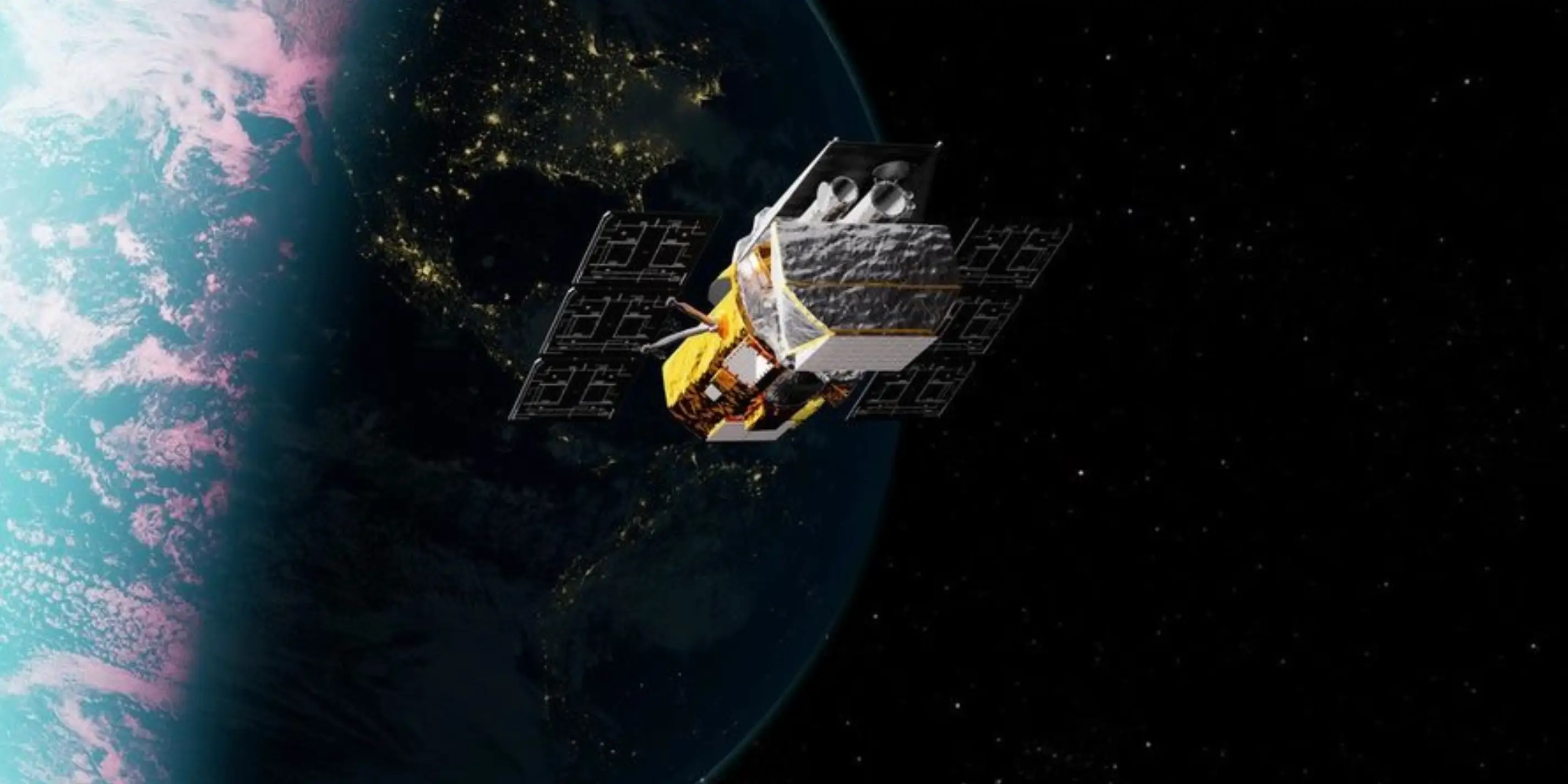
The telescope has also proved far more versatile than originally expected, spending time studying black holes, exploding stars, comets and other unusual cosmic events whenever it isn’t chasing gamma-ray bursts.
Now though, after over two decades in space, the telescope is fighting a completely different challenge than the one it was built to study. While it's still making important discoveries, the aging equipment has been slowly dropping closer to Earth because of atmospheric drag.
NASA is hoping that a rescue mission will give the spacecraft another chance, with plans to push it into a higher orbit in order to extend its life by a few more years.
However, this really is a race against the clock as the telescope continues to get closer and closer to Earth.
Time will tell if the experts are able to reach it before the spacecraft re-enters Earth’s atmosphere, leaving it to burn up.