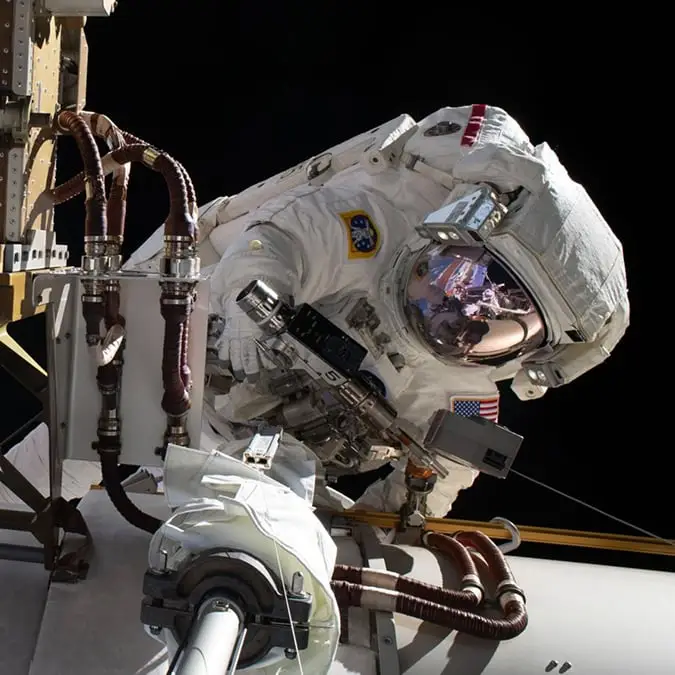
NASA astronauts are gearing up for a high-risk spacewalk outside the ISS into the void

NASA has revealed that its next spacewalk will take place tomorrow (August 18), with the space agency preparing its astronauts for the high-risk expedition.
According to NASA, two astronauts have been selected to work ‘in the vacuum of space’ in order to replace a space-to-ground antenna that will help to maintain high-speed data and communication transmissions between the orbital outpost and mission controllers.
The two astronauts in question are NASA flight engineer Anil Menon and ESA (European Space Agency) flight engineer Sophie Adenot who will embark on the six and a half hour spacewalk where they will swap out the antenna.
Why are spacewalks so dangerous?
Spacewalks are conducted with great caution as so much could go wrong when faced with the hostile void that is open space.
Advert
As the astronauts leave the safety of the International Space Station (ISS), they have to be vigilant of the risks of debris, which is moving very quickly in the Earth’s orbit, as well as extreme temperatures and the possibility of suit failure.
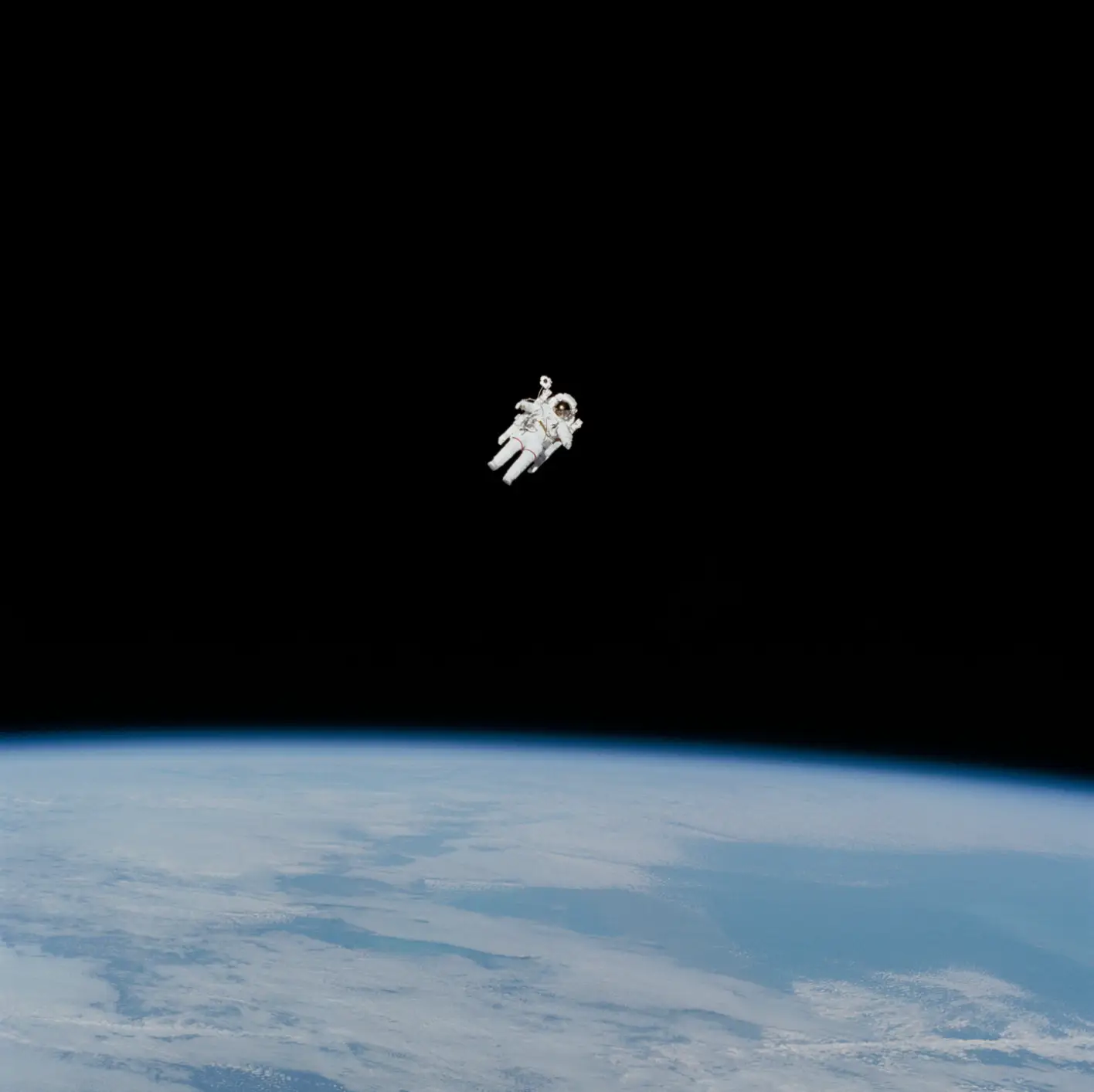
Another worst case scenario is the risk of becoming separated from the ISS and drifting away.
NASA astronaut Bruce McCandless II made first back in 1984 when he performed the first ever untethered spacewalk, using a jet-powered backpack called the Manned Maneuvering Unit to float freely in space.
At the time, he said: “It may have been one small step for Neil, but it’s a heck of a big leap for me.”
While no one has ever died while conducting a spacewalk, the risks are severe and NASA will often cancel an expedition last minute if the conditions aren’t favorable for the astronauts.
Previous spacewalks at the ISS
Recent spacewalks have taken place on the ISS in order to maintain the structure as it approaches the end of its operations, with it expected to be brought down at the end of the decade.
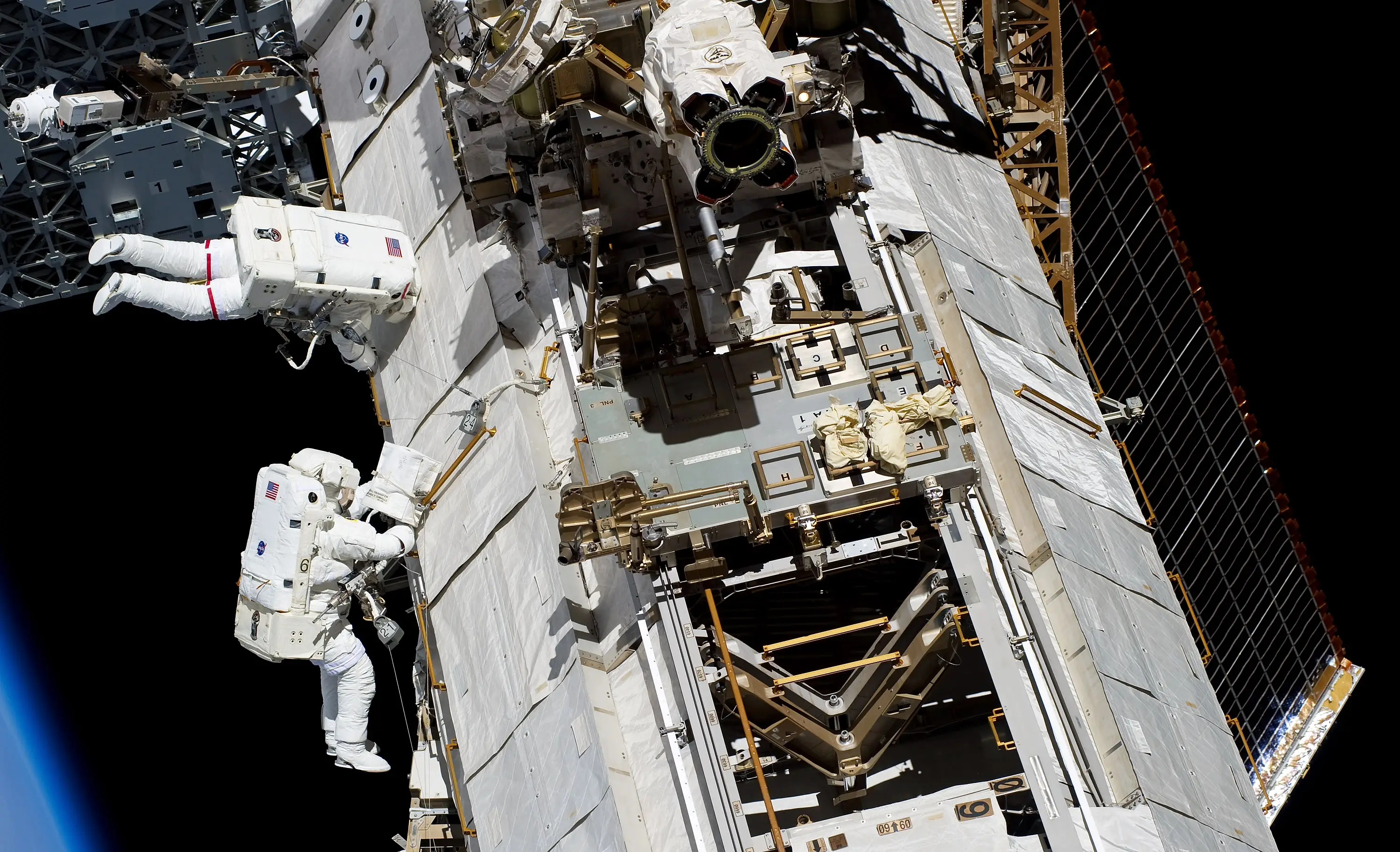
A previous spacewalk took place earlier this month where Menon, along with station commander Jessica Meir, augmented the space station’s power system.
NASA explained: “Meir and Menon spent six hours and 27 minutes building a modification kit on the station’s Starboard 6 truss segment where a roll out solar array is slated to be installed later this year.
“The astronauts still had time for science on Monday and explored microgravity’s effect on physics, the human body, and more. Meir worked in the Destiny laboratory module and swapped physics research hardware for an investigation studying ways to manufacture semiconductor crystals and process metal alloys in weightlessness.”