• News
    • Tech News
    • AI
  • Gadgets
    • Apple
    • iPhone
  • Gaming
    • Playstation
    • Xbox
  • Science
    • News
    • Space
  • Streaming
    • Netflix
  • Vehicles
    • Car News
  • Social Media
    • WhatsApp
    • YouTube
  • Advertise
  • Terms
  • Privacy & Cookies
  • LADbible Group
  • LADbible
  • UNILAD
  • SPORTbible
  • GAMINGbible
  • Tyla
  • FOODbible
  • License Our Content
  • About Us & Contact
  • Jobs
  • Latest
  • Topics A-Z
  • Authors
Facebook
Instagram
X
TikTok
Snapchat
WhatsApp
Submit Your Content
NASA astronomers release rare images of huge asteroid that threatens to hit Earth in 7 years

Home> Science> Space

Published 01:00 19 Feb 2025 GMT

NASA astronomers release rare images of huge asteroid that threatens to hit Earth in 7 years

The space rock could collide with our planet in 2032

Rikki Loftus

Rikki Loftus

google discoverFollow us on Google Discover
Featured Image Credit: Science Photo Library - ANDRZEJ WOJCICKI/Getty Images
Space
Nasa
Science
Earth

Advert

Advert

Advert

NASA astronomers have released rare images of a huge asteroid that threatens to hit Earth in seven years time.

Fears have been growing around YR4 2024, which is the name of the asteroid that is due to collide with our planet in 2032.

Having become known as the ‘city killer’, the asteroid could hit Earth with a force that is 500 times more powerful than the bomb detonated in Hiroshima, according to former NASA astronaut Chris Hadfield.
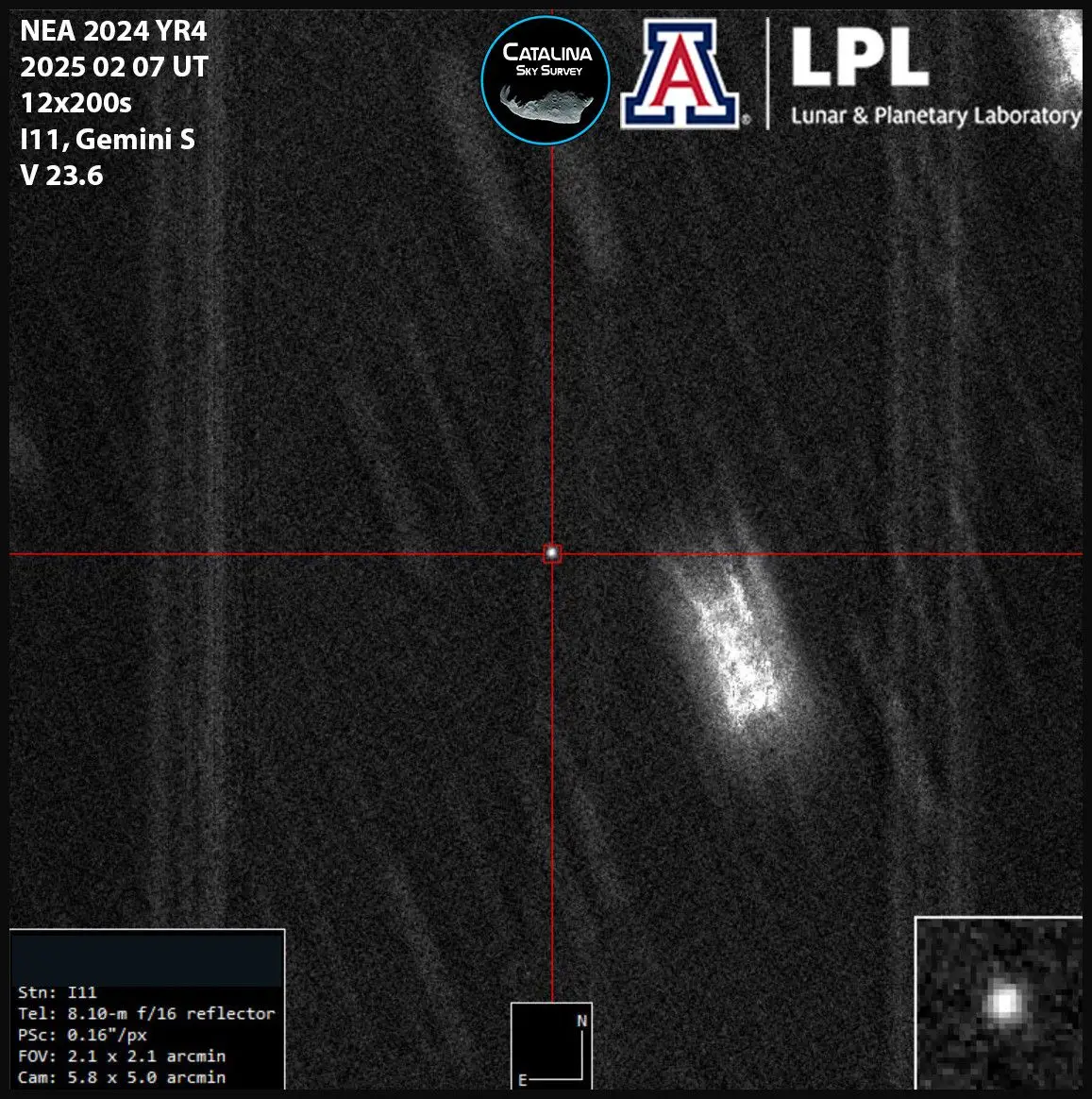
Images of the asteroid have been captured (Catalina Sky Survey/LPL/Dr. Wierzchos/Bryce Bolin)

Advert

Talking to LBC, Hadfield said: “Most asteroids are discovered by amateurs, people with their own telescopes who just love looking into the darkness and trying to find a star that’s where the star shouldn’t be or one that’s moving against the starfield, but this one is very faint, it has never been seen before this Christmas.”

Now, NASA has released images of the space rock that threatens to cause serious damage.

Speaking to Space.com, Bryce Bolin, who is a NASA astronomer involved in the photo-op, said that ‘only a few asteroids have been studied like this’.

The photos were captured by the Gemini South Telescope on February 7, which is located on a mountain in the Chilean Andes.

At the time that the images were taken, the asteroid is said to have been a whopping 37 million miles away from Earth.

In order to take the images from so far away, the team reportedly ‘took 12 200-second long exposures in the Red band (which is a specific range of wavelengths that correspond to visible red light or slightly beyond into the near-infrared spectrum) and tracked the motion of the asteroid’.
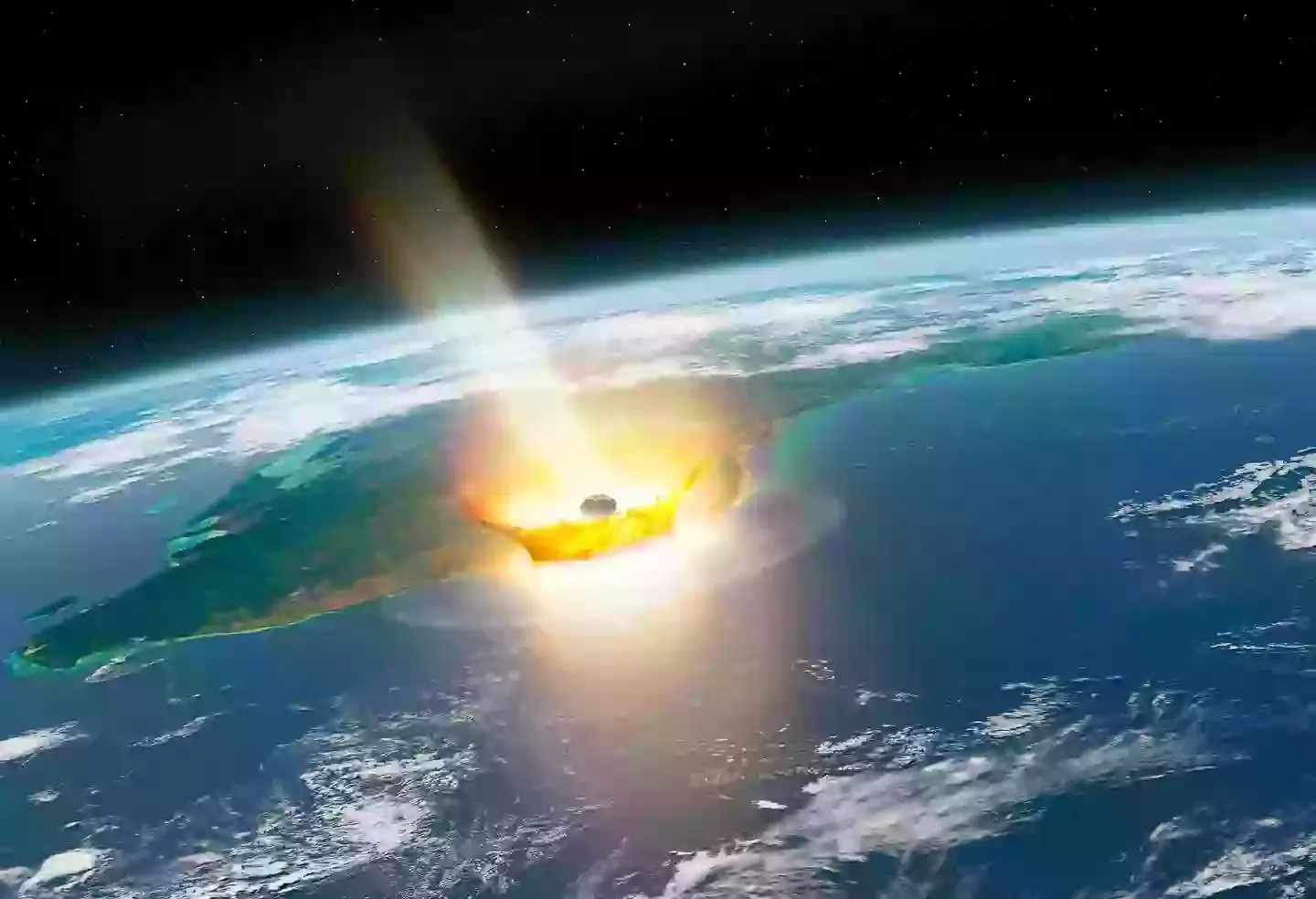
The asteroid could hit Earth in 2032 (MARK GARLICK/SCIENCE PHOTO LIBRARY/Getty Images)

Bolin went on to reveal that the observations were difficult to capture because the asteroid was very faint.

Another issue was the fact that the moon was 70% illuminated, which gave off backlighting.

The astronomer also said that YR4 is set ‘to be extremely exciting’ due to ‘the scientific potential of studying such a small asteroid in high detail’.

This sighting could be the last ‘chance we have to observe the asteroid from Gemini’ before it reapproaches back towards Earth in 2028.

NASA will also be using the James Webb telescope to learn more about the asteroid’s orbit path as it makes its way back to Earth in 2032.

The team will use their analysis to determine the level of damage that would be caused if the space rock does collide with our planet.

  • NASA issues warning after major solar storm threatens blackouts across Earth
  • James Webb Telescope catches sight of ‘city killer’ asteroid that scientists feared could hit Earth
  • NASA discovers ‘Super Earth’ sending mysterious message 154 light years away
  • NASA simulation reveals horrifying way Earth could be 'ejected' from the solar system

Choose your content:

a day ago
2 days ago
3 days ago
  • supplied via Tyla
    a day ago

    How woman born without a vagina discovered her condition at age 16

    Only 1 in 5,000 women are affected

    Science
  • Oleg Breslavtsev/Getty Images
    2 days ago

    Getting exactly seven hours and 18 minutes sleep a night 'prevents' these 'two major health conditions'

    Too much sleep can be just as bad for your health as not getting enough, according to experts

    Science
  • Andrew Francis Wallace/Toronto Star via Getty Images
    3 days ago

    'Boil in the bag' funerals where liquified bodies are flushed down a drain come to major western country

    It's an alternative form of cremation

    Science
  • wildpixel / Getty
    3 days ago

    Scientists warn men are losing their Y chromosomes and it could turn deadly

    The risk appears to increase with age

    Science