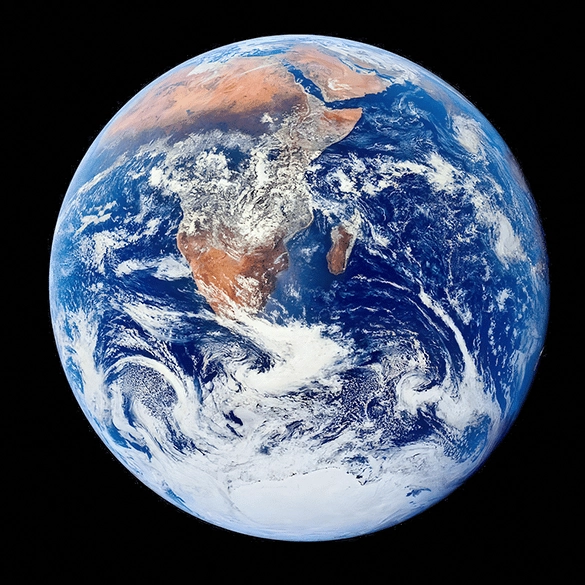
Scientists have just made a shocking discovery that suggests our universe shouldn't actually exist


While scientists have studied the universe's history, we still don't have a complete picture of how the universe exists and why.
But new research suggests that we shouldn't even exist at all...
According to a new study set to be published in Physical Letters B, current models indicate that the universe shouldn't exist today.
In fact, it should have destroyed itself a long time ago.
Advert
But obviously, we're still here, so what are we missing?
It all comes down to two key objects.
First is the Higgs boson case which proved the existence of the Higgs field. To avoid being too technical, it essentially gives everything its mass.
So, without it, nothing would exist.
However, there's a theory that the Higgs field could change.
'The Higgs field isn’t likely to be in the lowest possible energy state it could be in,' said Lucien Heurtier, one of the study's researchers.
'That means it could theoretically change its state, dropping to a lower energy state in a certain location. If that happened, however, it would alter the laws of physics dramatically.'
If it drops to a lower energy state, it could create 'bubbles' in space with entirely different physical laws.
He added: 'In such a bubble, the mass of electrons would suddenly change, and so would its interactions with other particles. Protons and neutrons - which make up the atomic nucleus and are made of quarks - would suddenly dislocate.'
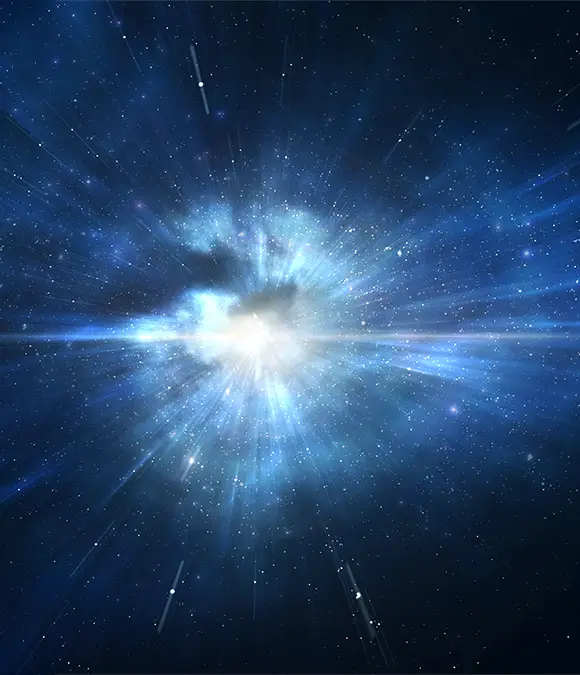
This could potentially make the universe unrecognisable: 'Essentially, anybody experiencing such a change would likely no longer be able to report it.'
Fortunately, this change isn’t expected to happen soon.
But it raises a question as to why it hasn't already happened. Which is where object two comes in: primordial black holes.
According to many current models, these tiny black holes formed right after the Big Bang. And they might have had a huge impact on the Higgs field.
They were so small that they could have formed quickly and disappeared just as fast without being detected.
But according to Heurtier and his team, they would have been around long enough to have a powerful impact on the Higgs field causing these so-called 'bubbles' to appear everywhere.
As a result, the universe shouldn't have been able to form.
So, we don't yet have an answer as to why this is. Researchers are exploring the possibility that there’s a bigger factor we haven’t discovered yet.
Like most things in physics, things can't always be easily explained as there's always an unknown higher force or behaviour that could hold the answer.