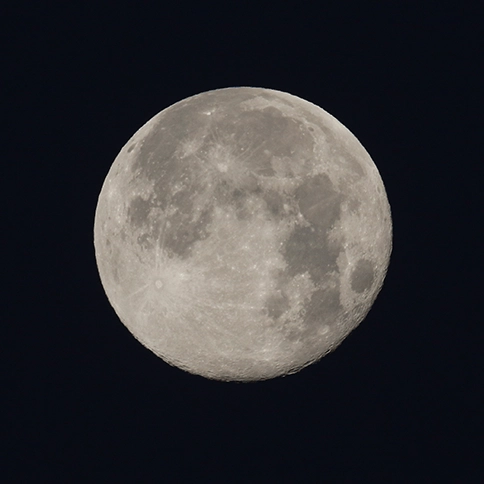
Astronomer captures moment unknown object lights up the moon in incredible footage


Mankind is heading back to the Moon for the first time since Apollo 17 landed there in 1972.
With the Artemis III mission hopefully taking us there in 2027, it hopefully wont be long until we step foot on the lunar surface again.
That's if there's any of the Moon left, as someone has captured the wild moment a massive object seemingly collided with our only natural satellite.
The astronomer in Japan managed to film the moment it looked like a meteor hit the Moon, possibly coming from the infamous Geminid meteor shower.
Advert
First documented in 1862, the Geminids are at their peak around December 4-16, which is why it's thought to be responsible for the object that collided with the Moon.
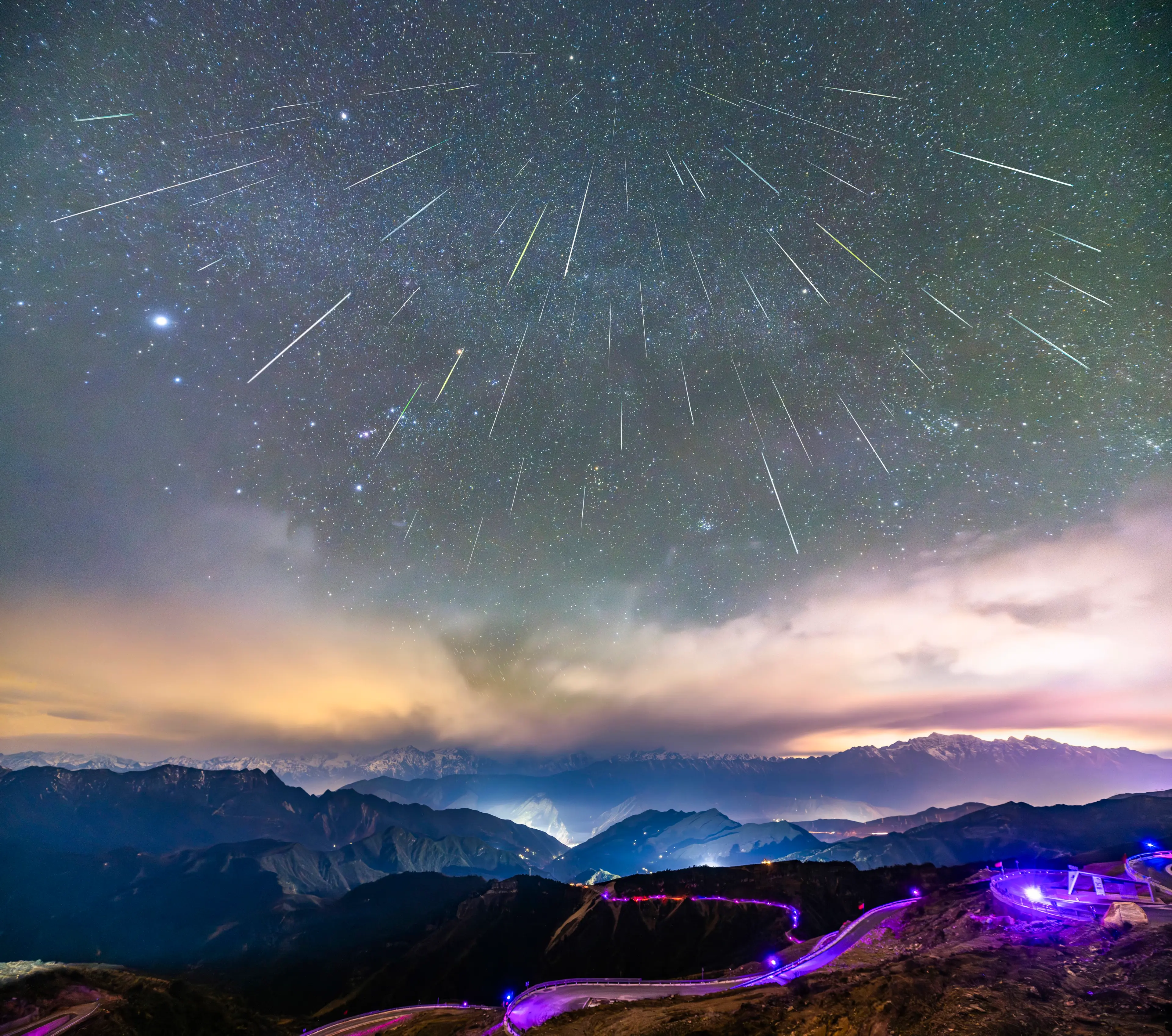
The footage was captured by Daichi Fujii, an astronomer and curator of the Hiratsuka City Museum in Japan.
Whereas most meteorites from the Geminids would burn up in our atmosphere and we're yet to find one actually on the ground on Earth, Fujii shows what an impact with the Moon looks like.
Posting on X, Fujii wrote: "There was another lunar impact flash tonight. I filmed it at 360fps from my home at 22:34:35 on December 8, 2024 (slow playback) and was able to confirm it with multiple telescopes.
"Bright meteors and fireballs have been appearing every day, but lunar impact flashes have also been captured one after another."
A December 2024 blog post from NASA explains how the Geminids' annual light show was due to peak on December 13-14 - coming not long after Fujii’s reported Moon strike. NASA's Serena Whitfield explained: "The debris causing the Geminids originated from an asteroid known as 3200 Phaethon. After astronomers discovered Phaethon in 1983, they realized the asteroid’s orbit matched that of the Geminid meteors.
"This pointed to Phaethon as the source of the annual meteor shower. Even though most meteor showers originate from comets, Phaethon was classified as a near Earth asteroid and not a comet."
Fujii's page has documented other lunar impacts, although it's important to note it's not necessarily the Geminids. Speaking to EarthSky, the American Meteor Society's Robert Lunsford explained how the December 8 footage might be a little early for Geminid strikes but it's possible: "Given the position of the radiant, there is a possibility that these lunar impact flashes are associated with the Geminid meteor shower. However, since sporadic meteors still outnumber Geminids in ground-based meteor observations, they may be sporadic meteors."
The site notes how a 2015 NASA study reported 19 Geminid lunar impacts in 2006, while there were 21 in 2010. Although rare, the Geminid impacts of 2010 made up 55% of all Moon strikes that year.
While the Moon looks destined to be pummeled by meteorites, it could be a good time to get out your telescopes.