uniladtech homepage
  • News
    • Tech News
    • AI
  • Gadgets
    • Apple
    • iPhone
  • Gaming
    • Playstation
    • Xbox
  • Science
    • News
    • Space
  • Streaming
    • Netflix
  • Vehicles
    • Car News
  • Social Media
    • WhatsApp
    • YouTube
  • Advertise
  • Terms
  • Privacy & Cookies
  • LADbible Group
  • LADbible
  • UNILAD
  • SPORTbible
  • GAMINGbible
  • Tyla
  • FOODbible
  • License Our Content
  • About Us & Contact
  • Jobs
  • Latest
  • Archive
  • Topics A-Z
  • Authors
Facebook
Instagram
X
TikTok
Snapchat
WhatsApp
Submit Your Content
Astronaut who was stranded in space for 311 days after his country stopped existing reveals his first emotion after returning to Earth

Home>Science>Space
Updated 13:55 2 Dec 2024 GMTPublished 00:56 30 Nov 2024 GMT

Astronaut who was stranded in space for 311 days after his country stopped existing reveals his first emotion after returning to Earth

He is known as the ‘last Soviet citizen

Rebekah Jordan

Rebekah Jordan

google discoverFollow us on Google Discover
Featured Image Credit: MAXIM MARMUR/AFP via Getty Images / NASA
Earth
Nasa
Space

Advert

Advert

Advert

The astronaut who spent 311 days stranded in space, after finding out his country no longer existed revealed his first emotion, upon his return to Earth.

Cosmonaut Sergei Krikalev was on a year-long space mission when he received news from back home that the Soviet Union had dissolved.

Krikalev’s mission was originally planned to last five months, but the political upheaval back on Earth threw everything into chaos.

The Baikonur Cosmodrome and the planned landing site were now part of the newly independent Kazakhstan. During the political chaos, officials were left scrambling to figure out how to bring the cosmonaut home, or if he even could.

Advert

Trapped aboard the Mir Space Station, he finally made his way back down to Earth in March 1992.

In a 2015 interview with the Guardian, Krikalev explained what his first emotion was when he finally touched down on solid ground.
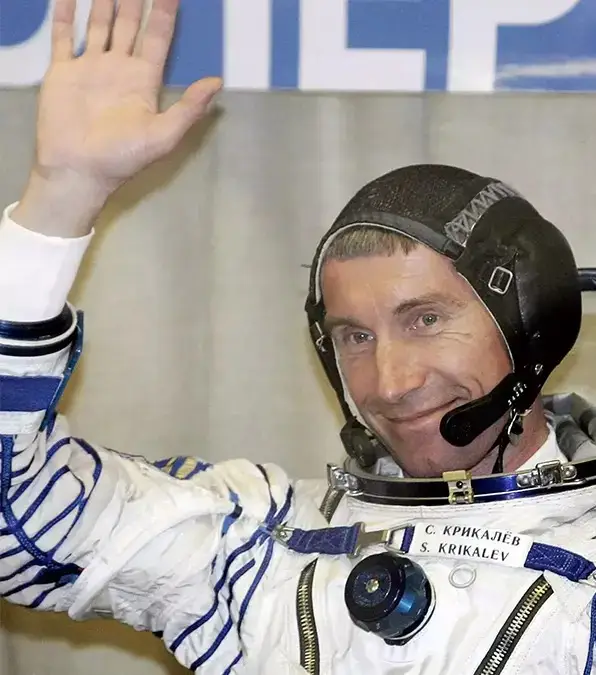
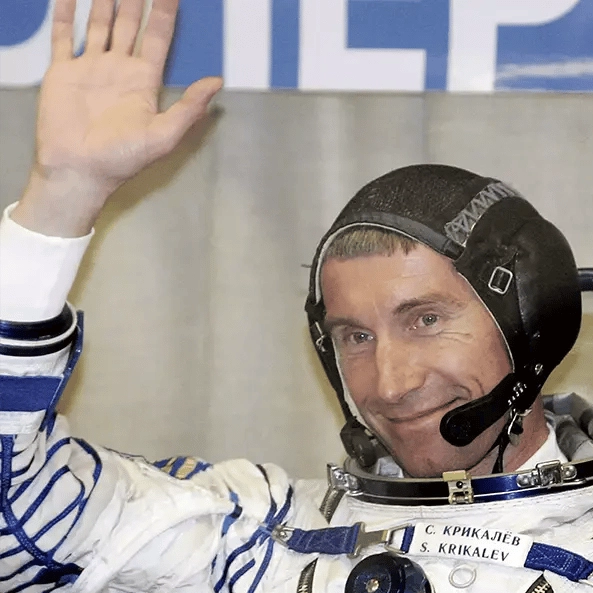
Krikalev was on a year-long space mission when he heard the news (MAXIM MARMUR/AFP via Getty Images)

“It was a long process and we were getting the news, not all at once, but we heard about the referendum, for example," the cosmonaut described his experience.

“I was doing my job and was more worried about those on the ground - our families and friends - we had everything we needed!”

Krikalev went on to say: “I think I felt satisfaction that I had done my job, and done it well. The second one was a sort of relief as I had held a huge responsibility for many months.”

When Krikalev returned to Earth, the Soviet Union was gone and his home was no more. However, he became known as the ‘last Soviet citizen’ because of his unique situation.

Believe it or not, it wasn’t his final time in space.
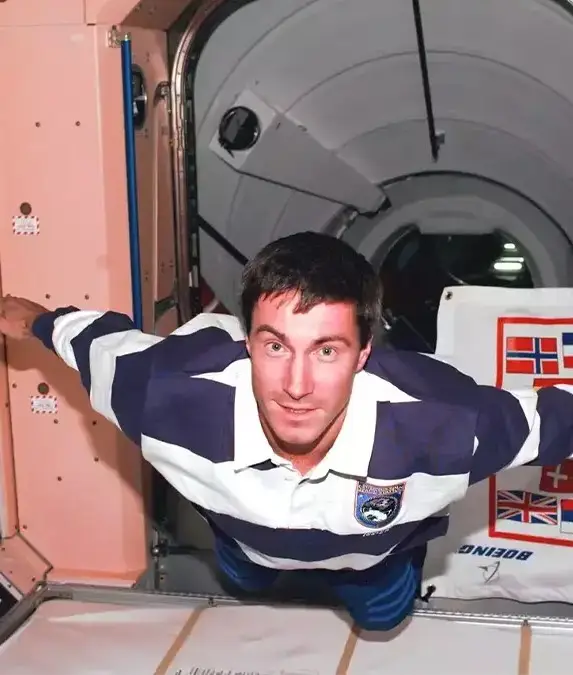
Krikalev returned to space after his first stint (NASA)

In 1994, he returned to orbit as part of the first joint US-Russian Space Shuttle Mission.

In December 1998, he also became the first person to enter the International Space Station along with NASA astronaut Robert Cabana.

Together, the pair were tasked with powering up the US module Unity.

Over his career, Krikalev spent a staggering 804 days, 9 hours, and 39 minutes in space - once holding the record for the most time spent off Earth.

But due to the amount of time Krikalev had spent in space, where he was travelling at high velocities, he also experienced time dilation.

This phenomenon is when time slows down at higher velocities, leading him to be 0.02 seconds younger than other people born at the same time as him.

Isn't space crazy?

Choose your content:

10 hours ago
11 hours ago
12 hours ago
  • NASA / Goddard / SDO
    10 hours ago

    When the Earth could be completely obliterated by the Sun revealed by scientists in new research

    Baba Vanga didn't see this one coming

    Science
  • Daniel Balakov / Getty
    11 hours ago

    Scientists make groundbreaking discovery about Alzheimers that could change how we treat

    It relates to how the cognitive disease spreads

    Science
  • Peter Cade / Getty
    12 hours ago

    CDC releases map of exactly which states 'explosive diarrhea' outbreak is hitting most

    It has disproportionately impacted the east of the United States

    Science
  • National Science Foundation/Peter Rejcek via Wikimedia Commons
    12 hours ago

    Puzzle of Antarctica's 'waterfall of blood' solved after more than 100 years

    Blood Falls is hiding a secret behind its red water flowing

    Science
  • You can now claim a free Xbox Series S worth $300 in Cyber Weekend sale
  • Astronaut shares 'enormous lie' he discovered after seeing the Earth from space
  • Staggering moment astronaut was told his country no longer existed before he was stranded in space for 311 days