
Artemis 2 crew will be sent home by engineers one day into mission if 345-second task can't be completed


We'll never be able to really fathom how big the cosmos is, but in an attempt to make things feel a little smaller, NASA is shooting for the Moon with its Artemis 2 mission. While the USA has the honor of being the first country to plant a flag on Earth's only permanent natural satellite, the Apollo program went out with something of a whimper when Eugene Cernan was the last person to set foot on the Moon in 1972.
Despite waning interest in missions beyond low Earth orbit, there are questions about why we haven't been to the Moon since 1972. That all changes with Artemis 2, as NASA sends a four-person crew on a flyby to the Moon, ahead of Artemis 3, hopefully landing us there in the not-so-distant future.
That's not to take away from the importance of Artemis 2, especially considering Christina Koch hopes to be the first woman to ever travel past low Earth orbit. As the history of the many failed space missions and the horrors of Apollo 1 showed, it's easy for things to go wrong up there.
Although Suni Williams and Butch Wilmore eventually made it back to Earth safely, we saw recent concerns when the pair were marooned in space for 286 days due to malfunctioning thrusters on their Boeing Starliner capsule. Even though Artemis 2 is supposed to take Koch, Reid Wiseman, Victor Glover, and Jeremy Hansen on a 10-day flyby, they could soon be coming back to Earth much sooner than expected.
Why could Artemis 2 be cut short?
Advert
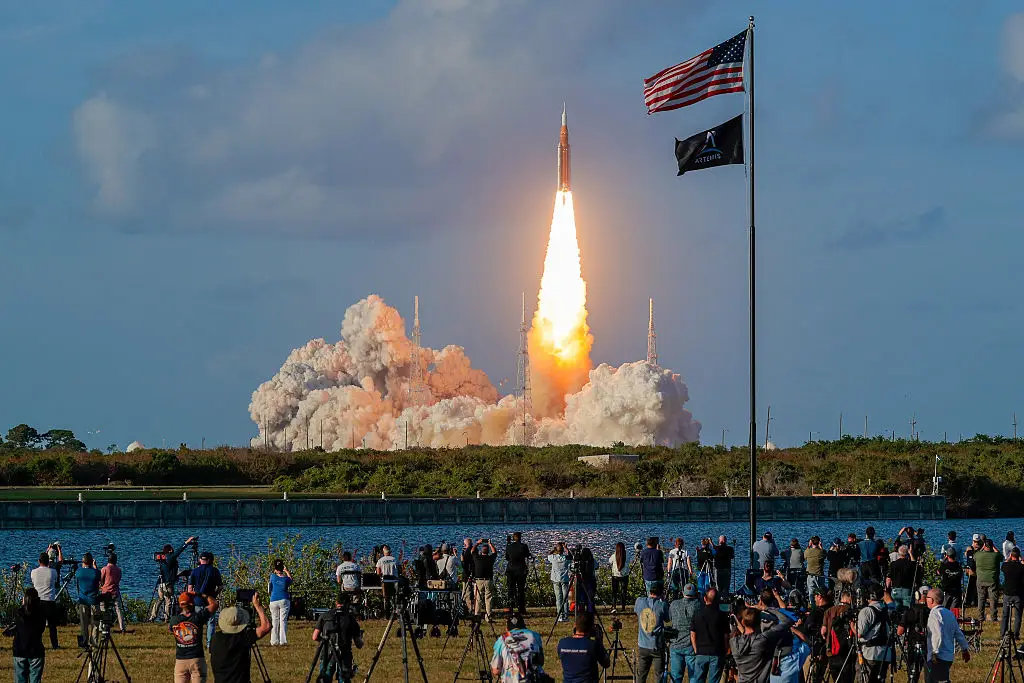
Artemis 2 has already faced several stumbling blocks, with weather issues previously delaying blastoff to an ominous April 1 launch window. Although the intrepid quartet is now up in the air and on the way to its 7,600 km flyby, they've already had to deal with a gross toilet issue on the Orion spacecraft. They might not have to be stuck up there with floating feces for much longer.
As reported by the BBC, NASA has to make a critical check before committing to the 'long burn' that sends it out of Earth's orbit and toward the Moon.
After taking a four-hour nap, the astronauts are being woken up at 7.00 am EDT to get ready for the 'perigee raise burn' that lifts Orion into a wide-swining path around our humble planet.
Before NASA gives the okay to the long burn, the crew will be tasked with trying to break their spacecraft. Don't worry, this is all in the name of science.
Why are Artemis 2 astronauts trying to break their Orion spacecraft?

Even though you might be worried that the Artemis 2 crew is trying to purposefully sabotage their spacecraft, it's to check that it can deal with any unexpected pressures that space puts on it. During this breaking period, they'll cycle the craft's computers through various modes, switch radios between ground stations and relay satellites, and vigorously move around the tiny cabin to check how life-support systems cope with an excess of carbon dioxide and humidity.
While all of this is going on, engineers will conduct experiments on the thrusters. This is to ensure the Orion spacecraft responds as the various models have predicted. The general idea is to check whether it can survive the mammoth mission to the stars. Only when all of this is ticked off will they fire Orion’s main engine for the 345 seconds needed to send it on its way to the Moon.
The previous record for the furthest humans have gone into space was set by Apollo 13's 400,171km, with Artemis II tipped to go much further than this. There's no quick way back when you're that far into the inky black of space, so if there's even the slightest problem, NASA will be bringing the crew home early by canceling the trans-lunar injection burn and using Orion's engine to get them back ASAP.