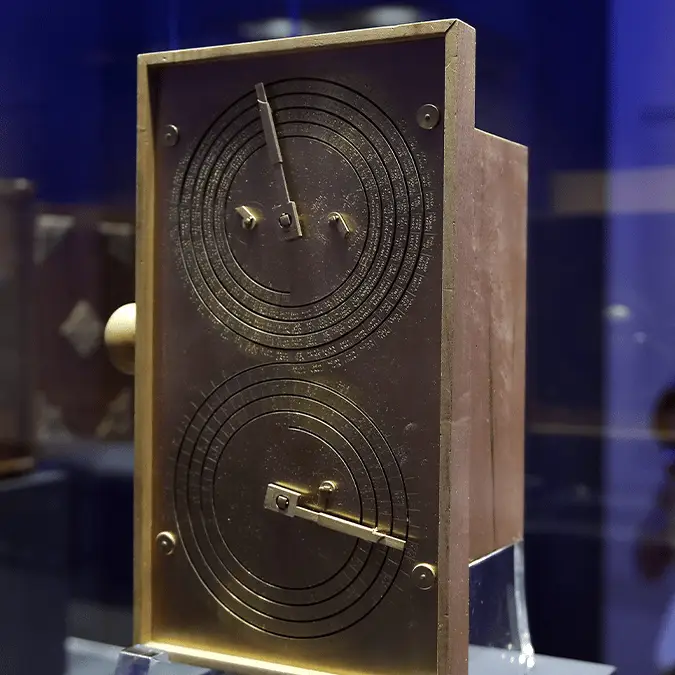
2,000 year-old ancient computer that 'shouldn't exist' was previously thought to be impossible


A device so advanced that it was once thought impossible for its time has baffled scientists for over a century.
The Antikythera Mechanism, often called the world's first computer, is a 2,000-year-old astronomical calculator that has challenged much of what we know about ancient technology. Discovered in a shipwreck off the coast of Greece in 1901, this intricate piece of engineering was far ahead of its time, raising serious questions about the capabilities of the ancient Greeks.
Made of bronze and featuring a series of intricate gears, the Antikythera Mechanism was designed to track celestial movements and predict astronomical events, such as eclipses and planetary alignments.
The level of precision in its construction suggests a deep understanding of mathematics and mechanics—something historians previously believed was beyond the reach of ancient civilisations.
Advert
As stated by fern in their embedded YouTube video above, at around the 10:35 mark, the Antikythera Mechanism is a "complex simulation of the cosmos".
Fern further added: "pick any day, the machine [would show] you where the world stood, which star constellation was rising, or when the next eclipse was coming. All this in a wooden case as large as a book".
For decades, experts struggled to piece together how the device worked. With only about a third of the original mechanism surviving, much of its function remained a mystery.
Previous studies managed to decode the back panel, which contained inscriptions detailing its purpose, but the front’s complex system of gears had experts stumped.
However, a 2021 study by researchers at University College London (UCL) appeared to have made breakthrough in solving the puzzle themselves.
Using advanced 3D modeling, scientists were able to reconstruct the mechanism’s front panel, revealing a sophisticated display that mapped the movements of the Sun, Moon, and the five planets known at the time.
The new model, described in Scientific Reports, aligns with ancient inscriptions and provides the most accurate reconstruction of the device to date.
Professor Tony Freeth, the study’s lead author, described the mechanism as a "tour de force of ancient Greek brilliance," emphasising that it was the first model to fully conform to the physical evidence. The researchers now aim to build a full-scale replica using modern materials to better understand how it functioned.
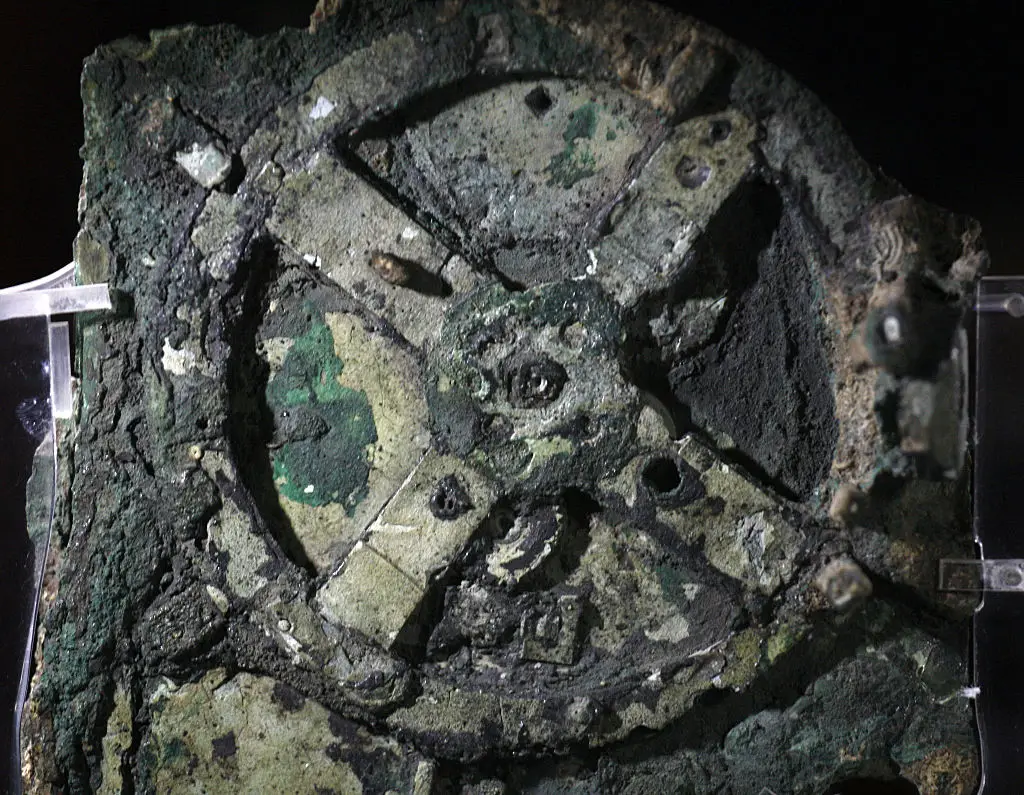
What makes the Antikythera Mechanism so fascinating is how out of place it seems in history. Similar mechanical complexity wouldn’t be seen again until clockwork devices emerged in the Middle Ages, more than a thousand years later. This has led some to speculate whether the knowledge used to create it was lost over time or if other equally advanced devices are yet to be discovered.
The discovery of the Antikythera Mechanism has, in a way, overwritten the way we look at ancient civilisations — it turning out that at least some individuals were far more technologically sophisticated than previously believed. As researchers continue to unlock its secrets, this ancient "computer" serves as a reminder that history is full of surprises.