uniladtech homepage
  • News
    • Tech News
    • AI
  • Gadgets
    • Apple
    • iPhone
  • Gaming
    • Playstation
    • Xbox
  • Science
    • News
    • Space
  • Streaming
    • Netflix
  • Vehicles
    • Car News
  • Social Media
    • WhatsApp
    • YouTube
  • Advertise
  • Terms
  • Privacy & Cookies
  • LADbible Group
  • LADbible
  • UNILAD
  • SPORTbible
  • GAMINGbible
  • Tyla
  • FOODbible
  • License Our Content
  • About Us & Contact
  • Jobs
  • Latest
  • Archive
  • Topics A-Z
  • Authors
Facebook
Instagram
X
TikTok
Snapchat
WhatsApp
Submit Your Content
Ancient rock from 4,200,000,000 years ago stuns scientists and answers one of the biggest questions about the Moon

Home> Science> Space

Updated 19:57 18 Nov 2024 GMTPublished 16:12 18 Nov 2024 GMT

Ancient rock from 4,200,000,000 years ago stuns scientists and answers one of the biggest questions about the Moon

This particular discovery relates to the dark side of the moon

Harry Boulton

Harry Boulton

google discoverFollow us on Google Discover
Featured Image Credit: peepo / Gary Hershorn/Contributor / Getty
Moon
Space
Science

Advert

Advert

Advert

Space is so significant that there's always going to be new discoveries, but this recent find from billions of years ago has confirmed a long-held theory about the Moon.

It's been a long time since astronauts have set foot on the Moon - due to a particularly frustrating reason - but that hasn't stopped space departments like NASA from exploring its surface with various robotic crafts.

Researchers have managed to send wooden satellites into space in order to find more sustainable ways to explore space, and India have made a rover that could help us uncover and understand the Moon's past.

However, one recent discovery by the China National Space Administration (CNSA) has uncovered rocks on the dark side of the moon that not only verify a widely held suspicion, but also could be up to 4.2 billion years old.

Advert
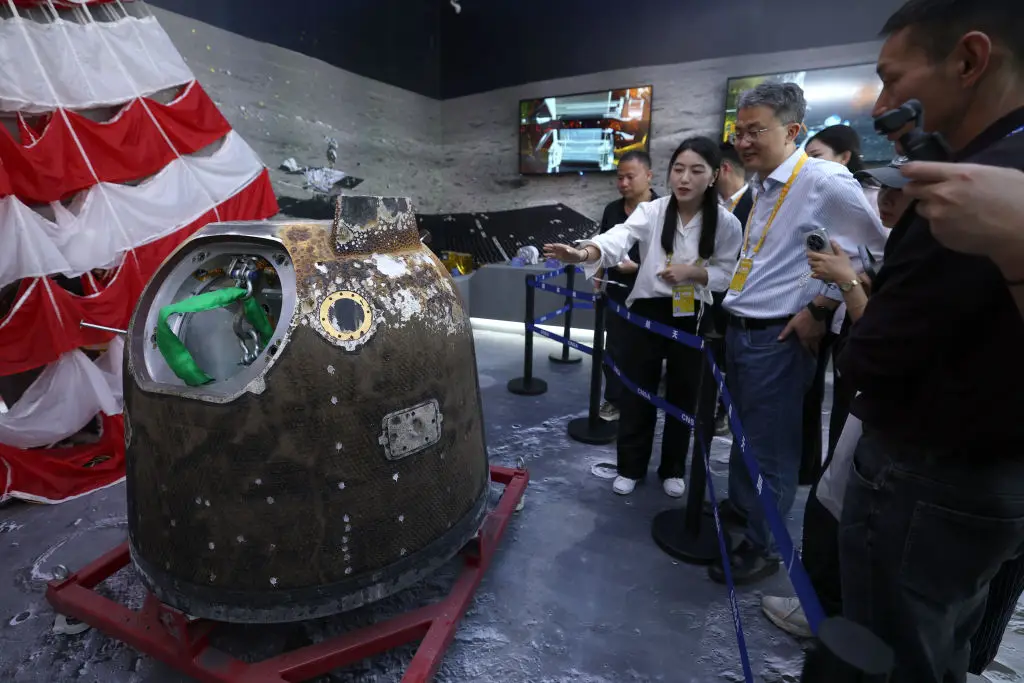
Chang'e-6 has since been displayed at an Aerospace Exhibition in China (Fu Tian/China News Service/VCG via Getty Images)

Discovered by the Chang'e-6 spacecraft, fragments of volcanic rock indicate that volcanoes have indeed erupted in the far side of the Moon, which was previously thought to be undiscoverable.

These rocks range from being 2.8 to 4.2 billion years old, and serve as a vital discovery in the Moon's history that illuminates many prior theories.

Data from NASA's Lunar Reconnaissance Orbiter, among other studies, indicated that the far side of the moon had a history of volcanoes and eruptions, but the retrieval of these rocks is the first actual confirmation.

This isn't the first time that researchers have reached the dark side of the Moon, as previous Chinese spacecrafts Chang'e-4 and Chang'e-5 managed to take survey of the area, with the latter returning rocks from the northern near-side.
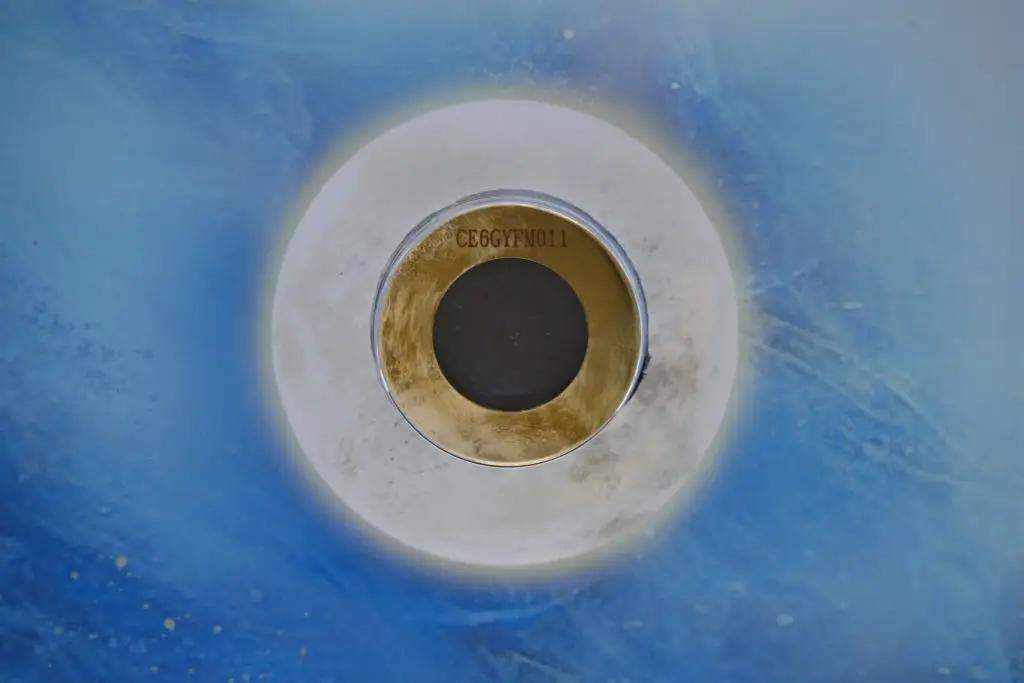
These lunar samples could be the start of exciting research surrounding the far side of the Moon (Chen Chuhong/China News Service/VCG via Getty Images)

The sample collected by Chang'e-6 also contains materials that begin to help illuminate the stark differences between the near and far sides of the Moon, which remain largely a mystery.

Information surrounding the discovery was published in scientific journals Nature and Science, in which co-author Qiu-Li Li stated, as reported by MSN, that this indicates over one billion years of volcanic eruptions on the Moon's far side.

It remains a further point of research as to how these eruptions lasted so long, and whether this can be indicated by the current samples or whether further expeditions are required is also unknown.

It's clear that this is just the start of an exciting time when it comes to the far side of the moon, which has up to now remained largely unknown, and hopefully further research can continue to illuminate the mystery location.

Choose your content:

2 days ago
3 days ago
  • YouTube / BBC
    2 days ago

    Fascinating simulation shows exactly how sperm is attacked when entering the female reproductive system

    There's a one in 250 million chance that we're ever even born

    Science
  • Randy Brooke/Getty Images
    2 days ago

    Leading scientist reveals disturbing theory on what happens when we die

    According to the expert, our molecules don't disappear when we die

    Science
  • Bloomberg / Contributor via Getty
    3 days ago

    Bryan Johnson makes 'unhinged' post revealing his partner's vaginal data with intimate tweet about sex life

    The biohacker has previously shared a detailed 11-step sex routine

    Science
  • Catherine Falls Commercial / Getty
    3 days ago

    Simulation reveals what happens to your body after drinking 'liquid death' consumed by half of Americans daily

    One heart surgeon put these kinds of drinks on their list of things we should absolutely be avoiding

    Science
  • NASA scientists sound alarm over phenomenon that could cause serious damage to the Moon
  • Chinese scientists discover extremely rare and valuable meteorite hiding on the far side of the Moon
  • Scientists issue unnerving update on when ‘city killer’ asteroid could hit the moon and it's sooner than you think
  • Why humanity hasn't been to the Moon in 54 years as Artemis program aims 2027 landing