uniladtech homepage
  • News
    • Tech News
    • AI
  • Gadgets
    • Apple
    • iPhone
  • Gaming
    • Playstation
    • Xbox
  • Science
    • News
    • Space
  • Streaming
    • Netflix
  • Vehicles
    • Car News
  • Social Media
    • WhatsApp
    • YouTube
  • Advertise
  • Terms
  • Privacy & Cookies
  • LADbible Group
  • LADbible
  • UNILAD
  • SPORTbible
  • GAMINGbible
  • Tyla
  • FOODbible
  • License Our Content
  • About Us & Contact
  • Jobs
  • Latest
  • Archive
  • Topics A-Z
  • Authors
Facebook
Instagram
X
TikTok
Snapchat
WhatsApp
Submit Your Content
Scientists have finally confirmed what lies inside the moon and it's not what you'd expect

Home> Science> Space

Published 10:26 2 Dec 2024 GMT

Scientists have finally confirmed what lies inside the moon and it's not what you'd expect

It's not made of cheese

Tom Chapman

Tom Chapman

google discoverFollow us on Google Discover
Featured Image Credit: Jose A. Bernat Bacete / MASTER / Getty
Space
Moon
Science
Discovery

Advert

Advert

Advert

We've been exploring the Moon since 1969, and despite decades of researching the Earth's only natural satellite, it's clear we still know relatively little about it.

Hovering there in outer space, the Moon is a mystery that's only had 12 people land on it.

Now, new research has given us a closer look at the Moon, and surprise, surprise, it's not made of cheese.

As published on Nautre.com, a team led by astronomer Arthur Briaud has discovered what the Moon is made of, shattering earlier beliefs about the celestial body.

Advert

Instead, the Moon is thought to be a solid ball that has a density similar to iron. Using acoustic waves made by quakes, Briaud and the team are able to analyze its interior materials.
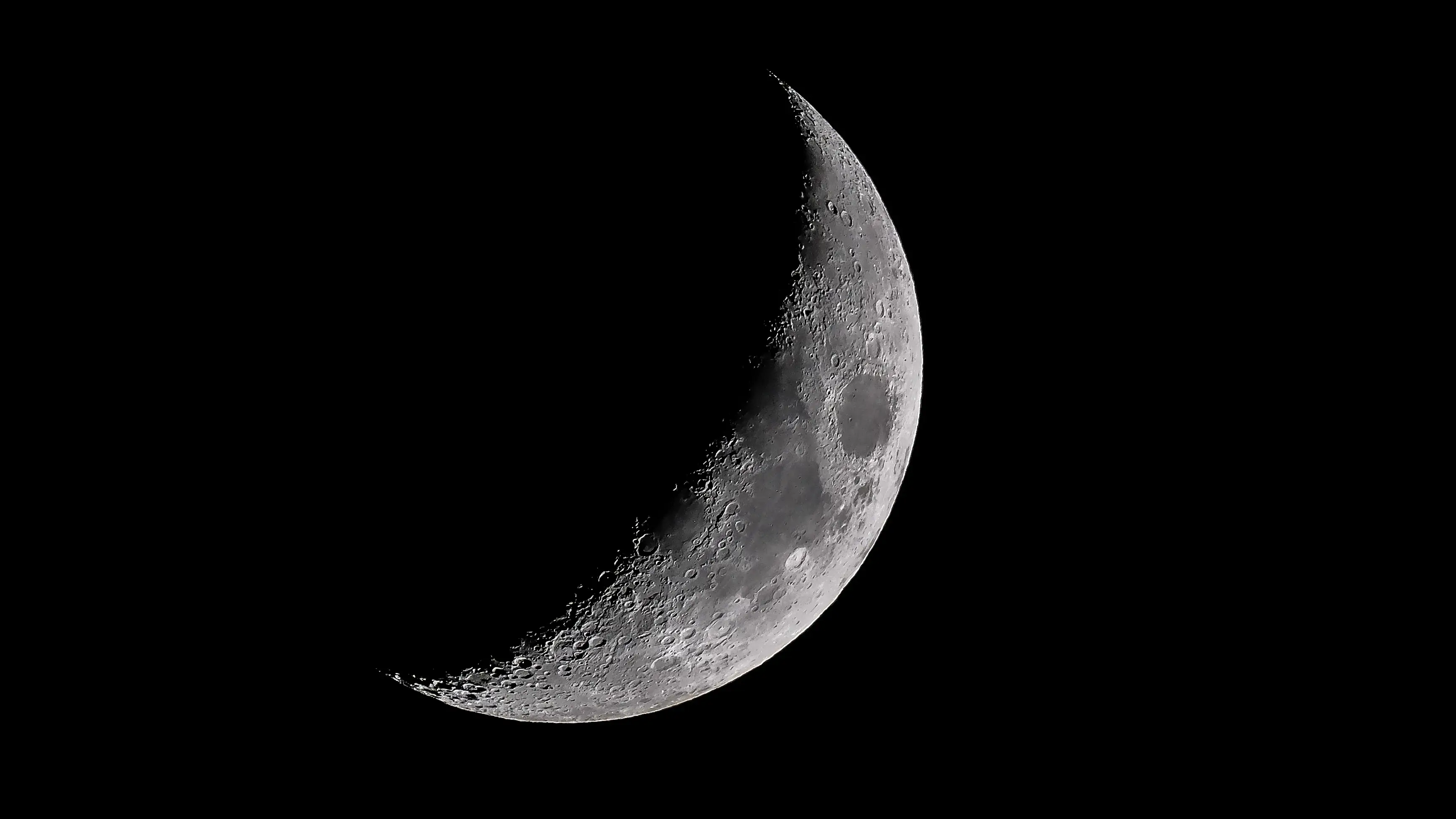
The Moon is no longer the mystery it once was (Anadolu / Contributor / Getty)

Briaud writes: "Our results question the evolution of the moon magnetic field thanks to its demonstration of the existence of the inner core and support a global mantle overturn scenario that brings substantial insights on the timeline of the lunar bombardment in the first billion years of the solar system."

Scientists from CNRS, Université Côte d'Azur, the Côte d'Azur Observatory, Sorbonne Université, and the Paris Observatory-PSL delved deeper into the Moon's core, following research from the Apollo 11 mission conducting geological surveys of it.

Several missions used laser ranging to measure the distance between the surface of the Earth and the Moon, working out that the outer core exists over a solid inner.

This inner core is composed of metal and has a density similar to iron, measuring 500 kilometers wide.

This means that this is about 15% of the Moon. Similar to Earth, the mantle has evolved alongside the Moon in a process that’s referred to as lunar mantle overturn.
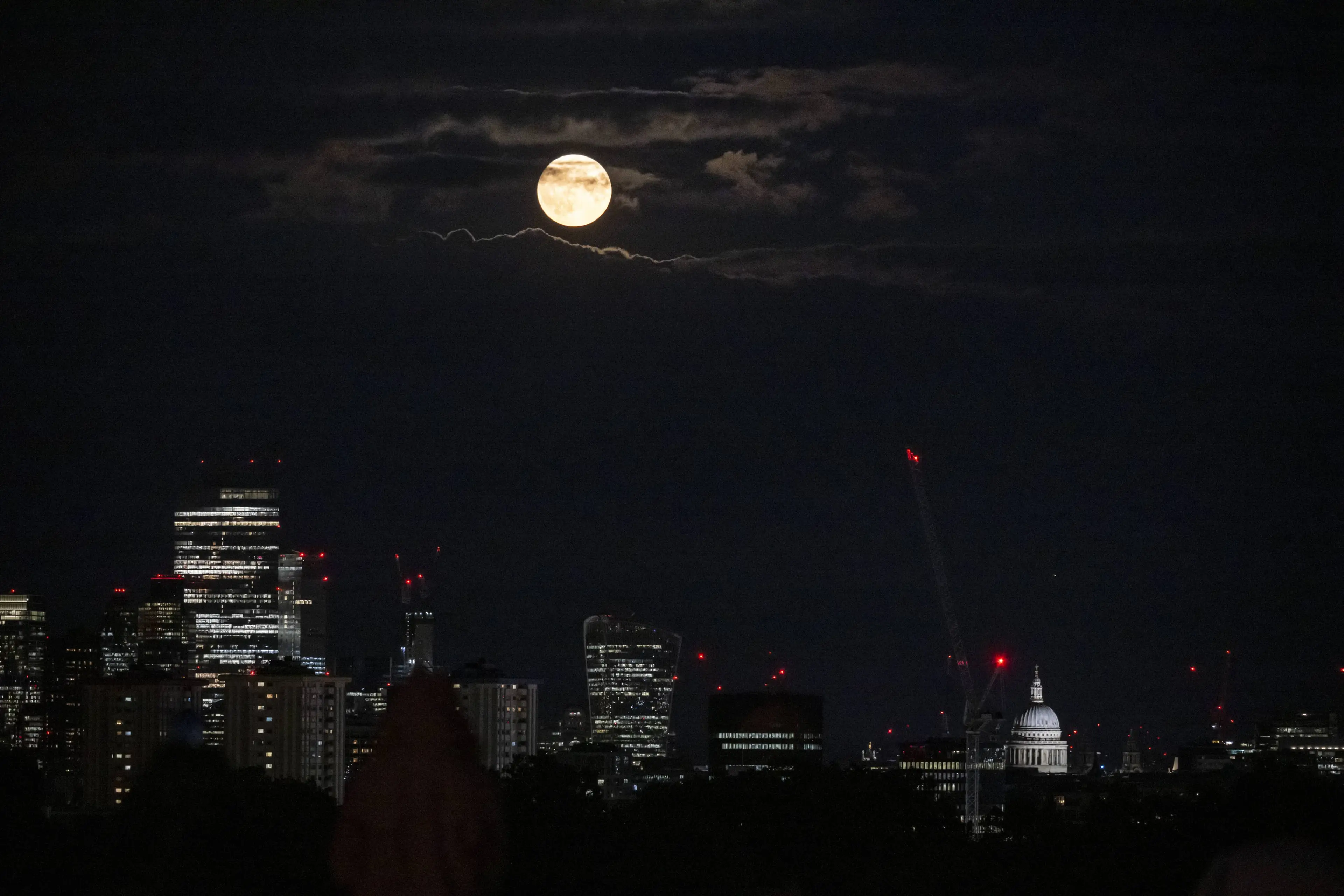
Scientists still don't know what happened to the Moon's magnetic field (Anadolu / Contributor / Getty)

It explains how iron-rich elements can be found on the surface of the moon, with mantle material carried up as volcanic rock that's left under the lunar crust.

Material that is too dense sinks through the lighter crust material and into the core-mantle.

It's hoped that these findings can help solve the mystery of the moon's magnetic field, which was once 100 times stronger than Earth's but has now almost completely gone.

While we once used to visit the Moon regularly, no one has stepped foot on it in 50 years.

Money and an insecure political climate seem to be the biggest reason we aren't making regular trips to the Moon, but it hasn't stopped us from researching it.

Like we continue to make discoveries here on Earth, the Moon isn't the space enigma it once was.

Choose your content:

an hour ago
7 hours ago
a day ago
  • Frederick York/Biodiversity Heritage Library via Wikimedia Commons
    an hour ago

    Sad fate of the first extinct species to have its DNA examined known as the quagga

    The species went extinct in the late 19th Century

    Science
  • Lourdes Balduque / Getty
    7 hours ago

    All blue-eyed people can trace their ancestry back to a single individual

    They lived between 6,000 and 10,000 years ago

    Science
  • Jim WATSON/AFP via Getty Images
    a day ago

    Major drugs classified as Schedule 1 as Trump reclassifies weed as less dangerous

    The decision was made by the Department of Justice last week

    Science
  • Anna Moneymaker/Getty Images via Getty
    a day ago

    FBI issues statement on string of mysterious deaths and disappearances of top US scientists

    Eleven scientists have recently died or disappeared under mysterious circumstances

    Science
  • NASA astronaut describes exactly what space smells like and it's not what you'd expect
  • Jeff Bezos' Blue Origin could hold the secret to putting humans on the Moon for life with new discovery
  • Exactly how much NASA's Artemis 2 mission around the moon cost
  • Scientists reveal what you dream about before death and it sounds unsettling